What the two Democratic candidates for Colorado governor say they’ll do for the Western Slope
Michael Bennet and Phil Weiser both say they’ll listen to rural communities on issues like public lands, wolves and affordability
Robert Tann Follow
Robert Tann/Steamboat Pilot & Today
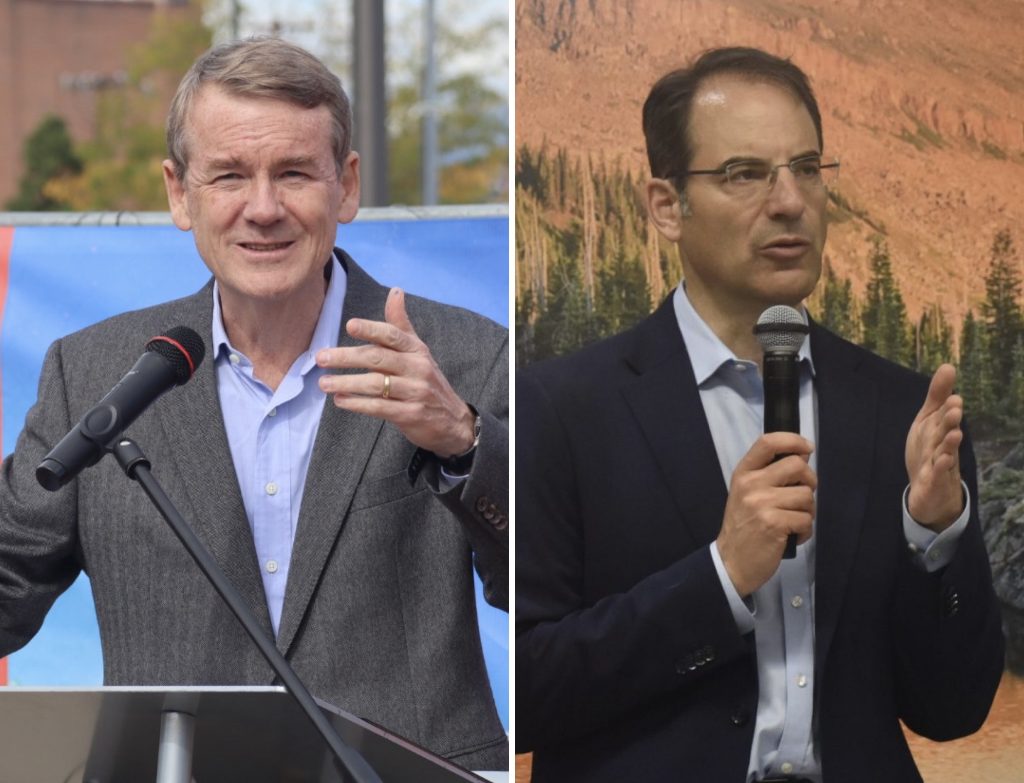
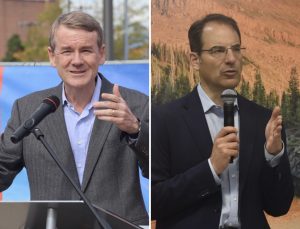
U.S. Senator Michael Bennet and Colorado Attorney General Phil Weiser say they know serving as Colorado’s next governor means representing more than just the populous Front Range.
The two Democrats are running in the June 30 primary to be their party’s nominee for governor this fall to succeed outgoing Democratic Gov. Jared Polis, who is term limited. Both say they’ve been champions for Western Slope issues during their time in elected office. But they also acknowledged that metro area-centered decisions can sometimes flare tensions with western communities and widen the urban-rural divide.
“There’s a reality to the perception that the Western Slope, and frankly, the Eastern Plains as well, are not always taken into account by the folks in Denver,” Bennet said. “But that’s one of the things that I’m most looking forward to working on. I’ve probably spent more time in rural Colorado as a senator than I have in urban Colorado.”
Bennet touted his position on the U.S. Senate Agriculture Committee, his involvement with developing a federal rural broadband plan and his push to expand public lands protections, all of which he says were informed by local communities.
“That work on public lands is a model of the way I’m going to want to do the work as governor,” Bennet said. “Not from the legislature down — just as I haven’t done it from Washington, D.C., down — but from the communities in Colorado up.”
Weiser said western Coloradans “do not need to imagine what type of leadership and what type of commitment to listening I will bring. They can look at the way I have served as our attorney general.”
He listed accomplishments that include securing a $25 million donation from UnitedHealth Group to the Rocky Mountain Health Foundation, which supports healthcare programs across the Western Slope, along with a $5 million investment into youth mental health. Weiser said he also advocated for keeping water on the Western Slope as a condition of extending a set of water rights owned by Xcel Energy and Tri-State Generation and Transmission Association, Inc.
Weiser said those issues show his ability to build relationships and “take action to get things done.”
Howling about public lands
Regarding the state’s divisive gray wolf reintroduction program, both candidates said they understood the frustration from Western Slope communities, who’ve pushed for more engagement and transparency from Colorado Parks and Wildlife, which is implementing the voter-mandated program.
Weiser said he heard from members of the Northwest Council of Colorado Governments that they were not being included in wolf decisions being made by Parks and Wildlife. He said he’s gone to bat for those communities and “publicly lobbied the (Parks and Wildlife) commission to make sure that as these key decisions are made, these local governments are at the table.”
Bennet has said he supports temporarily suspending wolf reintroduction, calling it an example of a well-intentioned plan that “went haywire.”
“It started off with a thoughtful and well-considered wolf management plan that got input from across Colorado, but unfortunately, it has not been executed consistent with that plan,” Bennet said.
On public lands, Bennet said he’s been a champion for conservation, playing key roles in former President Joe Biden’s protections for the Thompson Divide — which spans Pitkin, Garfield and Gunnison counties — and the creation of the Camp Hale-Continental Divide National Monument in Eagle and Summit counties. He also spearheaded several public lands protection bills in the Senate, including the Gunnison Outdoor Resource Protection, or GORP, Act, which seeks to expand protections across more than 700,000 acres of western Colorado recreation and wilderness areas.
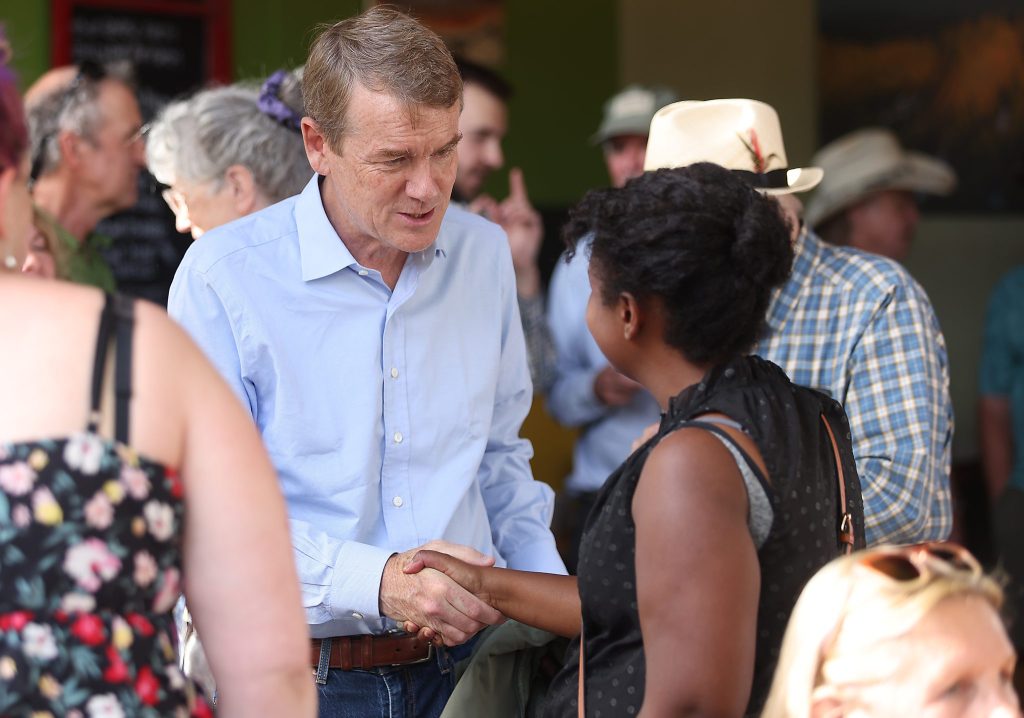
Bennet defended his vote to confirm two members of President Donald Trump’s cabinet who’ve come under criticism from public lands advocates: U.S. Agriculture Sec. Brooke Rollins and Interior Sec. Doug Burgum.
Rollins made headlines for announcing the end of the “Roadless Rule” established under former President Bill Clinton, which protects roughly 58.5 million acres of backcountry U.S. Forest Service land from road construction and logging — though Colorado is one of just two states that won’t be affected. Her agency also implemented widespread cuts to Forest Service staff.
Burgum has pushed for staffing cuts and funding reductions to the National Park Service, and has been accused by environmental advocates of prioritizing mining and drilling on public lands over conservation.
Bennet said he has led the criticism in the Senate of Rollins’ and Burgum’s public lands policies. He said he voted to confirm Rollins because her agency is critical to delivering federal resources for Colorado, be it for wildfire relief or ranching support.
Regarding Burgum, Bennet said he voted to confirm him because of his ties to Colorado, which Bennet believed could make him an advocate for the state.
“I was wrong,” Bennet said. “He’s been a terrible cabinet secretary, and I apologized long ago for my vote. And sometimes, now and then, I get it wrong. I wish there were more politicians who would apologize when they make a mistake.”
Bennet said, despite that, he still stands by his vote for Rollins and Burgum because he wants to ensure Colorado has access to federal support.
Water and affordability
Weiser said water is the single biggest issue on the Western Slope.
“Rural communities are really threatened — and you hear this expression sometimes — to be ‘on the menu,'” Weiser said, adding that he wants to ensure western Colorado isn’t taken advantage of as fights over water rights unfold.
Weiser said he would prioritize conservation, better water reuse strategies and smarter storage.
Bennet identified the high cost of living, in particular housing, as one of the most severe problems facing mountain towns. Bennet said a meeting he had in Basalt with teachers who were struggling to afford to live in the Aspen area was one of the moments that pushed him to run for governor.
Both Bennet and Weiser have laid out housing plans with many of the same goals, including streamlining regulations to build more units, supporting down-payment and rental assistance programs, and preserving existing affordable housing.
Both have also said there’s no “one-size-fits-all” policy when it comes to housing, and they’ve cautioned against statewide mandates that usurp local control. This has been a central conflict for much of Polis’ second term, with local governments often opposed to Polis and the legislature’s push for land-use reforms and other mandates aimed at increasing housing density.
On issues like taxing vacant homes, an idea that’s been floated in mountain towns where vacation properties eat up much of the housing supply, Bennet and Weiser have previously said they would prefer to see those decisions made at the local level, but are open to exploring the idea through state policy.
Why they’re running for governor
Bennet said his run for governor is primarily driven by a desire to address Colorado’s cost-of-living issues, which he sees as a key way to push back against political divisiveness.
“There’s two paths when people feel like there aren’t economic activities for their families and especially their kids,” Bennet said. “One path is a path of division and chaos that ‘Trumpism’ represents, and I think another path is actually addressing the challenges that we face.”
Bennet said his decades of private and public career experience, which include reorganizing and consolidating private businesses, serving as superintendent of Denver Public Schools and as a three-term U.S. senator, set him apart from Weiser.
“I think that I’ve had a career of working with people of every political stripe and people in government and outside of government to drive real results for Colorado,” Bennet said. “I’ve spent my career making really tough decisions and not accepting the status quo … and that’s what we need in Colorado.”
Weiser said he is especially concerned about young people’s future in Colorado.
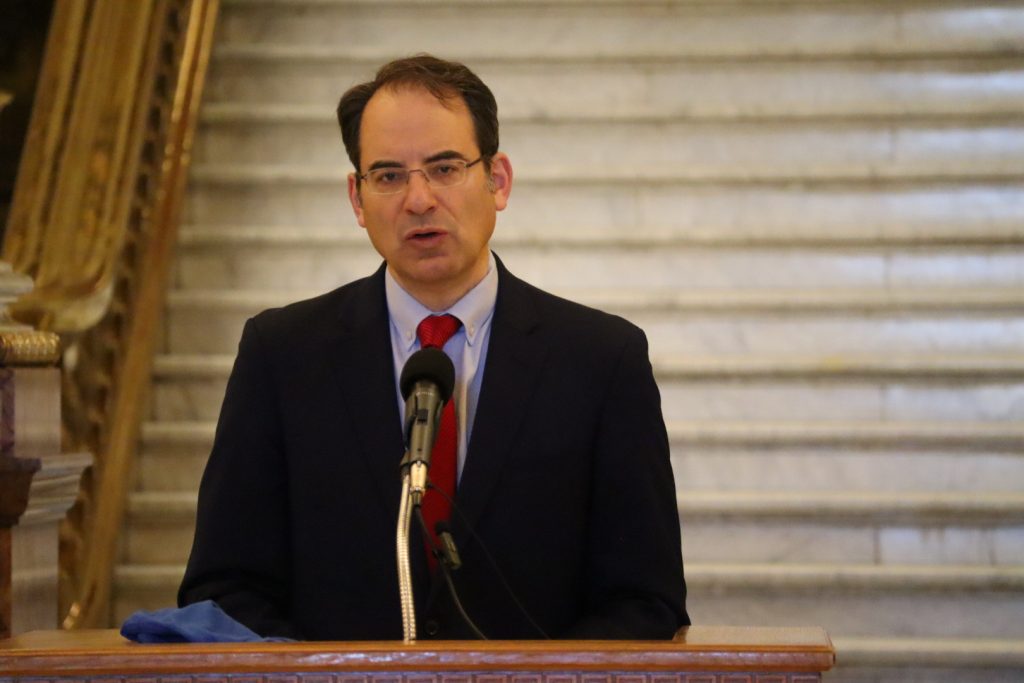
“Right now, for kids growing up in Colorado, it’s easier to get access to fentanyl and guns than it is to get a job,” Weiser said. “Kids are hurting. We’ve got a youth mental health crisis, we’ve got an education and workforce development system that is in need of serious repair and investment, and it’s too expensive for many people to live in Colorado.”
As of the most recent campaign finance filings on June 1, Weiser was leading Bennet in fundraising, with over $6.2 million raised and more than $5 million in expenditures. Bennet had raised over $4.6 million with more than $4.2 million in expenditures.
Ballots began being sent in the mail to registered voters on Monday, June 8. Voters will have until June 22 to return their ballot by mail to ensure it is counted, or until 7 p.m. on June 30 to drop their ballot off at a drop box or to vote in person.
Information on how to register to vote or update voter information can be found at GoVoteColorado.com.



Support Local Journalism
Support Local Journalism
The Sky-Hi News strives to deliver powerful stories that spark emotion and focus on the place we live.
Over the past year, contributions from readers like you helped to fund some of our most important reporting, including coverage of the East Troublesome Fire.
If you value local journalism, consider making a contribution to our newsroom in support of the work we do.