Survey of Colorado Gold Medal fishing location on Blue River cites fish feeding as possible reason for river health decline
Blue Valley Ranch, which stocks and feeds fish on its stretch of river, pushed back on the fish survey’s conclusion


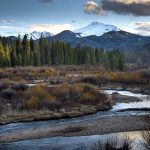
Colorado Parks and Wildlife/Courtesy photo
Editor’s Note: This article has been updated to reflect that Colorado Parks and Wildlife designates Gold Medal fishing waters in the state.
A Colorado Parks and Wildlife fish survey along the Lower Blue River cites a billionaire landowner’s practice of feeding fish — rather than overfishing — as the likely cause of increasing fish mortality.
The multiyear survey published in December is the first time the wildlife agency has provided an analysis of the fishery along the stretch of river, where a land exchange and permit system have sparked public debate about river access and fishery health.
“The reach studied is of interest because it contains two parcels that were previously under private ownership but are included in the Blue Valley Ranch Land Exchange as an addition to public property,” Parks and Wildlife aquatic biologist Jon Ewert wrote in the survey. “… Prior to these surveys, CPW had no direct information regarding the fish populations inhabiting this reach.”
The Lower Blue River — all 15 miles of which Colorado Parks and Wildlife has designated as Gold Medal fishing — flows from the Green Mountain Dam in Summit County before meeting up with the Colorado River in Grand County. Along the way, the river passes through Blue Valley Ranch, a more than 2,000-acre property owned by billionaire Paul Tudor Jones II. The ranch has been known to stock rainbow trout and feed fish pellets in that section of river.
Earlier this year, Blue Valley Ranch closed on a land swap with the federal government that traded parcels of private land for public land along the river. Shortly after closing on the land swap, Blue Valley Ranch and the nonprofit Friends of the Lower Blue River proposed a permit system to limit the number of anglers who could fish from rafts on the river.
The ranch and the nonprofit have said the permit system, which has not been finalized, is necessary due to the declining health of the Lower Blue River. The groups allege growing fishing pressure has driven fish mortality.
“The Lower Blue River, long recognized as one of the greatest trout fisheries in the world, is at a crossroads,” the Friends of the Lower Blue River’s website explains. “With increase in use, so have the fishing pressures on the river. … Fish populations are declining, and the river’s world-class trout fishery is quietly slipping away.”
The proposal to restrict float fishing has upset some anglers, who have called the permit system a “bait and switch” and say it is an attempt by the rich landowner to limit public access to the river when the land exchange was premised on increasing access.
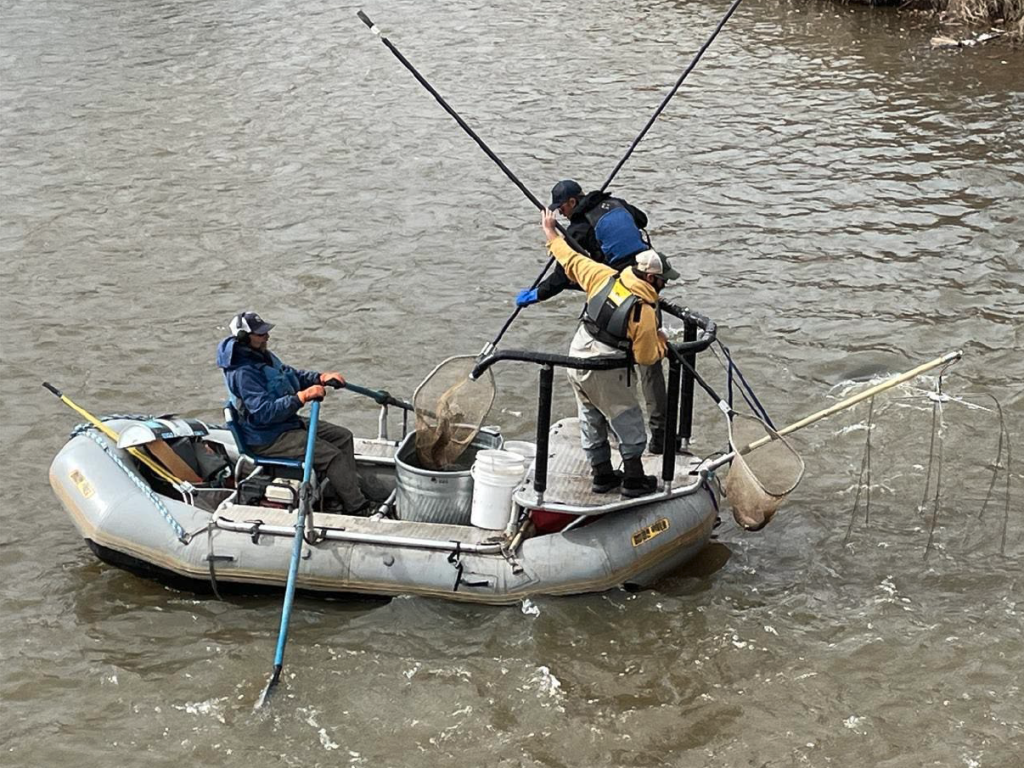
These anglers have also raised concern that the nonprofit’s proposed management plan for the Lower Blue River hasn’t taken into consideration impacts Blue Valley Ranch has had on the river, including by stocking and feeding fish. The section of the river through the ranch’s property is known as “Jurassic Park” due to the size of the rainbow trout there, with anglers reporting fish that weigh upwards of 20 pounds.
Ewert’s conclusion about the potential impacts of fish feeding echo the concerns that anglers have raised about the ranch’s practices.
“Larger rainbow trout, which are supported through supplemental feeding, can displace resident fish and result in higher natural mortality rates within the system,” Ewert said. “Other sources of mortality, such as angler-induced mortality, are expected to be minor compared to natural mortality rates, especially in this stretch, which is managed using catch-and-release regulations.”
However, Blue Valley Ranch fisheries biologist Brien Rose, who is also a member of the Friends of the Lower Blue River’s board of directors, questioned the veracity of the state wildlife agency’s conclusions regarding fish feeding.
“The author’s supplement feeding assertions are theoretical and do not provide a sound basis for the conclusions presented,” Rose said in a statement. “Overall, the survey reinforces that Lower Blue River fish survival is limited by habitat, flow conditions and cumulative angling pressure.”
Colorado Parks and Wildlife survey
The Colorado Parks and Wildlife survey used mark-and-recapture techniques to estimate fish populations during fall 2018, spring 2019, fall 2022 and spring 2023. The work was conducted from a site along Trough Road near the Blue River’s confluence with the Colorado River.
The survey found a “highly dynamic fish population with significant seasonal differences,” Ewert said. During the fall, brown trout made up the vast majority of the fish biomass, as much as 98%. In the spring, brown trout populations declined with rainbow trout making up closer to about 45% of the biomass, according to the survey.
Ewert suggested the findings mean that brown trout use this section of the river for spawning in the fall, while a smaller amount of rainbow trout use this stretch to spawn in the spring. Brown trout spawn in the fall months, while rainbow trout spawn in the spring months.
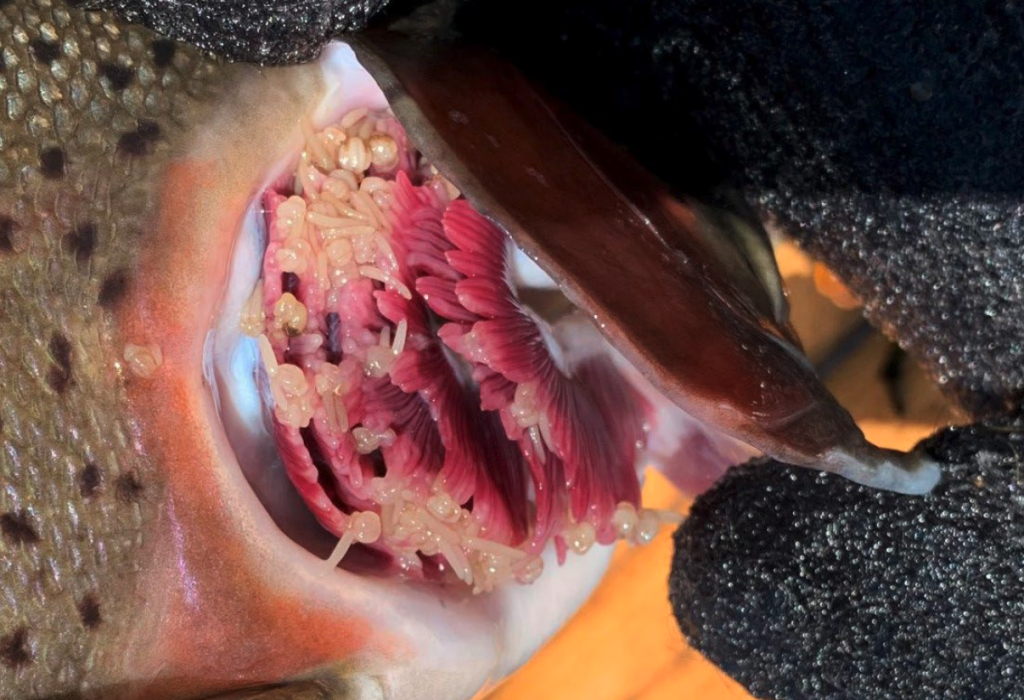
Many of the fish handled in the surveys had “large amounts of fish feed in their stomachs” and all of the rainbow trout captured “were heavily infected with gill lice parasites,” Ewert said, with larger fish tending to carry heavier infections. None of the brown trout were infected by the gill lice and did not appear to be susceptible to the parasite, he said.
Still, “the apparent association between fed fish and heavy gill lice infestation on this reach is a major concern regarding the health of this fishery as well as the Colorado River,” Ewert wrote. He said the gill lice “are a highly visible indicator of conditions that have the potential to foster and proliferate other parasites or communicable diseases, which may not be as obvious or detectable.”
The survey is the first time that Parks and Wildlife has studied fish populations in this stretch of river, Ewert said.
“The surveys demonstrate that the public gained valuable access to a highly unique river reach that hosts a productive fishery despite some challenges,” Ewert wrote. “CPW plans to continue working with partners to monitor this reach as necessary.”
Blue Valley Ranch response
Blue Valley Ranch helped Parks and Wildlife during the fish survey and has worked closely with the state wildlife agency to invest in the overall health of the river, Rose said. He said the ranch, which is upstream of the location sampled, has never fed fish in the portion of the river where the survey focused.
Rose said Blue Valley Ranch is “very conscientious” about when and whether it provides supplemental food to the river’s fish. Its decisions are based on “ongoing evaluation of fish health, water quality, streamflow, temperature and available natural food,” he said.
“Temporary fish feeding prevents starvation when flows and habitat compression limit natural food production,” Rose said. “In highly managed rivers, short-term food shortages can occur even when long-term habitat potential is strong. Period feeding maintains fish condition until natural productivity rebounds.”
The fish survey backs up the ranch’s assertion that fishery health on the Blue River is declining, Rose said. He said that during the spring survey samples, biomass of trout fell below Gold Medal standards, which Trout Unlimited defines as 60 pounds of fish biomass per acre.
According to the survey, the biomass of brown trout greater than 6 inches was roughly 27 pound per acre in spring 2019 and about 25 pounds per acre in spring 2023, while the biomass of rainbow trout greater than 6 inches was about 15 pounds per acre in spring 2019 and 29 pounds per acre in spring 2023. That would total about 42 pounds per acre in spring 2019 and 54 pounds per acre in spring 2023. During the fall samples, biomass was well above Gold Medal standards, with 99 pounds per acre and 92 pounds per acre of brown trout in fall 2018 and fall 2022, respectively.
“Discounting angling mortality without site-specific data oversimplifies fish loss,” Rose said. “Numerous studies show that low flows, warm water temperatures and high angling pressure — all of which regularly occur on the Lower Blue River — can be significant, even under fly-and-lure-only regulations.”
Noting that “correlation is not causation,” Rose said the fish survey “does not provide quantitative evidence that feeding causes gill lice, disease risk” or impacts the fish populations on the Lower Blue River. He said he’d like to see a more complete analysis that incorporates how highly regulated flows from Green Mountain Reservoir impact fish crowding during low-water periods.
“We disagree with some findings of the author but respect the agency’s intent to protect fisheries and improve their health,” Rose said. “Long-term stewardship of the Blue depends on trust, transparency and collaboration.”



Support Local Journalism
Support Local Journalism
The Sky-Hi News strives to deliver powerful stories that spark emotion and focus on the place we live.
Over the past year, contributions from readers like you helped to fund some of our most important reporting, including coverage of the East Troublesome Fire.
If you value local journalism, consider making a contribution to our newsroom in support of the work we do.