Middle Park graduate aims to grow native plants on ski trails
From Copper Mountain to Arapahoe Basin to Bridger Bowl, ski resorts are incorporating sustainability directly into land and water management on the slopes

Copper Mountain/Courtesy photo
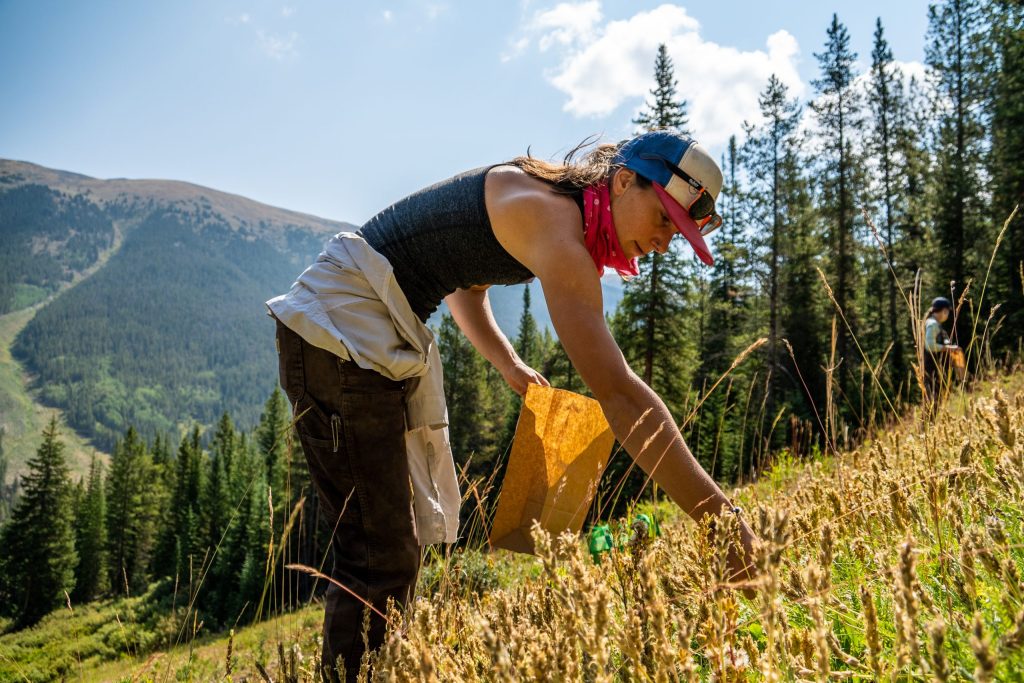
Katherine Riesberg, a graduate of Middle Park High School in Grand County, has been skiing since the age of two.
Riesberg said her love for outdoor recreation is a big part of what led her to pursue a Masters of Science and Ecology at Western Colorado University, where her thesis project led her to conduct research on the ski slopes of Copper Mountain.
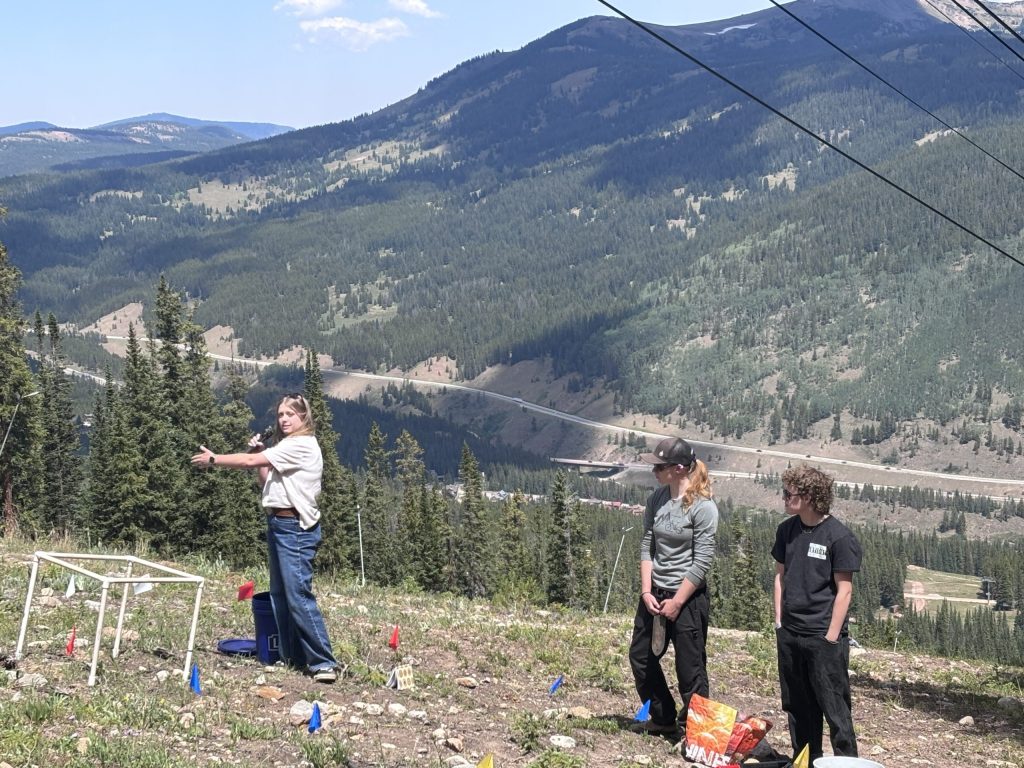
“I was absolutely jazzed when I first heard about this project,” Riesberg told a crowd gathered on the steep, rock slope of the Bittersweet Trail. “I was like, ‘Oh my God, there couldn’t be a better project for me, someone who loves skiing and loves conservation and is a mountain kid and loves plants.'”
Copper Mountain’s 10-year carbon sequestration study, which started in 2022, aims to develop methods to increase the native plant diversity on ski trails, according to a presentation by researchers during the resort’s Ski Conservation Summit on Wednesday, July 15.
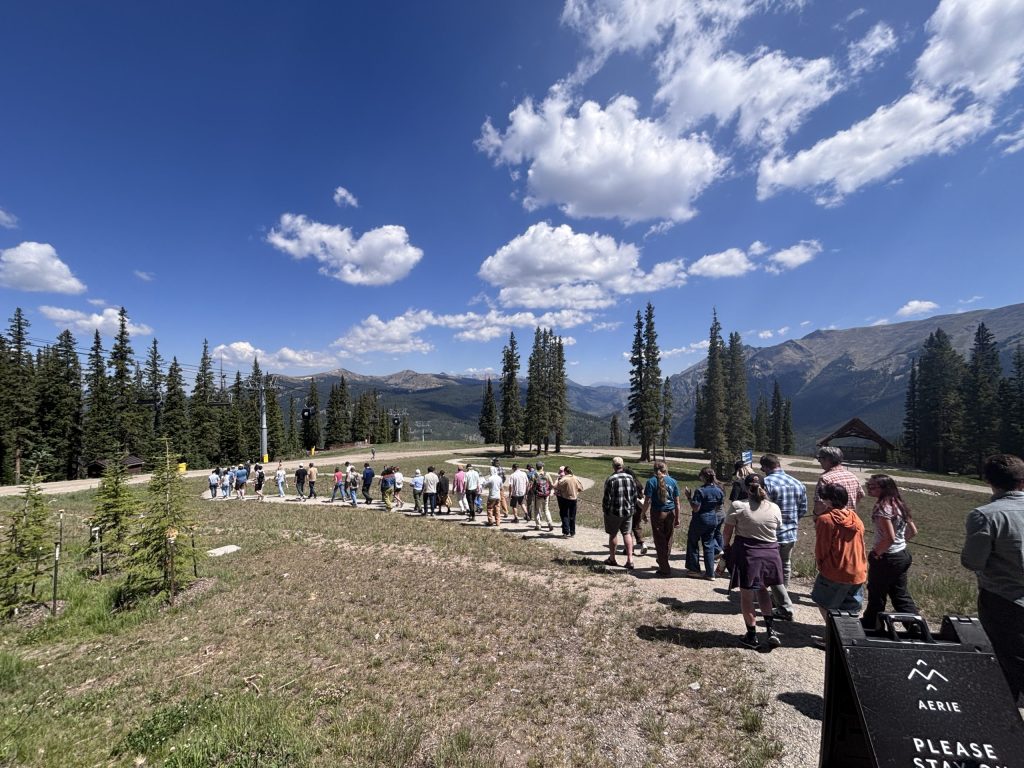
The summit gathered around 90 individuals, including university researchers as well as land managers and professionals from the U.S. Forest Service, the ski industry and local conservation nonprofits. Colorado ski resorts including Eldora Mountain, Arapahoe Basin Ski Area, Steamboat Resort, Winter Park Resort and Sunlight Mountain Resort were represented, as well as major ski companies like Vail Resorts, Alterra Mountain Co. and POWDR.
After Colorado’s record-low snowpack last winter, drought loomed over the summit. At one point, Western Colorado University ecologist and graduate advisor Jennie DeMarco held up a core sample of dirt from the ski slope that was so dry it disintegrated in her hand. She said the carbon sequestration study demonstrates the collaboration that is needed to respond to the impacts of climate change.
“This is one of my favorite studies because it is a great example of what we need right now when we’re thinking about conservation and climate action — and that’s collective action,” DeMarco said. “So, working across agencies, nonprofits, for-profits, federal agencies, academies, institutions and individuals to come up with solutions to better manage our lands to adapt to our changing environments.”
Ski slope soil has been ‘historically disturbed’
Copper Mountain Senior Resort Operations and Sustainability Manager Jeff Grasser described how the carbon sequestration study grew out of a project to collect native seeds from around the resort.
The sixth annual Ski Conservation Summit is also the offspring of the native seed collection project, Glasser said. It blossomed from an effort to share the “success story” of that project and foster a spirit of innovation around land and water conservation within the ski industry and its partners, he said. Both the study and the summit are funded through Copper’s Play Forever campaign.
“There are people in this room that probably do the same job that you do that you do not know yet,” Grasser said. “There are challenges that your peers have faced that you currently face, and vice versa. This is the opportunity to not only find a working relationship — another big thing is inspiring innovation.”
Early in the summit, Ryan Sparhawk — a biological science technician, or soil scientist, with the U.S. Forest Service — described how when ski resorts historically cut runs into the mountain, it removed the nutrient-rich topsoil.
“A lot of the soils we work with have been historically disturbed, topsoil has been all graded off, pushed off — and a lot of cases just pushed into the nearest creek — and it’s gone,” Sparhawk said.
He said a lot of his work focuses on revegetation of ski slopes.
“I won’t call it restoration,” Sparhawk said. “I’m not looking for pristine natural habitat, I’m looking for surface stabilization, watershed protection, runoff and erosion control for my work.”
‘Ecosystem services’ on the slopes
As long as humans keep recreating at ski resorts, it’ll never be possible to restore them to their original natural state, Riesberg said in an interview. But she said ecologists can try to maximize the “ecosystem services” — or the direct and indirect contributions ecosystems make to human well-being and survival — that these places provide.
Ecosystem services can include anything from tangible products, like timber from forests; to regulating processes, like wetlands filtering water; or even just things like natural beauty that improves the experience of recreating in the outdoors.
Amid climate change, one ecosystem service that scientists have focused on is known as carbon sequestration, or the process of using plants to help reduce the amount of carbon dioxide in the atmosphere. Carbon dioxide is one of the primary pollutants released by burning fossil fuels, which scientists say is filling our atmosphere with heat-trapping gasses and warming the climate on a global scale.
Plants absorb carbon dioxide from the atmosphere through photosynthesis, and that carbon can be locked into the soil when plants die and decompose into a nutrient-rich topsoil, according to the Western Colorado University researchers. The Copper Mountain carbon sequestration study will compare how three different treatments affect native plant growth on the ski slopes.
“Most of the carbon is below ground in the soil,” DeMarco said. “There is a huge pool of carbon in these ski slopes.”
On five ski trails at various elevations across the Copper Mountain, the researchers have staked out four equally sized plots. One plot receives no treatment and serves as a control, DeMarco said. Another plot receives a scattering of native seeds; the next, a scattering of native seeds plus compost; and the final plot receives native seeds, compost and biochar, she said. Biochar is a carbon-rich form of charcoal that can benefit soils.
The researchers monitor the plots over time, since the native plants and wildflowers can take several years to grow, gathering data on the number of native plants, the soil moisture, the estimated carbon in the soil and more.
DeMarco said the study was intentionally designed to be low-cost and easy to replicate, so other ski resorts could do similar work on their own slopes.
“Depending on what we find, we can use that to inform future management on ski slopes,” she said.
Ski areas sharing ideas
It’s not just in Colorado that ski resorts, the U.S. Forest Service and researchers are collaborating to study how to maximize the ecosystem services of ski slopes.
One team that presented at the summit included representatives from Bridger Bowl Ski Area and researchers from Montana State University, who are studying the use of wetlands to treat thousands of gallons of wastewater each day.
Other presentations included a talk by Monarch Ski Area employees about how they completed an 377-acre expansion into No Name Basin with culture and environment impacts in mind; an overview of A-Basin’s Wrangler Stream Restoration Project; and a discussion by national nonprofit The Nature Conservancy on nature-based solutions. The question and answer sessions were often lively, with questions that delved into the technical topics at hand.
Helena Robinowitz, a sustainability specialist at A-Basin who has attended the Ski Conservation Summit for the past three years, said that the collaboration has inspired projects at other ski resorts.
Robinowitz said that Copper’s native seed collection project inspired A-Basin to start a “community-oriented” wetland restoration project. A-Basin worked on that project with the Friends of the Dillon Ranger District, the same nonprofit that works with Copper to collect seeds, she said.
Ultimately, nature and the outdoors is an important part of what draws people to visit ski resorts, Robinowitz said. So it’s only natural that ski areas incorporate sustainability and environmental stewardship into their brand, she said.
“We can offer you such amazing snow and terrain because of our stewardship work,” Robinowitz said. “The mountain goats everyone loves are here because of our biodiverse terrain. Our moose are here because we restore our wetlands. Everything is circular.”






Support Local Journalism
Support Local Journalism
The Sky-Hi News strives to deliver powerful stories that spark emotion and focus on the place we live.
Over the past year, contributions from readers like you helped to fund some of our most important reporting, including coverage of the East Troublesome Fire.
If you value local journalism, consider making a contribution to our newsroom in support of the work we do.