Columbian sharp-tailed grouse find new home in Grand County as 25 years of restoration work continues
While they faced near eradication from the West, the species have maintained a stronghold in Moffat, Rio Blanco and Routt counties that is now serving as the foundation for new populations in Colorado

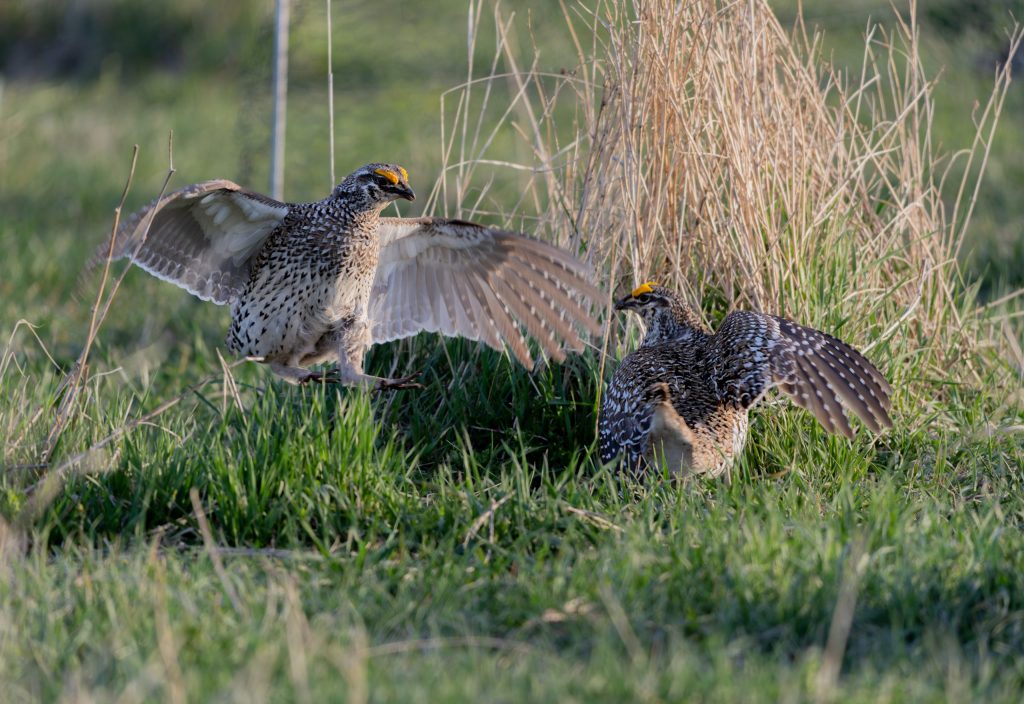
R. Gonzales/Colorado Parks and Wildlife
Large populations of Columbian sharp-tailed grouse used to roam across 22 counties on Colorado’s Western Slope until the mid-1980s when, owing to a variety of factors, the birds disappeared from all but one corner of the state.
This spring, Colorado Parks and Wildlife biologists captured 26 Columbian sharp-tailed grouse from Moffat County and released them into their new homes in Grand County.
The effort is a continuation of over 25 years of conservation work from the state wildlife agency to re-establish the species across its native habitat on the Western Slope, and an effort that has seen some of the most successful restoration of the birds in the nation.
“It’s a cool part of the native fauna of Colorado that we’re trying to keep going,” said Brian Holmes, Colorado Parks and Wildlife’s senior conservation biologist on the Western Slope.
A brief history of the Columbian sharp-tailed grouse in Colorado
Columbian sharp-tailed grouse were recorded by Lewis and Clark, who saw the birds in the sagebrush and bunchgrass plains of the Columbia River, according to Parks and Wildlife’s 2001 conservation plan for the species.
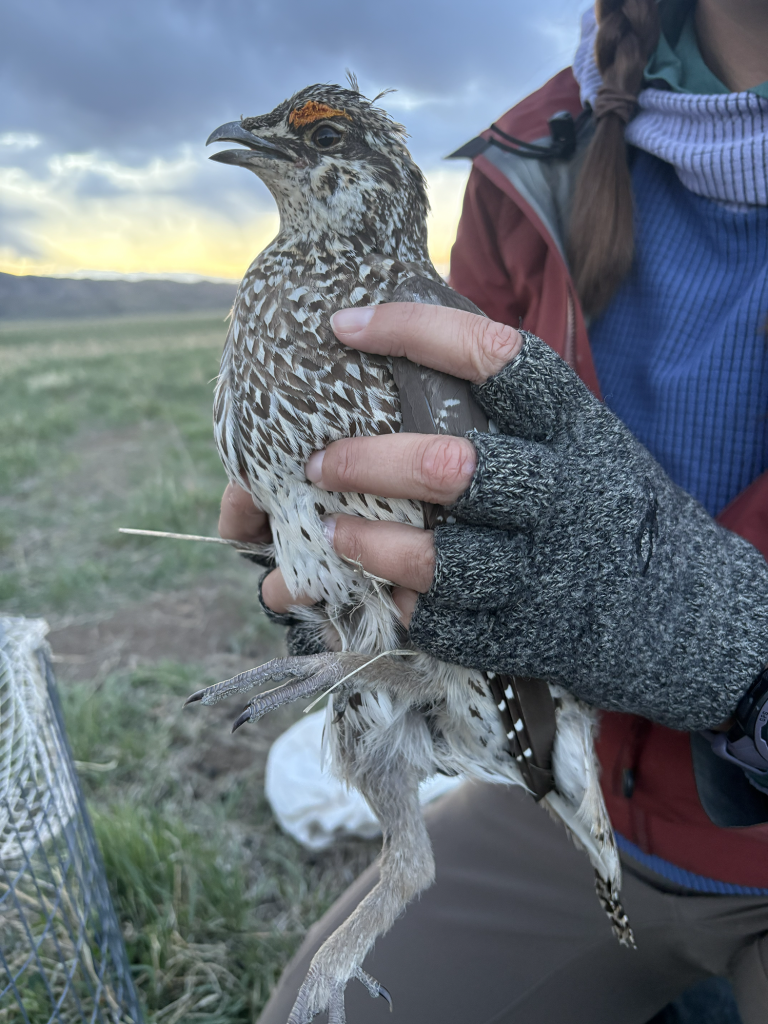
The birds are marked by a distinct, black V-sape mark on their breast feathers and what Parks and Wildlife describes as a “frosty appearance due to white spotting on the body and wing feathers.” They also have orange eye combs and the males have a spot of bright purple on their necks to attract mates.
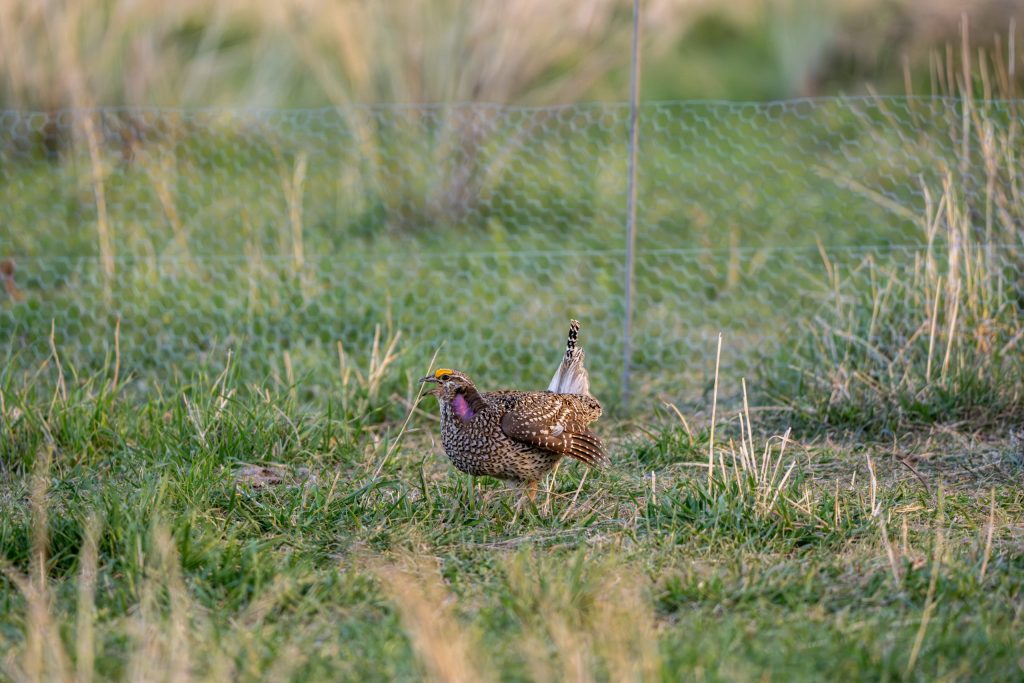
“They don’t really spend a lot of time together throughout the year,” Holmes said. “But they all get together on these dancing grounds in the spring, and late March to mid-May, and get together. The males dance, attract females, breed with females and then the females leave this spot on the earth and go find an appropriate place to have their chicks and raise them up.”
The behavior, Holmes added, is the bird equivalent to what elk do in the fall when they gather, bugle, spar and reproduce: “It’s a group effort to reproduce and fight each other.”
These dancing or breeding grounds are also called leks. For the sharp-tailed grouse, these leks can include anywhere from two to three males vying for attention up to 50 or 60 males, he added.
The Columbian sharp-tailed grouse belong to a group of ground-feeding, chicken-like birds under the name Galliformes. It includes birds like turkeys, pheasant, partridge as well as grouse and ptarmigans. Parks and Wildlife’s plan reports that the Columbian sharp-tailed grouse were once considered the most abundant bird of this family in the intermountain region.
Today, the species occupies less than 10% of its former range with the plan point to a number of potential factors: loss and degradation of habitats due to conversion of native rangelands to croplands, excessive grazing by livestock, herbicide treatments, fire suppression, invasion of non-native plants, removal of trees and shrubs in riparian areas, invasion of conifers and urban development.
In Colorado, the Columbian sharp-tailed grouse saw their habitat shrink from 22 Western Slope counties to habitat in Routt, Moffat and Rio Blanco counties. Despite this decline, the species survival in this pocket of Colorado makes it home to one of three existing populations in the West, Holmes said. The other two exist in southeast Idaho into northern Utah and in British Columbia.
“Colorado represents the bulk of one of these three large populations that still remain in the West, so we’re kind of a big deal when it comes to Colombian Sharp tailed grouse throughout the West,” he added. “We represent maybe a third of that subspecies distribution overall.”
Holmes said it’s likely there are more than 10,000 Columbian sharp-tailed grouse on the Western Slope.
Rebuilding Columbian sharp-tailed grouse populations in Colorado
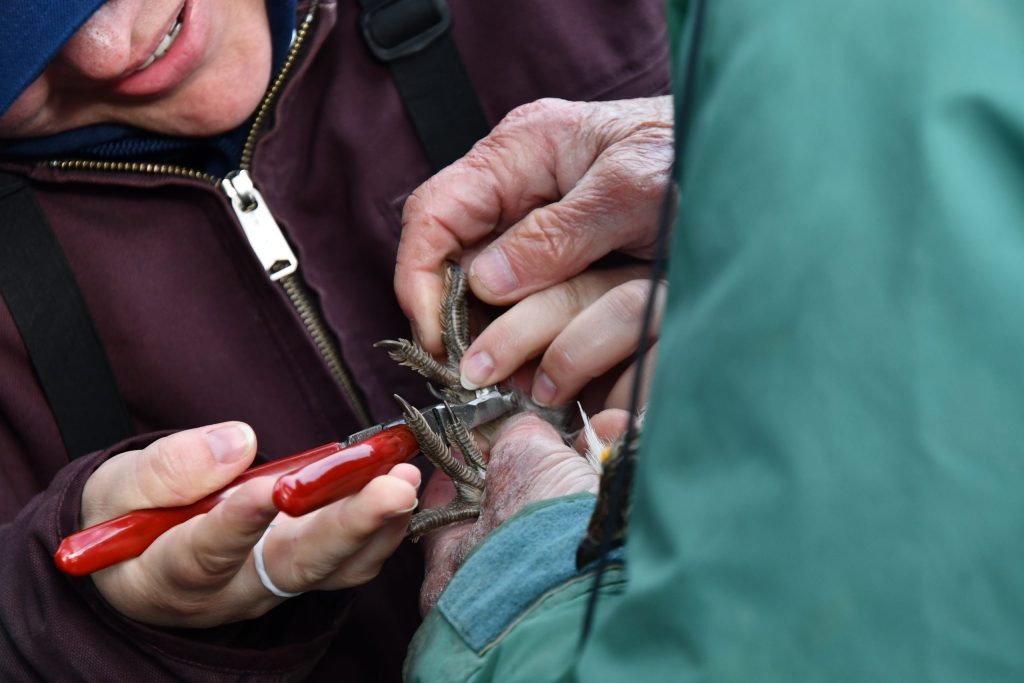
This three-county population in the northwest has also served as the foundation for Colorado’s restoration work, forming the initial numbers for three additional populations as Parks and Wildlife attempts to reestablish them in their historic range. Over the last 25-30 years, the state wildlife agency has translocated birds from Moffat, Routt and Rio Blanco counties to Eagle County, Grand County and a site in southwest Colorado in the Dove Creek area.
While the Dove Creek population has seen some population declines in recent years owing to drought, conversion of suitable habitat to more agricultural land, Holmes said the Eagle and Grand County translocations have been successful.
“Just because we put them there and they live, it’s kind of unimportant,” Holmes said. “What’s important is that they establish, they survive and they set up these breeding grounds, these leks, where they go and they make new sharp-tailed grouse and persist on their own. That’s our measure of success.”
This year, in Grand County, Parks and Wildlife saw an opportunity to reinvest in the site and build upon the success seen there.
“This Grand County translocation represents one of the, if not the single most, successful Colombian sharp-tailed grouse transplant that’s ever occurred in Western North America,” Holmes said. “We know that it can work and that it is working, so that’s why we chose this site, to augment that.”
He added that while other states have tried to reestablish populations of the sharp-tailed populations in former habitats, many have failed.
“What that means is not that we do anything better than other people, it means that we still have a large amount, or at least a sufficient amount, of high quality habitat,” Holmes said.
While habitat loss and degradation could have led to the species initial decline, the land in Grand County represents “really, intact, quality habitat,” Holmes said.
“In Grand County, we have high elevation, productive sagebrush, range of plans, grasslands, appropriate winter habitat, which is riparian areas, mixed mountain shrub communities, aspen pockets — that quantity and quality of habitat is still present,” he said, noting that it does beg the question, “Why did they leave in the first place?”
“We have no idea what the answer to that question is … we don’t know, but we’re gonna try to get them back,” he said.
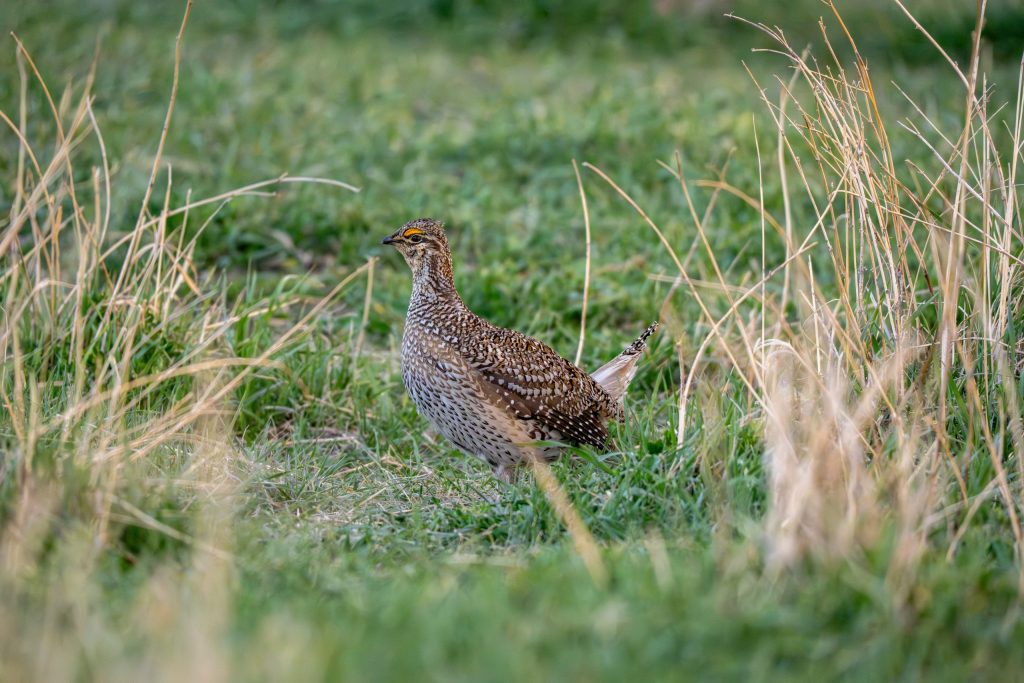
In April, this led Parks and Wildlife to relocate 26 Columbian sharp-tailed grouse — 20 hens and 6 males — to the county. The males were released in an area currently unoccupied by the species south of Hot Sulphur Springs with the goal that they will establish themselves and create a breeding site there. The females were released within an established population in the Blue River Valley in an effort to increase the genetic diversity there.
“The reason we chose to do something this spring is because while (the Grand County population) has persisted — which is good, it’s a sign of success — it still remains fairly small, and we’re trying to augment that to both demographically and genetically,” Holmes said.
If the relocation proves to be a success, Holmes said the agency would potentially move more birds to Grand County in 2027. Funds to monitor the restoration’s success comes from a 2024 Senate Bill, which created a production fee for clean transit from oil and gas producers in Colorado.
“This was a labor intensive effort, requiring 10-12 staff per day over the course of a week,” said Laura Clellan, the director of Colorado Parks and Wildlife, at the agency’s May 6 commission meeting. “This was also a truly interdisciplinary project staff from multiple CPW branches, including terrestrial, wildlife health, habitat and fuel services. We also want to acknowledge and thank the private landowners, who provide access and partnership to make this a success.”


Support Local Journalism
Support Local Journalism
The Sky-Hi News strives to deliver powerful stories that spark emotion and focus on the place we live.
Over the past year, contributions from readers like you helped to fund some of our most important reporting, including coverage of the East Troublesome Fire.
If you value local journalism, consider making a contribution to our newsroom in support of the work we do.