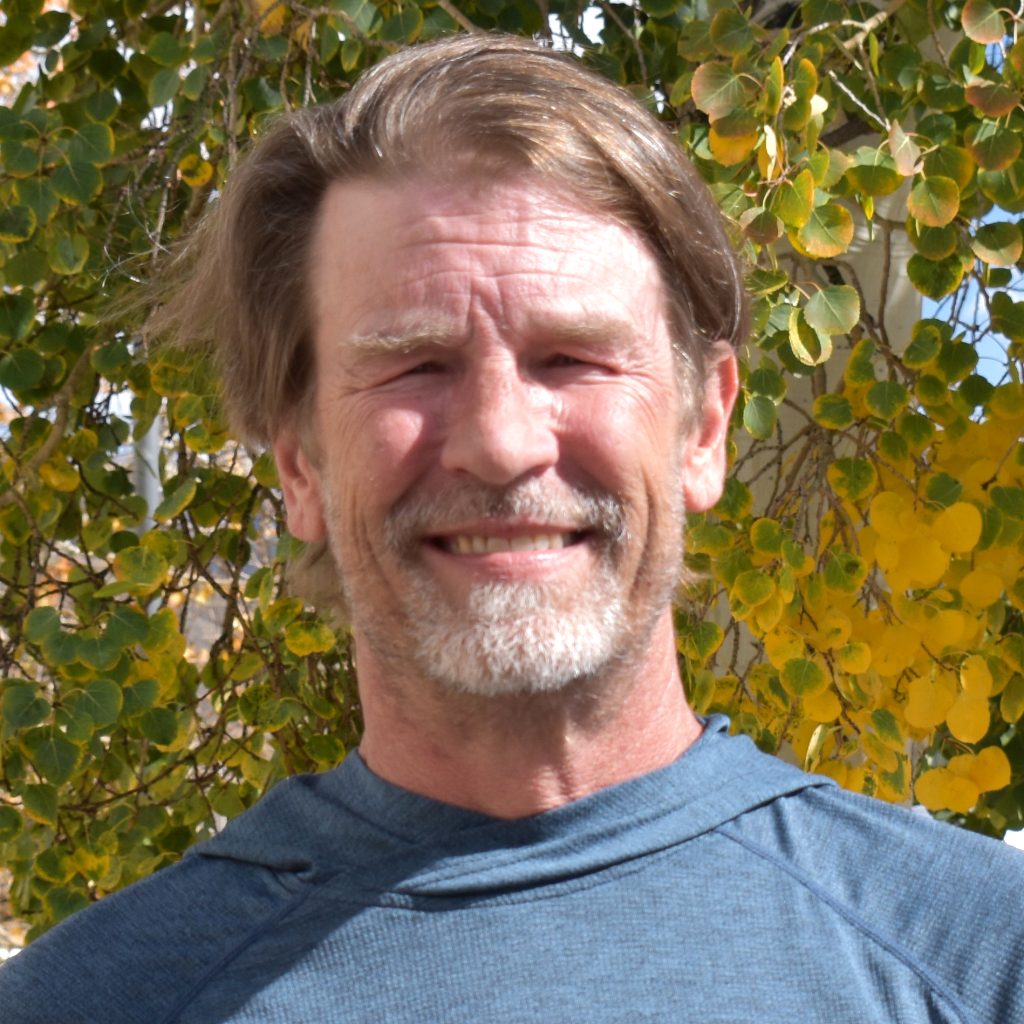
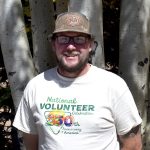
Q&A: Say hello to Adam Cwiklin, running for Fraser trustee
For Sky-Hi News
To learn how we produced the 2026 town election Q&A, read here:
Resident of Colorado for 33 years. Resident of Fraser for 33 years.
Q: In your opinion, what are the three most important issues facing Fraser over the next four years, and what specifically would you like the Board of Trustees to do about them?
I think the three most important issues are having Fraser recognized as a regional player. With that goes housing: affordable, workforce, attainable housing. We need to be careful about our budget and priorities.
In general, Fraser’s priorities and budget allocations are a concern. We’ve been in need of a public works facility for 15 or 20 years, and we are proceeding with child care and housing, things I see as secondary or tertiary responsibilities of a town. Public works is our primary responsibility. Even this year, I’m hearing we’re not going to move forward with that next year because of the budget, but we are moving forward with these secondary things. I regularly call out our priorities and where we’re spending our money at meetings.
We have four or five major things going on, and in my opinion, the one getting dropped is our primary responsibility: taking care of our assets. We own our roads and trails. Infrastructure is what public works takes care of.
Q: What is one area where you believe the town should be spending more money, and one area where you believe spending should be more carefully scrutinized?
I’m more of a limited-government person. I don’t know that we should be spending more. I think we’re overtaxed. I’m concerned about me and my longevity here. My escrow is going up faster than my income, and that leaves out fuel, food and everything else.
All spending should be scrutinized, and I think we do a fairly good job at that. We have some healthy discussions. I like dedicated funding mechanisms, so our income stream covers it. We do have that 1% for the buses, but it’s not sufficient. How do you go about that?
Ironically, I’ve never thought of myself as the conservative one, but I’ve been identified on the board as fiscally conservative. That comes from being a paycheck person. I have to budget my life. I’m not buying a $5 million house at the top of the hill. My situation and decision-making process are a little different.
I would go back to question one. The public works facility should be a priority. We keep taking on projects that are forever costs, not one-time costs. I see this being put off for a good long time because housing is going to have annual financial costs. Child care is going to be an annual cost. One-time things like a public works facility get pushed by an initial cost, and then there are ongoing costs for those programs.
The public works facility specifically. It’s that aluminum building behind town hall. I’ve seen the guys eat their lunch between the trucks, in the wintertime, too. I was employed there for 10 years. It’s a tough situation for those guys. They make do and don’t complain, but the town has been talking about it for 20 years, and we’re pushing it again because of child care and housing.
I would put child care and housing lower on the list. It comes down to priorities. We’re pushing forward on things that should be secondary or tertiary. I don’t mean to knock them. They’re valid causes, but in general, I don’t see those as government responsibilities. We’re in a special circumstance up here, and we’ve allowed it to get so out of whack.
Doing child care scares me. What if we have a bad tax year? Is the town laying off teachers? I don’t want that responsibility. I didn’t sign up for the school board; I signed up for the town. I do believe teachers are underpaid. I’m a civil servant, a proponent of the civil servant and the worker. I’m a grassroots person.
We need to have a discussion about our primary responsibilities. Unfortunately, we’re almost too late for that because we’re into child care and housing, so we need those things to settle down. We’re also building a downtown area. You’ve seen our sidewalk and street. We have all these things going on, and they’re all in competition with each other. Not that any one isn’t worthy of its own value.
Q: How should the town balance the needs of year-round residents, local businesses, second-home owners and visitors when those interests conflict?
It’s different levels of need. I don’t know that that’s conflict; I think it’s opportunity. The bus system services all those groups. When I’m making or discussing policies, I’m not looking to any one sector. Hopefully, our policies are good for all. It varies to some degree in each group, but if we’re doing our job correctly, it should be a win-win. There should be no clear loser.
That vacationer might buy a house here. They might be retired and be on the town board before you know it. We need to balance needs and look at the essential services we provide.
I think the comprehensive plan accomplishes that. You do a three-mile comprehensive plan for your strategies, growth and those things. That should be accommodated within it, and everybody has the opportunity to give their input. Obviously, things ebb and flow through time.
I don’t think one population should be prioritized over another. I am cognizant that we’re in a transitioning community. When I read ‘year-round resident,’ I took it as old-time local, but that just means year-round. It doesn’t mean here for three years, 10 years or 30 years.
We have a focus on local businesses. The words ‘economic development’ are magic, the holy words you can’t question. Everything is pushed as economic development. I look at it as more of an economic obligation. Is it creating jobs that aren’t on the AMI table? That’s economic development. The hospital is economic development. But when you pay somebody to build a building and then have to pay for their employees, too, it’s an economic drag. It’s cash flow, but not necessarily growth.
A lot of the programs we push as economic development, like child care and affordable housing, aren’t necessarily a positive to the economy. They allow workers to be here. The worker is benefiting. Economic development brings in high-paying jobs, those people spend money, and there’s an economic multiplier. This is obligation and accommodation. They’re valid causes and needed, and we’re in a special situation up here where I keep having to soften what I came to the table with.
I think it’s stereotyping to say each group has a particular need. With the bus system, a lot of second homeowners wanted their renters to have that availability. It’s individual within each sector. If you’re putting in the time and thought, hopefully everybody wins to some degree.
One of our biggest challenges is getting resident or guest engagement. The response on the Emerald line came because somebody sent out emails and a form letter, so we got a lot of form emails and a lot of people showed up. That was one of our more heavily attended meetings, which was great to see. We want to encourage more interaction. It would be great if we could find solutions for everybody.
Q: What should the town be doing to support locally owned businesses and strengthen the year-round economy?
I think we need to establish ourselves as the regional player that we are. We each have a role, and Fraser’s role seems to be more toward the workforce, housing and providing services. We need to be included in these bigger plans.
We have economic development incentives and a grant program that helps individual businesses achieve compliance with code, such as trash and signs. This is done to improve the neighborhood, and that should attract more guests and improve their business. In the last 10 years, we’ve started incentivizing business development, meaning the construction as well as the business that inhabits the structure. We’re putting a lot of funds into it.
Economic development and a year-round economy are a central theme of what we do. We’ve created a [Downtown Development Authority]. Most of our efforts are under the guise of economic development. We need more feedback loops to see what’s working so we can adjust what we’re doing to make it more effective.
Bringing employees into town or workforce housing into the downtown area: All these things are designed so we can grow and do more year-round. The pitch given to us about local housing is that employees will be there when businesses are slower. Residents want to go out and enjoy their time, and they actually have more time in the off-season. These are holistic approaches, and I think it’ll take some time, but those are the goals: economic development and a year-round economy.
Q: In a situation where trustees try to make a decision that a vocal group of residents strongly oppose, how would you approach that situation?
With transparency. If you approach the problem in a transparent and reasonable manner and display your options, things are defensible. They may not agree with you, but a good example is the bus system and the Emerald line specifically. We’ve had some service changes there. We had a public outcry, and some options were presented.
I don’t think the public was necessarily pleased with what we decided in the end. But when it’s out in the open, it’s transparent, and you’re making decisions based on facts and budget, then it’s easily defensible.
We were looking for more cost savings because, to me, this is a budget issue. But the alternatives provided were drastic to achieve any cost savings. I think the option chosen was close to the full cost of full service. The transit system was really pushing microtransit, and I do see that as the future.
To me, the solution was to basically do a pilot study. Let’s get microtransit started. If we have both in place, we have flexibility to go one way or the other, to modify. We’re not locked into one certain direction. It does seem like microtransit is the future, and they are moving in that direction. So why not try it and improve on it?
Q: At the end of your term, what specific accomplishments would make you say your time as a trustee was successful?
I think the Fraser Valley is entering an incredible period of growth, coming out of an incredible period of growth. The numbers I’m hearing could be four times the size. With that, we need sustainable policies in place before this stuff hits. Resources are limited to what we’re allowed to have after diversions, and it is our job to steward those.
For me, it is allowing this growth but making sure it’s done in an environmentally sensitive manner that protects our water supplies, our rivers, which are really the same, and our outside environment. My goal is sustainable policies so we minimize our detriment to the environment as we grow.
Q: Fraser says it has made workforce housing and affordable housing as one of its top priorities. What specific housing strategy would you support, and how would you measure whether the town’s housing investments are actually helping local workers?
I think the question is pointing us in one direction. You’re asking for a single silver bullet. There is no silver bullet. It takes a multitude of approaches to deal with affordable housing.
The good question is: Is it really affordable? At this point, the project is nearing CO on the first building. I think we should be discussing our feedback loops, how we get that kind of information and feedback so we can adjust if this isn’t. I don’t know that that’s in place yet.
I haven’t been down that road in my mind yet, but you just created a new trail for me to follow. I think that’s important. We need to know that our policies are effective in accomplishing what we intended them to do. If they aren’t, we need to be able to adjust. I think those are very good questions.
Q: The town has identified creating a more vibrant, walkable downtown as a priority. What would you specifically like to see change in downtown Fraser over the next four years?
I think the biggest thing we can do to improve the walkability of Fraser is complete our sidewalk system. Some streets have them; some streets don’t. I know we’ve added some. We added one in front of the Holiday Inn, where we used to see people walking their luggage down the street. Across from the train station is the same kind of opportunity.
We need connected sidewalks. They can’t be intermittent. They can’t be a dashed line. I walk everywhere: the post office, the grocery store, Murdoch’s, the coffee shop, the library.
For me, a walkable community is a community. That’s when people interact. They run into each other on a sunny day. It’s not a work situation. I think a walkable community is imperative to having a social community.
Q: Fraser has been exploring a transition to home rule, which could give the town greater authority over local governance and policy. What is your opinion on home rule?
When I first came to the board, I was one of the skeptical ones. I’m leaning toward home rule at this point. I’ve done additional research on the liberties it gives the town, specifically in water and natural resource conservation, which is where my skills and knowledge are. As I research it more and more, I believe I’m becoming more and more in favor of it.
I do think this past fall was a little rushed. We had a transition of the town manager and some other things that also made it poor timing. It’s a big topic that people need to understand and probably shouldn’t be rushed. When it’s rushed, people get reactive. Education is the key on that one. I think it’s the right move to make in good time.
Q: What should Fraser’s role be in regional transit, and how much should the town be willing to invest in improving alternatives to private vehicles?
I think public transportation is essential. We only have so much land. As we discussed earlier, I believe the Fraser Valley is looking at triple or more. It can’t accommodate that many vehicles. That’s where some of my earlier decisions on microtransit came in. We need to start looking at the different models, what works and what doesn’t, and be engaged.
We are a regional player. The further out you get from the ski area itself, the more employees. All of our communities, whether they’re guests, visitors, residents or employees, need that bus transit system or some kind of public transit to travel around.
There’s just not the parking. This is a constraint we’re going to start seeing as we grow. There’s not land, and parking takes a lot of land. Parking structures are incredibly expensive. I’m hearing $150,000 a parking spot. How do we do this? I think the answer is public transportation.
We have the bus system coming up. Amtrak is going to start doing four times a day to and from here next fall, I believe. We’re trying to get people here without cars. We need to be able to move them around without cars as well.
We need to be at the table if RTAs, regional transit authorities, are being discussed. There’s one going in place for the gondola and other improvements at the Winter Park ski area. There’s discussion of another one happening in Fraser. I think we would be remiss not to be present.



Support Local Journalism
Support Local Journalism
The Sky-Hi News strives to deliver powerful stories that spark emotion and focus on the place we live.
Over the past year, contributions from readers like you helped to fund some of our most important reporting, including coverage of the East Troublesome Fire.
If you value local journalism, consider making a contribution to our newsroom in support of the work we do.