Colorado lawmakers plan bill to centralize higher ed, workforce opportunities under new state department
A report found that Coloradans face an ‘overwhelming set of options’ for degrees and career opportunities. State leaders say a one-stop-shop agency could fix that.

Robert Tann Follow
Robert Tann/Post Independent
Colorado lawmakers are eyeing legislation next year that could lead to the formation of the state’s newest agency: a one-stop-shop for higher education and workforce resources, including training and apprenticeship programs.
The plan stems from an executive order signed earlier this year by Gov. Jared Polis commissioning a study on Colorado’s postsecondary education, training and employment opportunities.
The study found that Coloradans must navigate an “overwhelming set of options” for degrees and career opportunities, including 472 schools, more than 300 apprenticeship programs, over 4,500 training programs and nearly 10,000 degree options. Additionally, more than 20 divisions and offices exist across seven state entities, offering more than 110 programs related to education and career readiness.
Saying that the current system can’t keep up with today’s needs, Polis called for a new agency that could house and coordinate various programs in a bid to make it easier for Coloradans to enter the workforce pipeline, in what officials are referring to as the Department of Higher Education and Workforce Development.
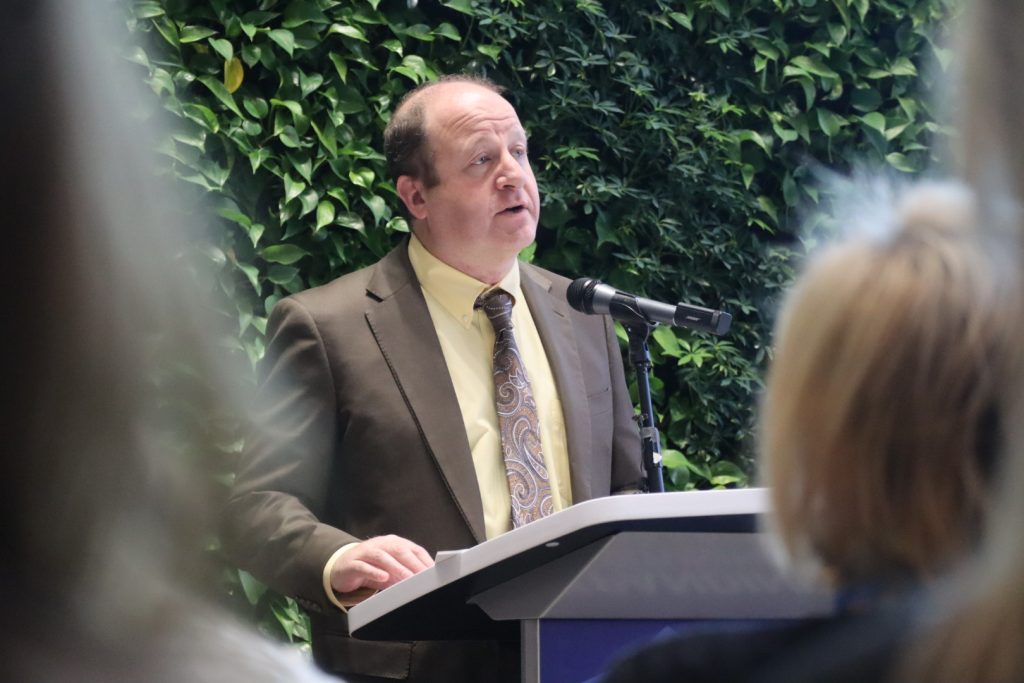
“If I can’t even name all the state agencies that are involved or the programs, how can a job seeker possibly navigate or find what they’re looking for,” Polis said on Wednesday during a press event in Denver announcing the plan.
The new department’s role could include helping Coloradans and employers compare apprenticeships, certificates, training programs and college degrees. It could also provide data on costs, completion rates and earning outcomes while helping the state respond to shifting economic and federal environments, such as changes to loan eligibility.
“This will help provide one front door, instead of having multiple agencies, clear pathways connecting education with careers — no wrong paths or dead-ends,” Polis said.
Lawmakers said they plan to introduce a bill during the next legislative session, which begins mid-January.
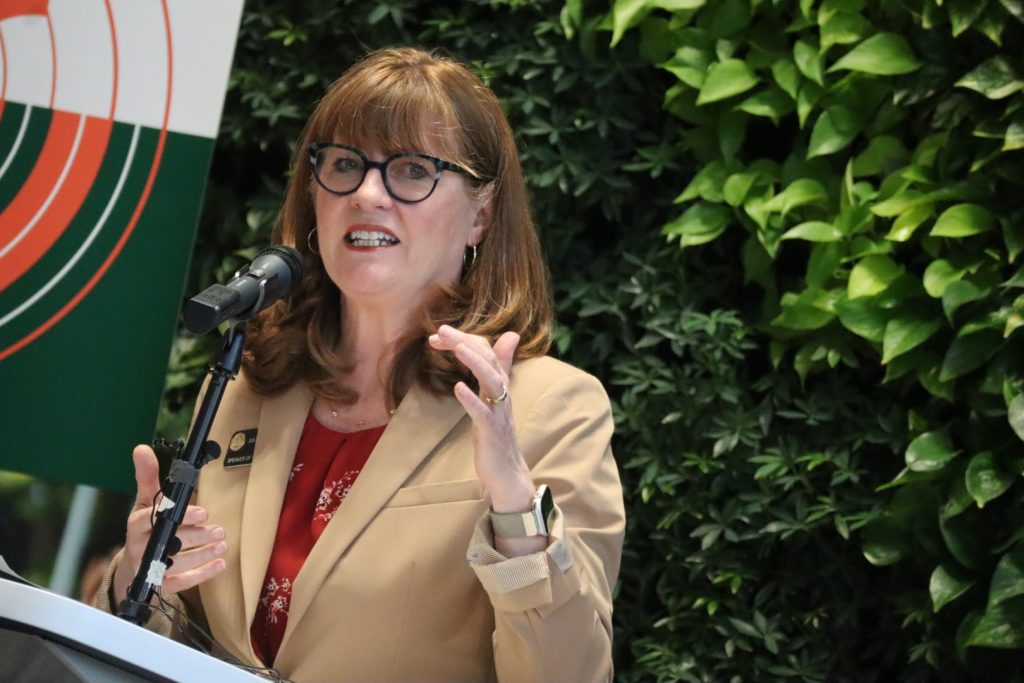
Colorado House Speaker Julie McCluskie, a Dillon Democrat who has championed past education legislation, is among those spearheading the effort.
McCluskie said the push for a unified state agency builds on work the legislature has done to expand postsecondary opportunities, including doling out nearly $90 million in Opportunity Now job training grants over the past three years, and making community college free for over 10,000 health care workers.
“It will be up to the legislature to bring forward, now, the concrete next steps for that roadmap,” McCluskie said.
McCluskie said she hopes to have draft legislation “in the month ahead” after gathering stakeholder input from policy experts and department heads.
“The initial piece of legislation that we are focused on now is, ‘How do we build this department,'” McCluskie said. “Who needs to be at the table to help design that? What are the steps that we need to take in order to actually figure out how we move the parts and pieces.”
Jason Wardrip, business manager for the Colorado Building and Construction Trades Council, which represents local unions across the state, said, “I look forward to this conversation. I think it’s going to be extremely difficult.”
“We’re in to make sure we’re lifting up every single postsecondary educated person, no matter which side they choose to be in, whether it’s higher ed, apprenticeship or rather it’s just going to the military,” Wardrip said.
Funding for the new agency could also come into question.
The upcoming legislative session will again be clouded by a tight budget environment, with lawmakers needing to cut roughly $850 million in spending for the next fiscal year. Lawmakers this year already had to fill a $1.2 billion budget deficit in the spring. They returned for a special session in August to close a $783 million gap caused by federal tax cuts in the One Big Beautiful Bill Act.
Outside of the federal tax changes, the ongoing budget deficits are due primarily to state spending outpacing the voter-approved cap on government revenue established under the Taxpayer’s Bill of Rights.
Polis said the plans for a new higher education and workforce agency are “designed to be budget neutral,” though it will be up to the legislature to decide funding for the agency.
“It’s more about structure,” Polis said, adding that he hopes there is some “modest” funding for administration.



Support Local Journalism
Support Local Journalism
The Sky-Hi News strives to deliver powerful stories that spark emotion and focus on the place we live.
Over the past year, contributions from readers like you helped to fund some of our most important reporting, including coverage of the East Troublesome Fire.
If you value local journalism, consider making a contribution to our newsroom in support of the work we do.