Colorado lawmakers scrutinize strategies to rein in state Medicaid spending
Lawmakers who sit on the powerful Joint Budget Committee voice concern that some proposals could jeopardize coverage and access to care

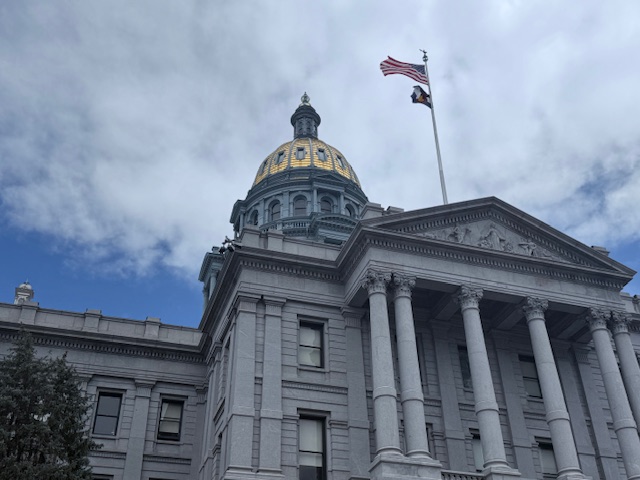
Madison Osberger-Low/The Aspen Times
A bipartisan group of Colorado lawmakers tasked with writing the state’s annual budget voiced concerns on Monday over proposals to curb Medicaid spending during a marathon, multi-hour hearing.
Lawmakers who serve on the legislature’s Joint Budget Committee met at the Capitol to hear from officials with the Colorado Department of Health Care Policy and Financing, which oversees the state’s Medicaid program, on ways the agency plans to address growing costs.
The roughly 8-hour-long discussion also included a presentation from Manatt Health, a consulting firm hired by the state to analyze Colorado’s Medicaid spending and present suggestions for ways to trim its budget.
Manatt’s report found that since fiscal year 2018, spending on the state’s Medicaid program has risen by nearly 60%, representing a roughly 8% increase per year. While Colorado is not an outlier — Medicaid costs are rising for states across the country — it is uniquely challenged by the Taxpayer’s Bill of Rights, or TABOR.
TABOR is a voter-approved amendment to the Colorado Constitution that limits state revenue to the rate of population growth plus inflation. Any excess revenue must be returned to taxpayers.
Colorado’s Medicaid spending, however, is nearly double the revenue growth rate imposed by TABOR, and now accounts for roughly one-third of the state’s total general fund spending.
Mark Ferandino, who leads the governor’s Office of State Planning and Budgeting, told lawmakers that if Medicaid spending is left unchecked, it will “continue to take up more and more of the available general fund in the state’s budget.”
Ferandino asked, “How do we get the growth in Medicaid down to a more sustainable path for the state, understanding that we also want to make sure we’re ensuring coverage, we’re ensuring we’re investing in the right things to reduce costs, and we’re making the cuts in the smart places to actually reduce the growth and bend the cost-curve down?”
‘There will be nobody unscathed’
Manatt’s report outlines several ways state officials could do so. But lawmakers with the Joint Budget Committee appeared skeptical of some of the strategies.
A major driver of the state’s cost increases is long-term care, due in part to Colorado’s status as an aging state. As of 2023, Colorado ranked third among states with the fastest-growing older populations.
Long-term care eats up 45% of the state’s Medicaid claims but only accounts for about 6% of Medicaid patients.
State Sen. Judy Amabile, D-Boulder, said there’s been more focus on making cuts to long-term care, which would be absorbed by a smaller pool of patients. She said spending reductions to other services would allow cuts to be spread out over a larger number of Coloradans and “would be less painful per person.
“I haven’t really seen a lot of interest in looking at that, but I’m interested in looking at that,” Amabile said.
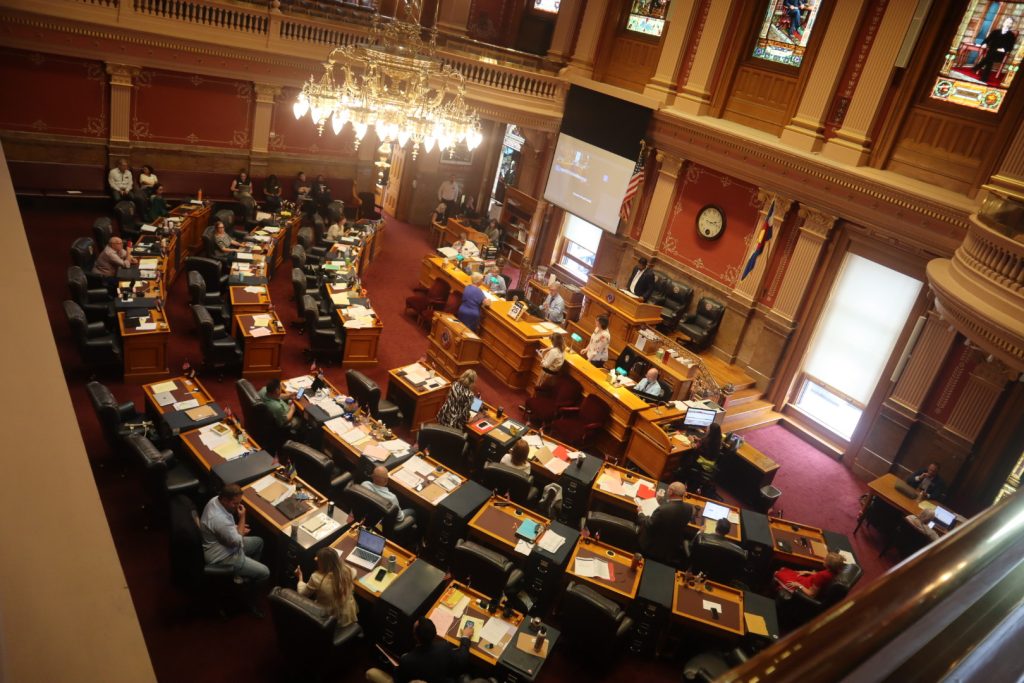
Colorado Department of Health Care Policy and Financing Executive Director Kim Bimestefer said the agency has “spent a lot of time on where to make reductions,” adding that much of the state’s Medicaid population is already set to see impacts from impending federal changes.
Many of those changes come from the “big beautiful bill”, the sweeping domestic policy law passed by congressional Republicans that carries the bulk of President Donald Trump’s second-term agenda.
Changes include a reduction in provider tax rates, which states use to bring in a larger share of federal Medicaid funding. Colorado’s hospitals have warned that once that rate begins to wind down starting in 2027, it will cost them billions of dollars in lost federal revenue over the coming years.
Bimestefer said those changes will jeopardize coverage for the state’s Medicaid expansion population, which represents hundreds of thousands of low-income Coloradans who receive Medicaid coverage under the Affordable Care Act.
“The pressure on our expansion population will be enormous, and we will continue to have to make extremely difficult decisions for at least the next three years,” she said. “So, there will be nobody unscathed, unfortunately, inside the expansion populations.”
Drivers of growth, proposals to curb spending
Lawmakers also questioned some of the drivers of increased Medicaid costs, with some defending those growth areas as long-overdue investments. That includes behavioral health care, an area where Colorado has historically ranked near the bottom of states providing those services.
State lawmakers in recent years have passed legislation expanding behavioral health coverage and access, including for substance use disorders.
“Perhaps this has grown a lot because we were doing a really terrible job of providing access to services just a few years ago,” Amabile said, “and we made a conscious decision to say, ‘Let’s stop ignoring this entire category of health need and let’s actually do more.'”
Rep. Rick Taggart, R-Grand Junction, said Colorado has been able to expand services largely due to the influx of federal money during the COVID-19 pandemic, when Congress passed trillions of dollars in relief funding for states.
That funding, however, was temporary and has since dried up.
“Did the providers realize that these were more, in some cases, one-time investments to, in fact, encourage things … but that rates weren’t sustainable over a long period of time?” Taggart said. “People don’t realize it was a one-year, two-year investment, and (they) rather viewed it as more ongoing. There’s a real conflict built into that.”
Bimestefer said that while the state should be “proud of these advancements” to expand Medicaid coverage and access, thanks in part to COVID-era federal funding, those initiatives have also increased the state’s costs now that those dollars are no longer available.
Kevin McAvey, a data strategist for Manatt, outlined several proposals for how the state could curb its Medicaid costs. That includes directing more people to outpatient treatment for substance use disorders, rather than inpatient care, which tends to be more expensive.

Other ideas pitched during the hearing include tiered reimbursement rates for certain behavioral health services, rather than flat rates, investing in more mobile care and reinstating prior authorization requirements for certain specialty drugs, such as some HIV medications.
“Colorado would need to be careful, though, when instituting (prior authorization) policies to institute adequate access to drugs in each class to avoid adverse member impacts that could drive up costs in the long-term,” McAvey said.
Lawmakers suggested some of those proposals could lead to less coverage and access.
When it comes to substance use treatments, Amabile said that withdrawal management and residential treatment are different, yet it “feels like we just threw all these things into this bucket” and saying “let’s reduce it.”
Taggart expressed unease with a tiered system for behavioral health that would provide more reimbursement for some services and less for others. Assuming that more intensive services would see more funding, he said he was worried about incentivizing people to seek care only when it becomes more severe, which would also become more expensive to provide.
“I just hope we don’t have reverse engineering going on here,” he said.
Colorado health officials and consultants with Manatt said they plan to engage in more discussions with stakeholders over the coming weeks to fine-tune their proposals.
Lawmakers on the Joint Budget Committee will also need to consider the budget plan presented by Gov. Jared Polis, which would cut the state’s Medicaid budget in the 2026-27 fiscal year by about half of what it’s currently projected to be.
Polis said his budget proposal would still increase Medicaid spending by nearly $300 million but would help rein in costs in various ways, such as limiting billing hours for home health nursing and therapy services and reinstating a cap on adult dental benefits.
Lawmakers on the Joint Budget Committee previously expressed reservations about the governor’s Medicaid plan, and they will be the ones to ultimately craft the state’s next budget, which the legislature will vote on in the spring.










Support Local Journalism
Support Local Journalism
The Sky-Hi News strives to deliver powerful stories that spark emotion and focus on the place we live.
Over the past year, contributions from readers like you helped to fund some of our most important reporting, including coverage of the East Troublesome Fire.
If you value local journalism, consider making a contribution to our newsroom in support of the work we do.