Colorado sees uptick in bear encounters. Where is it happening and what is the cause?
Despite a hot and dry start to bear season, plentiful natural food led to reduced conflict in some northwest areas notorious for heightened bear activity

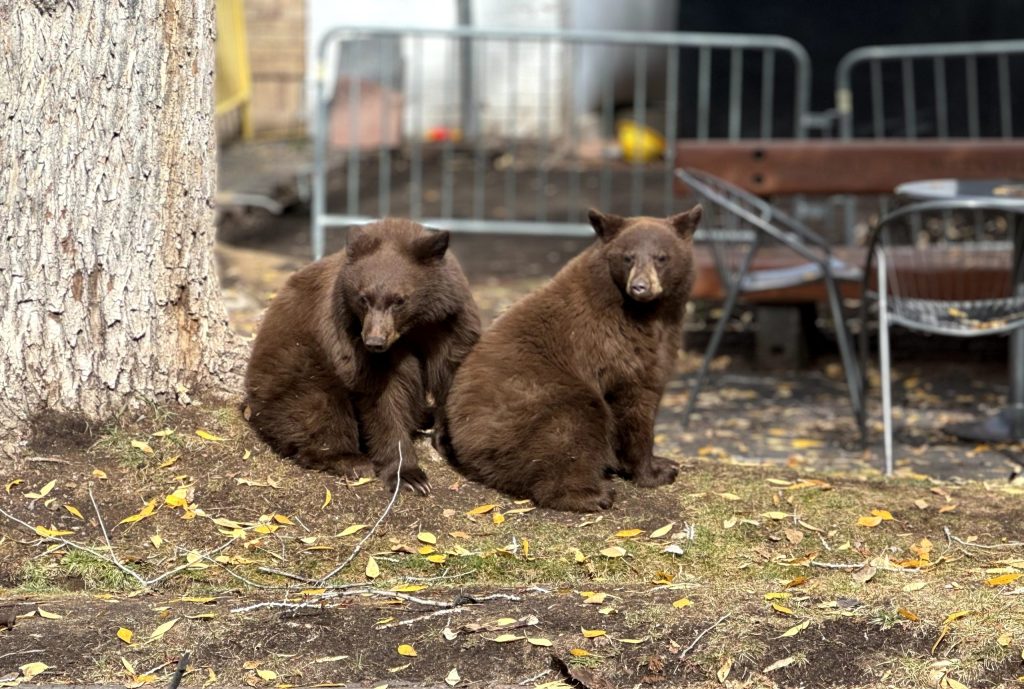
Holly Taylor/Courtesy Photo
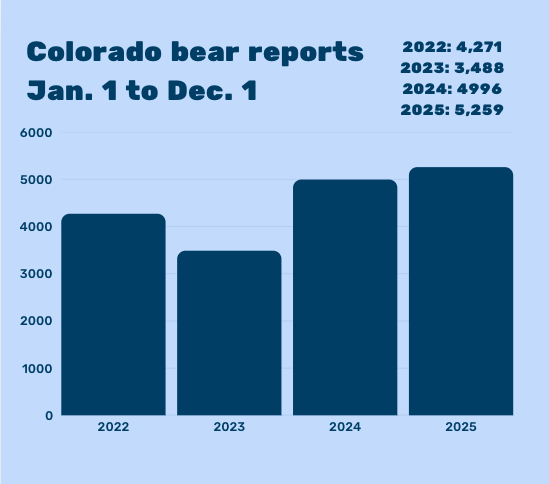
Across Colorado, reports of bear sightings and conflicts ticked up this year, reaching the highest number since 2019 and exceeding the seven-year average.
Colorado Parks and Wildlife reported in a news release that the agency received 5,259 bear reports between Jan. 1 and Dec.1, up from the 4,996 reports it received last year.
Reports and sightings of bears have ticked up over the past few years, with the state wildlife agency reporting last year’s numbers were “off the charts,” increasing by over 30% from the previous year.
What’s causing the increased bear encounters?
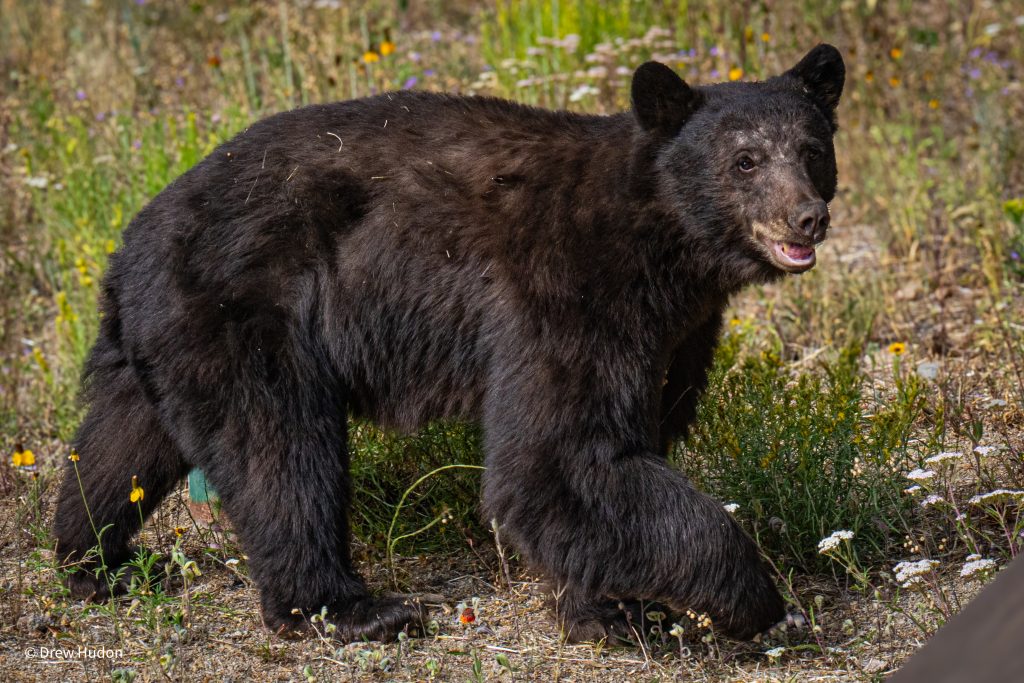
Colorado is home to a population of between 17,000 and 20,000 black bears. Each year, conflicts between humans and bears are driven by the availability of natural food sources — berries, fruits, nuts, plants and grasses — as bears will seek human food sources when it’s readily available and these natural foods are limited due to season or food failure.
As a result, most human-bear related conflicts are attributed to trash — over half of all statewide reports last year — as well as pet food, bird seed, outdoor grills, compost and more.
With the start of the 2025 bear season colliding with hot and dry conditions, Colorado Parks and Wildlife’s northwest wildlife managers were bracing for an uptick in bear conflict, expecting the spring and early summer climate to impact the availability of natural food sources.
However, the late summer and early fall brought about a healthy production of these foods in the northwest region, with wildlife managers from the region referring to the food year as “productive” and “abundant.”
“Given the hot and dry conditions, staff were prepared for limited natural food sources, but many fruit-bearing plants produced significant nuts and berries, which kept bears out of trouble,” said Matt Yamashita, Parks and Wildlife’s regional wildlife manager for the Roaring Fork and Eagle valleys, including Glenwood Springs, in a news release.
Where is bear activity rising and falling in Colorado?
Most years, conflicts with bears has been the highest in northwest Colorado, which includes five regional wildlife areas designated by Parks and Wildlife. The vast majority of these conflicts historically have come from the area encompassing Glenwood Springs and Pitkin and Eagle counties.
Yamashita reported that this year, the area experienced “remarkably low levels of human bear conflicts.”
Kirk Oldham, a Parks and Wildlife regional wildlife manager who oversees western Garfield County, Grand Junction and Mesa County, reported a decline in conflicts in parts of this region, including in Collbran, Parachute, Rifle, Silt, and New Castle.
“In spite of the assistance from Mother Nature, conflicts still exist, demonstrating the need for constant awareness and diligence every year,” Yamashita said.
Jeromy Huntington, Parks and Wildlife’s wildlife manager for Grand and Summit counties, said that the area continued to see “unnecessary” conflicts with humans and bears. Specifically, Huntington said there was a significant increase in bears entering homes in both counties this year.
“This is primarily a result of poor trash management and unlocked or open doors and windows,” Huntington said.
In Jackson and Routt counties, while reports of human and bear interactions decreased, bear activity remained elevated closer to Steamboat Springs, reported Kris Middledorf, Parks and Wildlife’s regional manager for this area.
“Since the implementation of the city (of Steamboat)’s bear-resistant trash receptacle ordinance, compliance has improved, though proper use continues to be a challenge,” Middledorf said, pointing to unlocked vehicles as another common attractant in the area.
What will happen as winter sets in?
While Parks and Wildlife has not yet released month-to-month data on the bear reports in 2025, historically, bear activity ramps up in August, September and October as the animals prepare for winter. For bears, winter and their quiet denning period are predicated by the decline of natural food sources.
“Bears aren’t true hibernators; rather, they enter a state of torpor,” said Rachael Gonzales, the public information officer for Parks and Wildlife’s northwest region.
Torpor refers to a period where the bears enter their dens to conserve calories and energy.
“While we associate winter with torpor or hibernation, it’s really the lack of a natural food source that signals it’s time to head into the den for black bears,” Gonzales said. “Because bears aren’t true hibernators, there may be times where they will leave their den during the winter, even for a very brief period of time. In some cases, bears, typically males, in places where winters are warmer may den very little or not at all.”
How can bear conflicts be reduced?
Reducing bear conflicts is a priority for the wildlife agency, as the consequences are steep for both humans and bears. Once bears learn to exploit humans for food, the animals can become dangerous — and the options for wildlife officers are fairly limited.
Relocation is chosen as a management option for bears that pose a safety concern but before the bear’s behavior escalates to a dangerous level. However, this can have mixed results, as there is no way to unteach a bear once it habituates to human-related food sources like trash.
The wildlife agency’s other main option is to euthanize bears that become habituated to human food sources. In 2024, Parks and Wildlife relocated 68 bears and killed 98 as a result of conflicts.
In addition to continuing its human-bear conflict grant — which awarded just under $1 million to 22 communities across Colorado in 2025 — Parks and Wildlife started a working group this year with the goal of finding other solutions and ways to reduce interactions between bears and humans.
Some of the group’s recommendations may find their way before Colorado’s state legislature in 2026. Dan Gibbs, the executive director of Colorado’s Department of Natural Resources, told the Parks and Wildlife Commission in November that the department is working on a bill encompassing these, including ” making changes to statute to improve Parks and Wildlife’s enforcement abilities.”



Support Local Journalism
Support Local Journalism
The Sky-Hi News strives to deliver powerful stories that spark emotion and focus on the place we live.
Over the past year, contributions from readers like you helped to fund some of our most important reporting, including coverage of the East Troublesome Fire.
If you value local journalism, consider making a contribution to our newsroom in support of the work we do.