How much has wolf reintroduction cost Colorado so far?
A Joint Budget Committee briefing looked at how Parks and Wildlife has spent general fund allocations on wolves

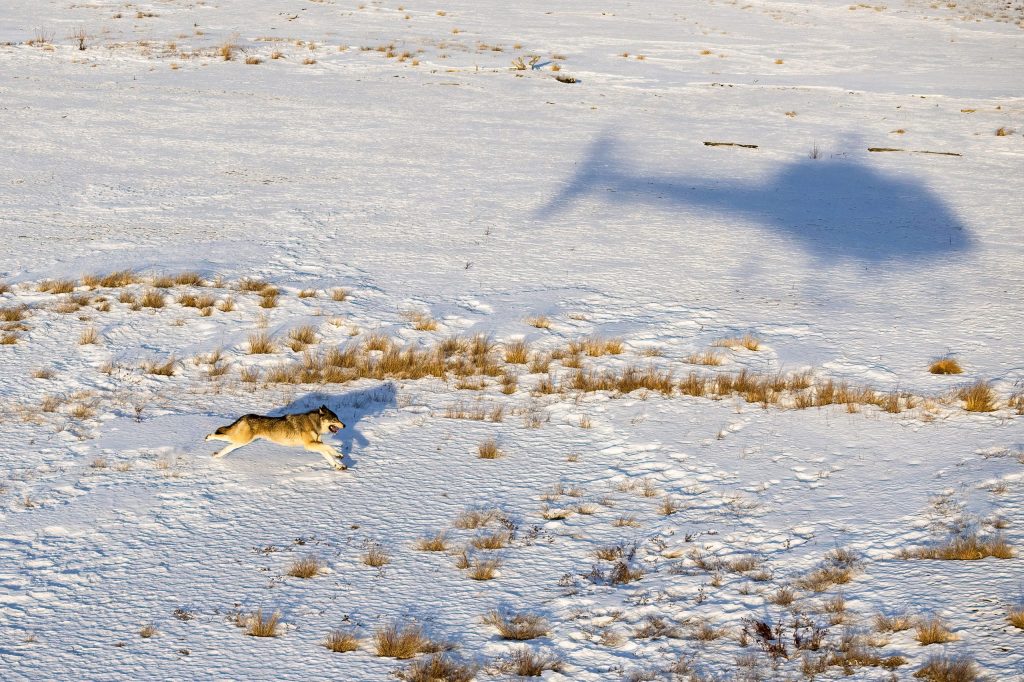
Colorado Parks and Wildlife/Courtesy photo
Colorado lawmakers continue to raise questions about the cost of the state’s wolf reintroduction during the early phases of the annual budgeting process for 2026.
On Tuesday, Dec. 9, the Joint Budget Committee was briefed by committee staff on the 2026 budget for the Department of Natural Resources, which includes Colorado Parks and Wildlife.
It’s the second step in the Legislature’s budget process. Next, the committee will hold a hearing in January with the Department of Natural Resources to answer lawmakers’ questions and discuss its budget priorities.
The briefing on Tuesday reopened conversations that had been had between the department and committee last year on what Colorado’s wolf program is costing, how state dollars are being spent and whether cuts to the program would be possible.
During the briefing, lawmakers requested that the January hearing provide additional clarity on how funds are being spent, how and when Parks and Wildlife is investigating and paying wolf depredation claims, whether the wolf reintroduction is tracking as expected from a biological perspective and more.
They also asked for information on how the decision to dismiss Parks and Wildlife Director Jeff Davis in November was made and how the search for his replacement will be conducted. According to records obtained by 9NEWS and the Denver Post, Davis resigned from the position to avoid being fired. Davis was offered another position within the Department of Natural Resources through May.
The Joint Budget Committee will be looking for places to make reductions and cuts as the state faces another budget shortfall in 2026. The deficit is projected to be around $850 million, slightly less than the $1.2 billion gap lawmakers were faced with in the current fiscal year.
What is the wolf program costing?
The reintroduction of gray wolves in Colorado was initiated by the passage of Proposition 114 in 2020, requiring Parks and Wildlife to develop a plan and reintroduce the animals by the end of 2023.
To implement the measure, the agency has received annual allocations from the general fund.
In the first fiscal year of the effort, 2021-22, Colorado Parks and Wildlife received $1.1 million from the state’s general fund. When spending exceeded the initial allocation, the annual distribution was increased to $2.1 million. For the next two fiscal years, as the agency ramped up the wolf program, spending fell slightly below this number — $1.79 million in 2022-23 and $1.57 million in 2023-24.
However, spending increased this year as the wolf population grew and Parks and Wildlife added staffing and programs geared toward minimizing conflicts between wolves and producers.
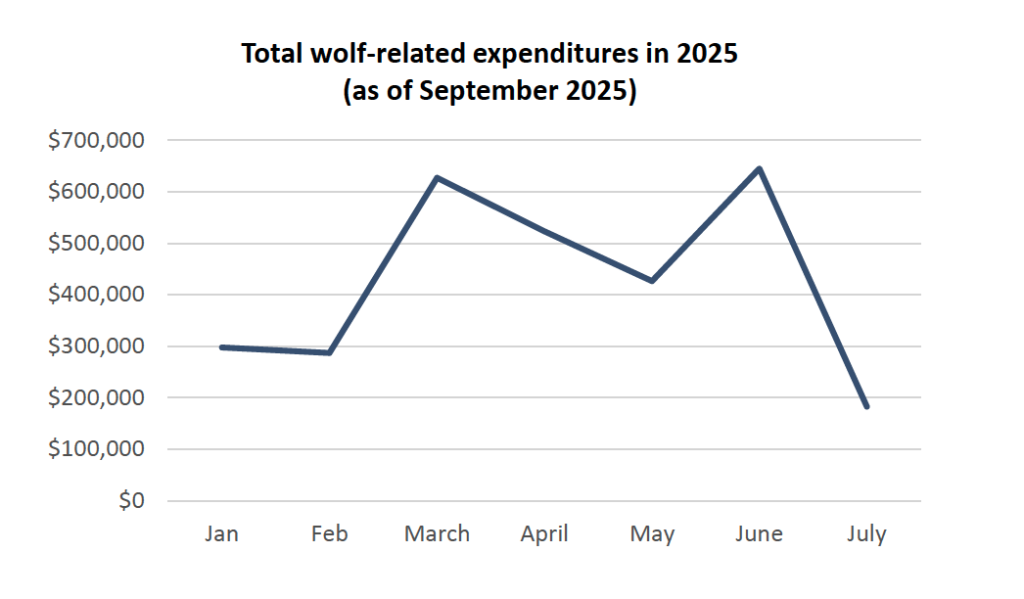
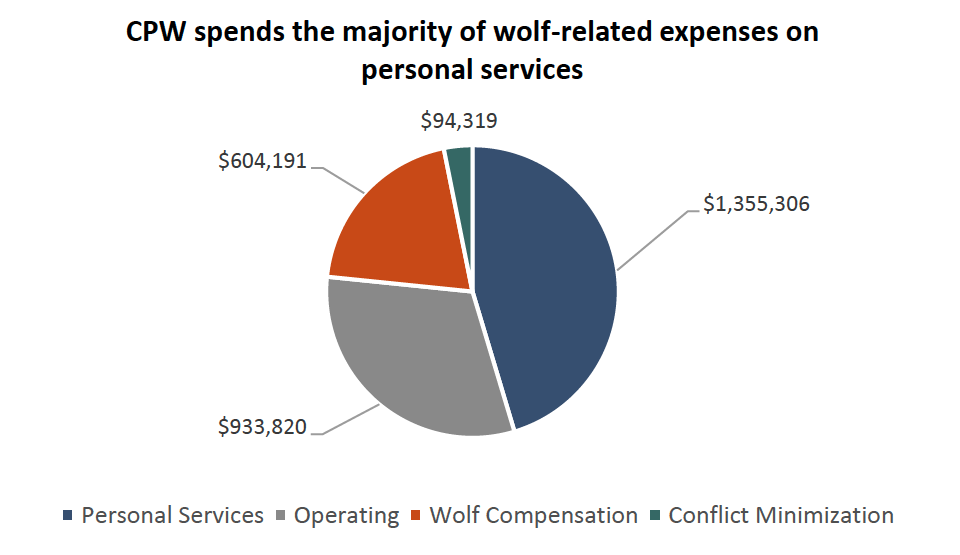
From January to July this year, Parks and Wildlife spent $3 million on the wolf program. The largest portion, around $1.4 million, was spent on personnel. Around $933,000 was spent on operating costs, $604,191 on compensation for producers and around $94,000 on conflict minimization. In addition to the general fund allocation, the agency receives funds from the Born to be Wild wolf license plate and other sources.
In addition to the $2.1 million, the state Legislature established a separate fund to compensate producers for wolf-related losses to livestock and livestock guardian animals. The wolf depredation fund received $175,000 from the general fund in the 2023-24 fiscal year, but has received $350,000 in each subsequent year.
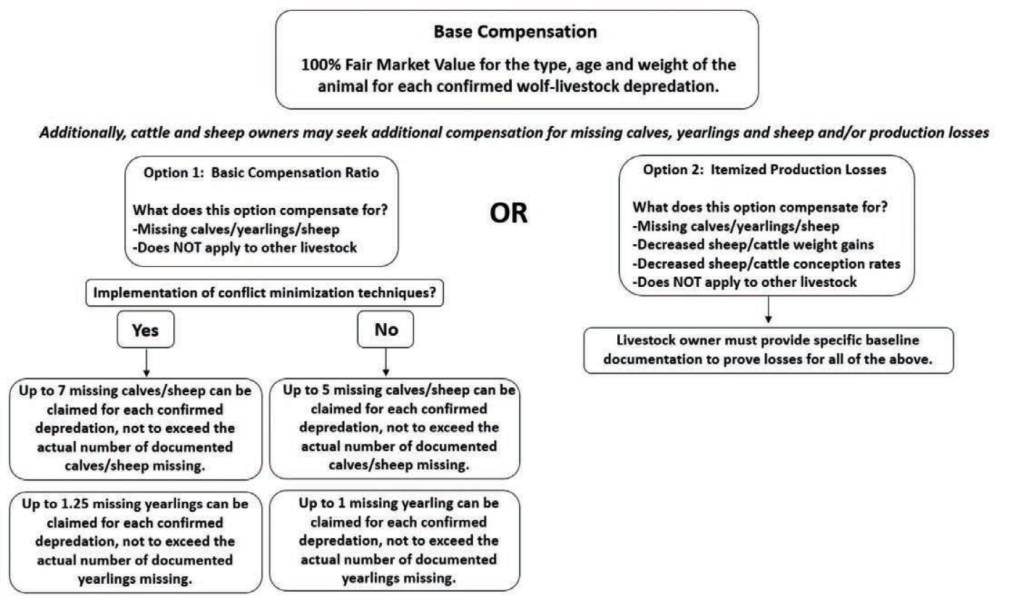
Colorado is required to compensate producers for livestock and working animals injured or killed by wolves as well as for indirect losses — which cover missing animals as well as reduced weight and pregnancy rates — on ranches impacted by wolf depredations.
According to the budget committee report, Parks and Wildlife paid two claims totaling just over $2,000 in fiscal year 2023-34, using money from the general fund. In 2024-25 — the first full fiscal year after Colorado released its first wolves in December 2023 — the agency paid over $608,000 to 13 producers. The majority of these payments, $476,546, came from the wolf depredation compensation fund, with the remaining amount coming from federal dollars and non-license revenue from Parks and Wildlife’s wildlife cash fund.
The wolf program and conflict minimization are responsible for the second-largest increase in general fund allocations to the Department of Natural Resources since the 2018-19 fiscal year. It is second only to increases to the executive director’s office due to policy adjustments, according to the joint budget committee’s report.
Kelly Shen, a nonpartisan Joint Budget Committee staff member, said part of the reason was that Parks and Wildlife “didn’t have a lot of general fund (allocations) prior to the amount they’re receiving for wolf reintroduction.”
As a state enterprise, the majority of Parks and Wildlife’s revenue comes from the sales of hunting and fishing licenses, state park passes and other fees. However, state law prohibits the agency from using money from hunting and fishing license sales or associated federal grants to pay for wolf expenditures.
Should Colorado cut the funding?
The increase in spending on wolves this year — alongside continued concerns from Western Slope producers and elected officials about a lack of transparency and preparedness by the agency regarding wolves — raised questions from lawmakers earlier this year. Sen. Dylan Roberts, a Frisco Democrat, criticized the program’s escalating costs, saying the spending seemed “out of control” in a June hearing.
During the 2025 budget process, Roberts helped introduce a budget footnote that asked Parks and Wildlife not to spend its $2.1 million on acquiring additional wolves until it fully implemented specific preventive measures — requested by a citizen petition, which was denied by the Parks and Wildlife Commission — to reduce conflicts with wolves and livestock.
In a special session held this August to address further budget concerns, the state took this a step further, reducing Parks and Wildlife’s allocation by around $260,000 and prohibiting the agency from spending the remaining allocation to acquire additional wolves during the fiscal year. This amount was commensurate with the nearly $257,000 Parks and Wildlife spent on the January translocation of 15 wolves from British Columbia to Colorado.
White Parks and Wildlife can use other funds — such as gifts, grants and donations — to obtain wolves this winter; it has hit a federal roadblock and was prohibited from using British Columbia again to source the animals.
As the state looks forward, the program could see additional cuts. The joint budget committee staff report offered a 10% reduction in the annual $2.1 million allocation — equating to a reduction of around $210,000 — as an additional option to consider, noting that the cut “may impact program operations.”
Shen said the reduction was merely “an option on the table since it is an area that receives general fund,” but that staff was not making recommendations for or against it at this point. Shen added that the wolf program expenditures at this point are startup costs and may not be “representative of ongoing costs of what it takes to manage and sort of associated things related to wolves across the state.”
Cutting funding to Colorado’s wolf program does not negate Parks and Wildlife’s legal obligation to create a sustainable population of gray wolves.
“In statute, it states that the General Assembly shall make appropriations that are necessary to fund the Wolf Restoration and Management Plan as well as fair compensation for livestock losses,” Shen said. “Additionally, the statute says that the lack of an appropriation from the general fund shall not halt the reintroduction of gray wolves.”
With Tuesday’s briefing a precursor for future budget conversations, the debate over wolf costs is not over. The Joint Budget Committee is expected to hold a hearing with the Department of Natural Resources, including Parks and Wildlife, in early January to answer the lawmakers’ questions about wolves and other programs.









Support Local Journalism
Support Local Journalism
The Sky-Hi News strives to deliver powerful stories that spark emotion and focus on the place we live.
Over the past year, contributions from readers like you helped to fund some of our most important reporting, including coverage of the East Troublesome Fire.
If you value local journalism, consider making a contribution to our newsroom in support of the work we do.