Winter’s test: How Grand County wildlife survives a cold, dark season

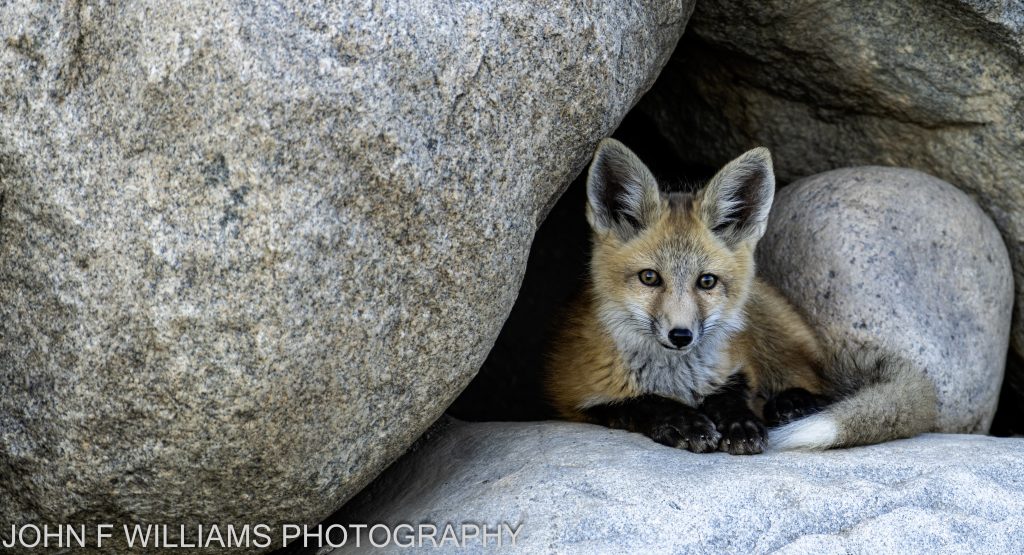
John Williams Photography/Courtesy photo
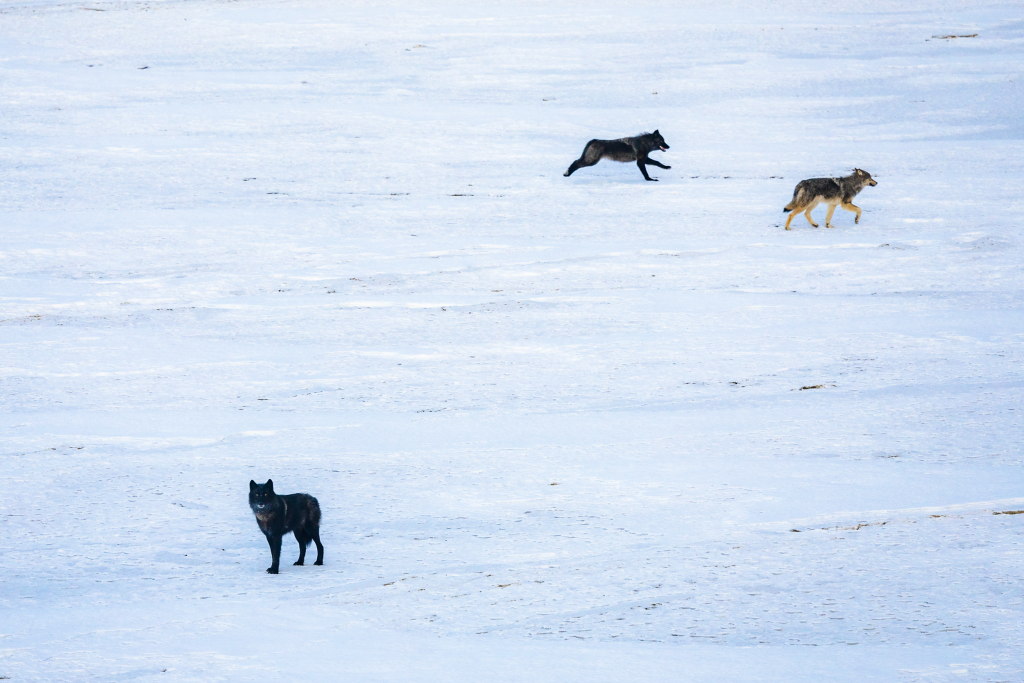
As snow settles in the valleys and whips off mountain crests, Grand County transforms into an icebox. Aside from evergreens, most greenery retreats underground, waiting for spring’s thaw to coax leaves and petals back to life. Across this stark landscape, wildlife fights a seasonal battle for survival.
Winter demands the most of Colorado’s wildlife. Food grows scarce, temperatures plummet and conserving calories can mean the difference between life and death. For females, the stakes are even higher. With the end of fall comes the end of mating season, and often the beginning of pregnancy. They need enough calories to sustain themselves and their unborn young.
“If they don’t have the food and fat storage they need, they do abort their young,” said Rachael Gonzales, public information officer for Colorado Parks and Wildlife.
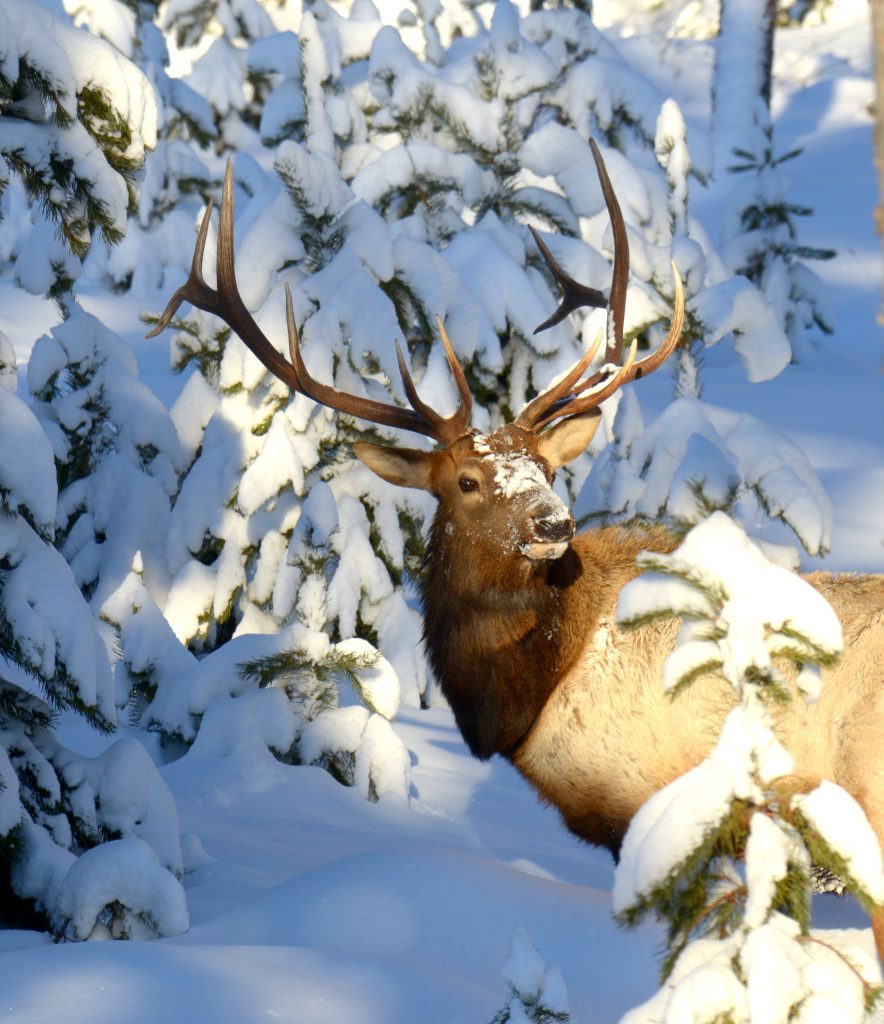
To cope, ungulates like moose, elk and deer make a vertical migration, leaving the high country for valleys where foraging is easier. Through winter, they rely on grasses, shrubs and evergreens like juniper. Often, their food hides beneath snow, but with effort, they can reach it. Fierce winters, however, can make this unattainable.
“Two years ago, we had a severe winter where crusted snow made it impossible for animals to reach food underneath,” Gonzales recalled.
Herbivores aren’t the only ones moving downslope. Predators like mountain lions and bobcats follow their prey, increasing the chance of human encounters.
Grand County’s black bears enter a hibernation-like state called torpor. Rather than entirely disappearing for the season, bears slow their metabolic rate and shelter away, but they still venture outside during mild spells.
“They’re not true hibernators,” Gonzales said. “They can wake up, walk around, and then go back into their den.”
That’s why residents should remain bear-aware all winter.
The human factor
Winter recreation is a cornerstone of Grand County culture, but it can stress wildlife. Skiers and snowshoers often startle animals, spiking heart rates and burning precious calories.
“Stress can actually kill them,” Gonzales warned.
Every time an animal flees, it spends energy critical for survival. Seasonal closures give wildlife a reprieve from human pressure.
“Respecting closures and signage is huge,” she said. “If a parking lot is full, have a backup plan. Overcrowding adds pressure to wildlife.”
Colorado Parks and Wildlife works with the Forest Service and local partners to protect winter ranges and calving areas. Many closures extend into spring to safeguard newborns. The message is simple: know before you go.
Wildlife encounters: What to do
Even with precautions, encounters happen — often with elk and moose. These species may seem harmless, but they can be dangerous.
“I’m more afraid of running into a moose than a bear,” Gonzales said.
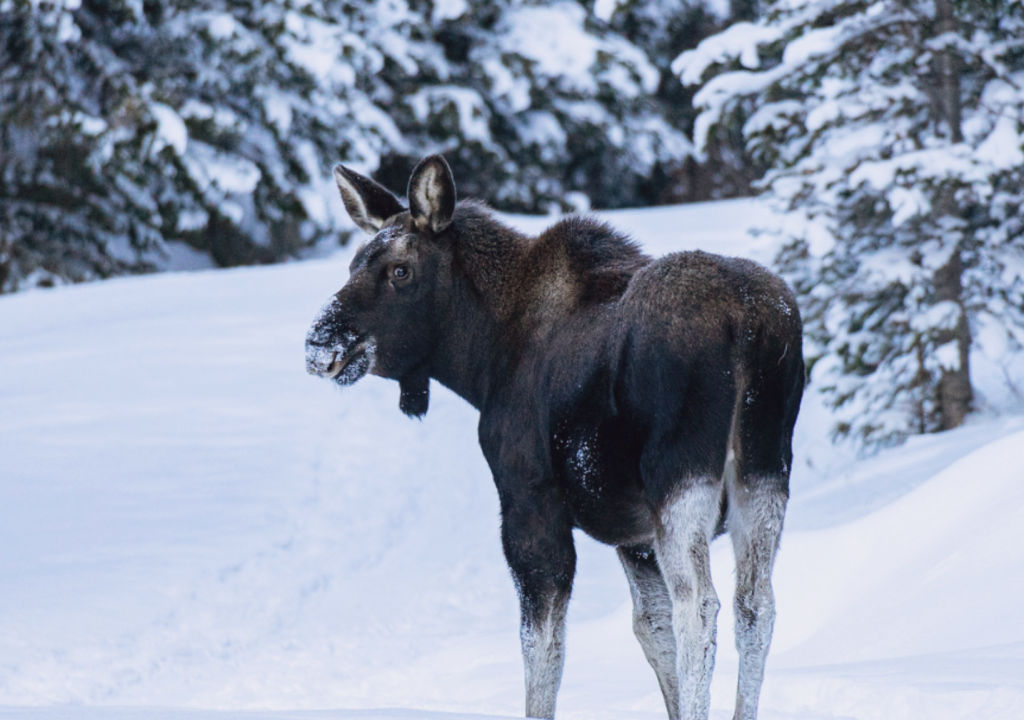
Moose are mighty, unpredictable and common in eastern Grand County. If you encounter one, give it space and ensure it has an escape route. Signs of agitation include pinned ears, lip licking and raised hackles.
“If they can’t get out safely, they’re probably going to come after you,” Gonzales said, and dogs amplify this risk. “Keep your dogs on a leash. Moose see them as predators.”
Moose can run up to 35 mph and swim up to six. Don’t try to outrun them—put a solid object between you and the animal.
Mountain lion encounters require a different approach: make yourself big, maintain eye contact and fight back if attacked.
“You want to make them feel uncomfortable, so they leave,” Gonzales said.
At home, deter lions by signaling human presence — lights, noise, even a radio.
Black bears are less active in winter, but can emerge during mild spells. If one approaches your property, haze it.
“Pound on windows, make noise,” Gonzales advised.
Filming for Instagram might seem tempting, but it teaches bears bad habits.
“Once they learn how to do something — like getting food — they’ll keep doing it,” she said.
Secure trash, clean grills and never feed pets outdoors. These steps prevent attracting bears and the prey species that lure mountain lions.

Choose stewardship over selfies
Coexistence isn’t just about avoiding danger — it’s about reducing stress on animals during their most vulnerable season. That means respecting closures, keeping dogs leashed and removing holiday decorations that can entangle antlers. It also means resisting the urge to crowd wildlife for photos.
“It’s not worth it for the ‘gram’,” Gonzales said bluntly.
Added stress can lead to starvation or death.
Community education efforts, like the Wintering Wildlife Conservation Initiative, offer resources and tips for responsible recreation. Colorado Parks and Wildlife also provides safety guides and updates at trailheads and ranger stations.
Grand County’s winter wildlife is more than a backdrop for outdoor adventure It’s a living system under strain. Every choice we make, from where we ski to how we store trash, ripples through that system.
“At the end of the day, whether it’s deer, elk or mountain lion, they’re trying to survive the winter,” Gonzales said.
Helping them succeed ensures the landscapes we love remain wild for generations to come. So when you head out, remember: know before you go, give wildlife space and choose stewardship over selfies. In the quiet of winter, survival depends on it.


Support Local Journalism
Support Local Journalism
The Sky-Hi News strives to deliver powerful stories that spark emotion and focus on the place we live.
Over the past year, contributions from readers like you helped to fund some of our most important reporting, including coverage of the East Troublesome Fire.
If you value local journalism, consider making a contribution to our newsroom in support of the work we do.