Leadville lawyer faces Summit County school board president in Democratic primary for seat in the Colorado House of Representatives
Leadville-based attorney Chris Floyd will face off against Consuelo Redhorse, who is serving her second term on the Summit School District Board of Education

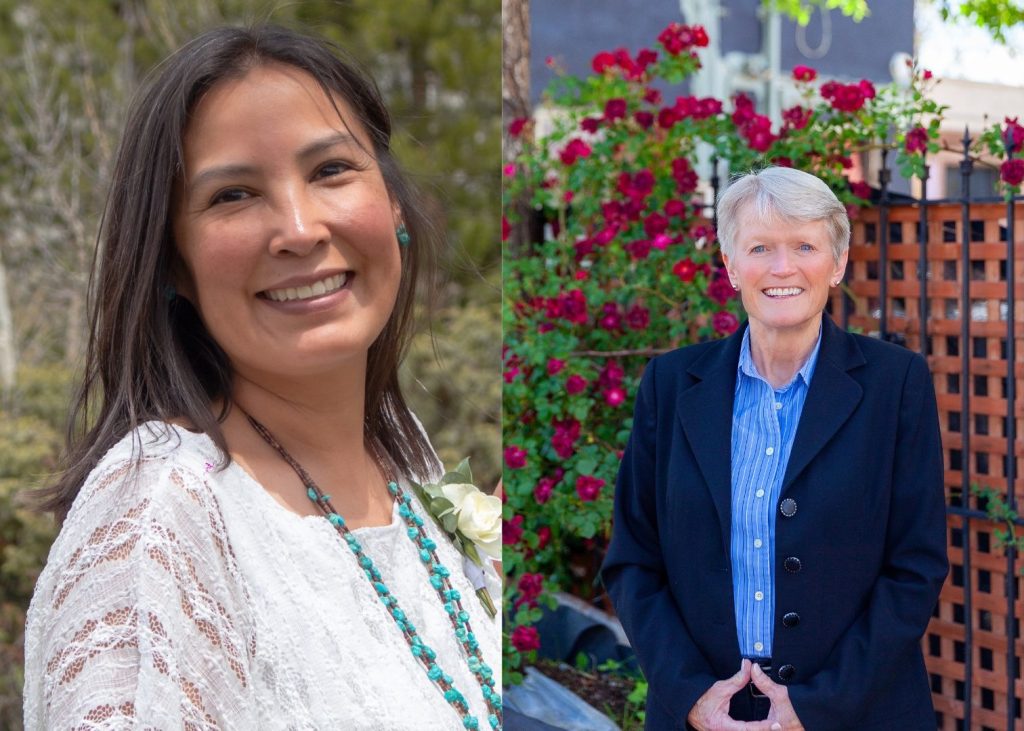
Courtesy photos
A Leadville lawyer will face the president of the Summit School District Board of Education in the Democratic primary for a seat in the Colorado House of Representatives.
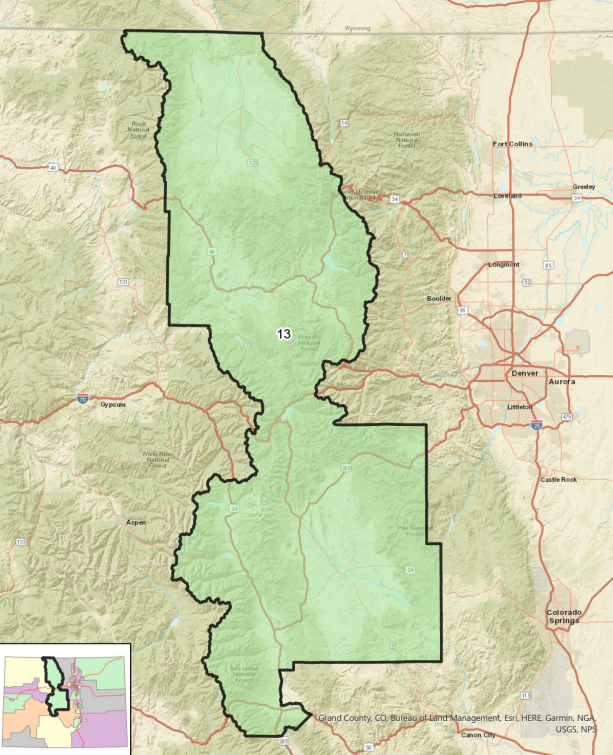
Chris Floyd, of Leadville, is running against Consuelo Redhorse, of Silverthorne, in the race for House District 13, which includes Summit, Grand, Park, Lake, Chaffee and Jackson counties. The primary election is scheduled for June 30, with ballots being mailed to voters beginning June 8. Whoever wins in June will face Republican candidate Miguel Martinez in the November general election.
In interviews, Floyd and Redhorse described what voters should know about their experience, laid out their positions on issues from housing affordability to TABOR reform, and outlined what their top priorities would be if elected.
Floyd moved from Virginia more than a decade ago to open a law practice in Leadville and has served as the Lake County attorney and a municipal judge. She has been endorsed by outgoing House Speaker and District 13 Rep. Julie McCluskie, who is term-limited.
“One of the things I came to realize is that this district really needs a strong advocate,” Floyd said. “One of the reasons for that is most of what comes out of the state legislature is driven by the 11 largest counties on the Front Range — and they just aren’t like us. They aren’t like the communities that make up House District 13.”
Redhorse, a lifelong Coloradan and member of the Navajo Nation, is serving as president during her second term on the Summit School District Board of Education after first being elected in 2019. She has lived in Summit County for about 15 years and works as an accountant for a property management company.
Being on the school board, Redhorse has learned that “everything is connected” to decisions made in the Colorado legislature, and she hopes to build on her experience as an elected official in the statehouse.
“I’ve had a really great opportunity just being really integrated with the community, talking with families and students and teachers, in a time where people have so many experiences in public education,” Redhorse said. “I thought I could take that experience and really bring it forward to be able to represent more people and really look beyond the K-12 realm of leadership that I’ve experienced.”
Housing and affordability
Both candidates said housing affordability is a top issue for voters in District 13, and one they would prioritize if elected.
Redhorse said the state Legislature has made progress “cutting the red tape” to help streamline construction of affordable housing, but said she would focus on making it easier to redevelop existing properties for housing.
If elected, Redhorse said she would examine how land-use policies affect the ability to create affordable housing, while ensuring that “local governments really get the final say and making sure we’re not mandating too much.” She said that housing has to be affordable so that service industry workers whose jobs support the local economy can afford to live in the communities where they work.
Floyd said that while many housing efforts have focused on making single-family homes more affordable for first-time buyers, there hasn’t been enough focus on the affordability of rental housing. Noting that many jobs in resort communities are seasonal, she said someone may work at a ski resort in Summit County in the winter, then move down to Buena Vista for the summer rafting season, without necessarily looking to own a home.
“But many of them end up spending more than they would pay on a mortgage for a rental property — so that’s another thing,” Floyd said. “There are a lot of different aspects that we need to look at in terms of the housing issue.”
The two candidates also said that Coloradans in their district are facing affordability concerns at every turn — from gas and groceries to healthcare and property insurance.
Floyd noted that while Front Range residents have access to several healthcare providers, most mountain residents have only two main providers and higher rates of uninsured residents.
“If you don’t qualify for Medicare or Medicaid or some other type of assistance, your premiums are just absolutely outrageous,” she said. “So, we have so many people now that have dropped off of the healthcare rolls because they just can’t afford it.”
Redhorse agreed that mountain communities differ from the Front Range and need targeted strategies to address the higher cost of living. She said she would focus on finding “sustainable solutions” to reduce costs as residents balance rising expenses.
“Our prices have spiked — the cost of living, the cost of childcare,” Redhorse said. “Families are trying to make the choice between having food on their tables, paying for their basic utilities, paying for their mortgages, paying for childcare and trying to get to the places where they work.”
Candidates diverge on top priorities
Redhorse ranked protecting public lands and water among her top priorities, while Floyd said supporting small businesses is a top issue, though the candidates agreed that both issues are important.
Redhorse said low snowpack this winter highlighted the need to safeguard Colorado’s water supply and address federal staffing cuts at land management agencies, which she said have affected local governments, businesses and recreation areas.
“We experience it every day. In all of our communities, so much of our land is public land, and something that we need to keep protected for future generations,” Redhorse said. “What I’ve heard a lot is the need for responsible growth and making sure we’re not over loving our public lands, while also understanding that it’s such an important part of our economies up here.”
Redhorse noted that because so much recreation happens on public lands and waters, protecting them also protects local economies that rely on tourism. She said that small businesses in particular are being impacted by cuts to federal land management staff and ongoing drought.
Floyd said that main streets in mountain towns “are kept alive by our small businesses” and that she would work to expand broadband access and workforce training, including in the trades, for rural areas. Especially in winters with low snow or summers with low water, residents need opportunities to pivot to other work when tourism slows, she said.
“A lot of our younger workforce, I fear they’re leaving not only the area but the state, because there’s no opportunity for them here,” Floyd said. “So, I really think we need to invest more in workforce training.”
Over the past year, Floyd said that she has engaged with the Colorado Water Congress to learn more about the state’s water issues. She believes that District 13 communities need a strong negotiator to advocate to balance rural and urban water needs and she supports “having a very assertive approach to protecting Colorado’s water interest.”
State budget crunch and TABOR Reform
As Colorado’s legislature has faced budget deficits in recent years, both Floyd and Redhorse said they would support changes to the state’s Taxpayer Bill of Rights to allow the governments to keep more tax revenue.
Colorado’s Taxpayer Bill of Rights — or TABOR — limits the amount of revenue that state and local governments can collect and spend. Passed in 1992 as a constitutional amendment, it requires voter approval for all tax increases and places caps on government spending based on inflation and population growth. Democrats in the legislature have tried in recent years to change the TABOR cap through ballot measures, but voters have rejected those efforts.
“Colorado has grown so much that the TABOR formula, the way it’s structured — it just doesn’t work. It can’t work anymore,” Floyd said.
She said Colorado also needs to look at where it can reduce costs and operate state agencies more efficiently.
Redhorse also described TABOR as “outdated” and said it has limited the governments’ ability to provide services, especially as Medicaid costs have grown faster than the caps on state spending. She said, “it’s just arbitrary, the caps don’t truly show the increase in the cost of all the services Colorado is providing.”
Both Floyd and Redhorse said they support the “Cut the Ropes” ballot initiative, which will ask voters in the November election to change how much tax revenue the state and school districts can keep to spend on education.
Immigration, law enforcement and privacy
Both Democratic candidates said that they support Colorado laws that protect immigrants and limit local law enforcement participation in federal immigration enforcement.
Redhorse said she is concerned about what she described as “racial profiling” by the federal government, which affects both immigrants and U.S. citizens. She said she also believes that some local law enforcement agencies are cooperating with Immigration and Customs Enforcement in violation of Colorado law, eroding trust within their communities.
“The lack of trust that immigration enforcement has caused in so many of our communities, especially our Latino communities, is huge,” Redhorse said. “We have people out there that are victims of crimes or needing protection, who are too afraid to go to our local law enforcement, who are really there to serve the people and keep communities safe.”
Floyd said that she also believes that local law enforcement should focus on enforcing state laws and protecting communities, rather than assisting the federal government with immigration enforcement. She said she is particularly concerned that immigration enforcement has impacted “vulnerable individuals” and children.
“I absolutely reject any attempts to try to remove folks that have made a good pathway in this country,” Floyd said. “With that being said, I also support law enforcement and their duty to protect our communities. To the extent there are lawbreakers who don’t have legal status, I think there are current legal avenues to address that.”
Both candidates also expressed concerns with the Flock Safety cameras that law enforcement agencies across the state use, saying the license plate reader technology collects too much information and could violate Coloradans’ privacy rights. Both said they support reining in the use of the technology, after the state legislature rejected a bill that would have done so during this year’s session.









Support Local Journalism
Support Local Journalism
The Sky-Hi News strives to deliver powerful stories that spark emotion and focus on the place we live.
Over the past year, contributions from readers like you helped to fund some of our most important reporting, including coverage of the East Troublesome Fire.
If you value local journalism, consider making a contribution to our newsroom in support of the work we do.