Gas prices climb in Colorado ski towns as uncertainty grows over Middle East tensions
The United State’s intensifying conflict with Iran could soon show up at Colorado gas pumps amid already rising prices

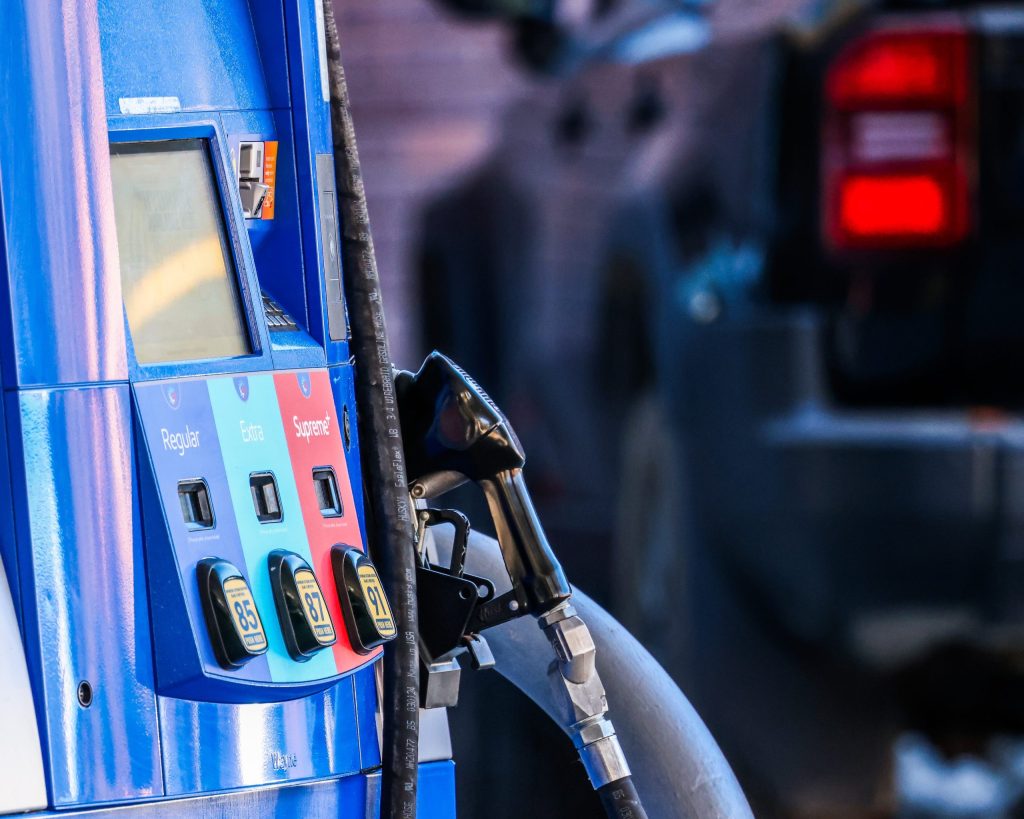
Austin Colbert/The Aspen Times
Gas prices in Colorado’s ski towns have risen notably since last week, following sharp increases in petroleum prices as anxiety rises over potential disruptions to crude supplies from the Middle East.
Less than a week after the United State’s conflict with Iran created threats to oil supply and a major global shipping route, the national average price of gasoline saw its largest single-day spike since 2022 on March 2, according to a post by GasBuddy petroleum analyst Patrick De Hann. Since then, prices have continued to climb.
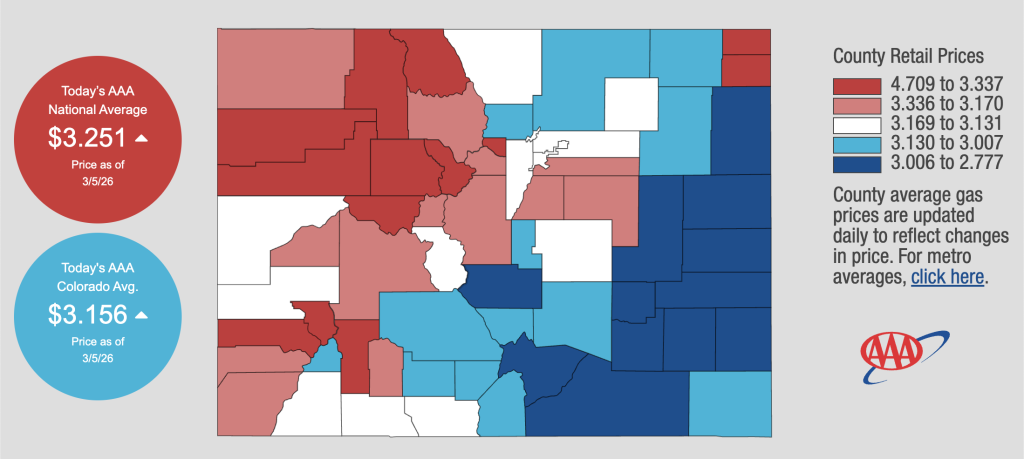
The national average price for regular gas is $3.251 per gallon as of March 5, according to data from the American Automobile Association. The Colorado average is slightly below that at $3.156, outpacing the $3.059 average price from exactly one year ago.
Colorado’s average for March 5 is roughly four cents per gallon above yesterday’s average of $3.114, or more than 21 cents above last week’s average of $2.903.
Several Western Slope counties are also seeing gas prices that notably outpace both the state and national averages. The current average price per gallon for Pitkin County is $4.709, followed by Garfield County at $3.390, Eagle at $3.377, Summit at $3.370 and Routt at $3.531 per gallon.
In Glenwood Springs, gas prices have risen 60 cents over the past month and over 20 cents over the past week.
However, combined with routine price increases from the switch to more expensive summer-blend fuel and increased demand from drivers, it’s difficult to say how much responsibility the war with Iran bears for the rising prices, according to Colorado AAA regional director Skyler McKinley.
“Gas prices are structural, seasonal, and then there’s the wild card of international relations,” McKinley said. “I think it’s impossible in this moment in time to say, ‘X amount is a function of international uncertainty, X amount is a function of increased demand, X is a function of a very, very, very dry winter we’ve had.'”
Last month’s average price per gallon in Colorado was $2.728, a remnant of cheaper prices during the late fall and early winter. As spring weather arrives and demand increases, gas prices resume their upward trend.
“Now is the time of year when we start using more refined petroleum products like gas to go on road trips, and that type of economic activity begins, so an increase in demand this time of year is always expected,” McKinley said. “We have another 15-cent price increase that’s incoming as a function of the switchover to summer blend. All of that has been priced in for many months, and prices have been rising consistent with that.”
Although the climbing gas prices came as no surprise to McKinley, intense military escalations with Iran on Feb. 28 could partially be behind future price spikes outside of what is typical for this time of year.
“I would say, will we see price increases as a function of international uncertainty? Yes,” McKinley said. “I know that because crude oil is up. Right now it’s trading at around $80 per barrel … that is up in the neighborhood of $10 to $15 from where it was even 10 days ago. That will be priced in at the pump later on.”
McKinley added that gas prices will continue to rise heading into the warm months, though the extent will depend on the length of the potential closure of the Strait of Hormuz, a major global shipping route separating Iran from Oman and the United Arab Emirates to the south.
For now, a $3.30 to $3.40 average price per gallon of gasoline for Western Slope counties likely won’t be as damaging to the economy and drivers’ purchasing behavior as some may speculate, McKinley said, as those prices are still a ways away from the most expensive prices seen in the state. The highest recorded average gas price for Colorado is $4.920 per gallon, recorded in June 2022.
“Let’s say that the events of the past week did not happen, and you were telling me prices in Colorado were about $3.10 on March 5. I’d say that sounds about right, looking at the trend lines that I saw heading into March,” he said. “We’re not at that abnormal situation, but I expect we’ll start to see a lot of the pricing of this uncertainty at the pump beginning next week.”
Rural counties on the Western Slope are often an exception to winter’s lower gas prices and don’t enjoy the same cheaper gas that drivers along the Front Range and major metros do.
“Gas prices will always be higher in the high country because it costs more money to get gas to the high country,” McKinley said. “Number two, there’s just not the space for the amount of competition (between stations) that you see in the Front Range. … And margins on gas are very, very, very low.”





Support Local Journalism
Support Local Journalism
The Sky-Hi News strives to deliver powerful stories that spark emotion and focus on the place we live.
Over the past year, contributions from readers like you helped to fund some of our most important reporting, including coverage of the East Troublesome Fire.
If you value local journalism, consider making a contribution to our newsroom in support of the work we do.