Colorado lawmakers push for guardrails on coal plants forced to stay open due to federal orders
Measure comes after the Trump administration ordered a retiring coal plant in Craig to stay open past its scheduled closure date, citing an energy “emergency”

Eli Pace/Steamboat Pilot & Today archive
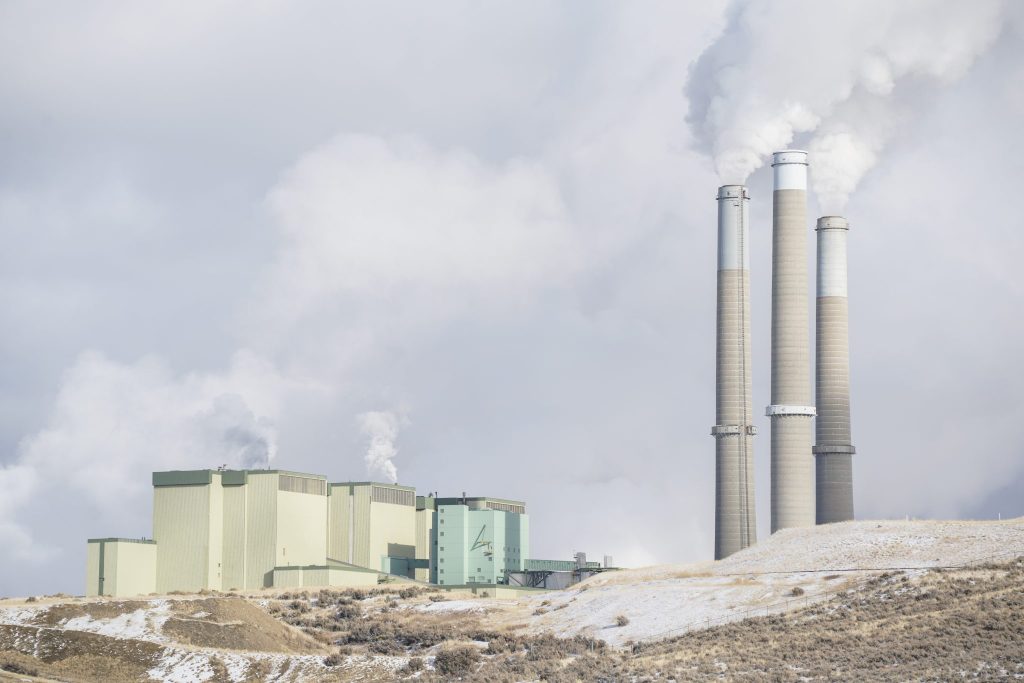
Colorado Democrats are planning to counter the Trump administration’s push to buoy coal-fired power plants, with legislation unveiled Wednesday that seeks to place more guardrails on plants that are forced to remain open due to federal orders.
The legislation, House Bill 1226, comes after the U.S. Department of Energy issued an emergency order on Dec. 30 forcing the coal-fired Craig Station Unit 1 plant in Moffat County to remain open one day before its scheduled closure.
The order was issued under section 202(c) of the Federal Power Act, which allows the Energy Department to keep power plants running during times of crisis, such as war or energy shortages.
Energy Secretary Chris Wright claimed in the Dec. 30 order that Colorado and other western states face an energy “emergency” due to a “shortage of electric energy, a shortage of facilities for the generation of electric energy, and other causes.” The Trump administration has used the Federal Power Act to keep coal plants open in Michigan and Washington, as well as an oil plant in Pennsylvania.
Lawmakers say HB 1226 is intended to mitigate the fallout of those emergency orders, including protecting ratepayers from shouldering the cost of keeping plants online and limiting further pollutants.
“If coal-fired plants are required to stay open, we’re establishing a process by which we’re ensuring they’re not continuing to pollute our communities … and making sure that ratepayers aren’t impacted in a massive way,” said Rep. Jenny Willford, D-Northglenn, a prime sponsor of the bill in the House alongside Rep. Meghan Froelich, D-Englewood.
HB 1226 would allow utility providers to receive backing from the state’s Public Utilities Commission to issue bonds to help pay for the cost of keeping their plants online if ordered by the federal government. Those bonds come with lower interest rates compared to traditional debt financing and are intended to blunt the cost impacts on ratepayers.
The bill also requires utility providers to submit quarterly reports to the utilities commission detailing the costs and energy output associated with running a coal plant past its scheduled retirement date. The utilities commission would be required to make those reports public.
“That will also help ratepayers understand what the impacts are of these federal orders,” Willford said.
The Energy Department’s emergency order requires the Craig plant to remain open through March 30, though the department can extend that timeline for as long as it says there is an emergency.
Keeping the plant open through March could cost $20 million, while keeping it open for a year could cost $85 million, according to a December report by Grid Strategies, a consulting firm that supports renewable energy, which was prepared for the environmental group Sierra Club.
Tri-State Generation and Transmission Association and the Platte River Power Authority, nonprofit entities which co-own Craig Station Unit 1, recently said that keeping the plant open means ratepayers will “unnecessarily bear the full cost of complying.” The plant had been shut down due to a mechanical valve failure before the Energy Department’s Dec. 30 order.
Tri-State CEO Duane Highley said in a Jan. 29 statement that while the utility providers “support the U.S. Department of Energy’s efforts to ensure the western United States maintains a reliable supply of electricity to meet growing demand and emergencies,” as nonprofits, “we face issues that other utilities do not, because it is our members that ultimately are going to pay for the cost of this order.”
Tri-State and Platte River Power Authority recently filed a petition with the Energy Department asking it to reverse its emergency order to keep Craig Station Unit 1 running. Colorado Attorney General Phil Weiser and a coalition of environmental groups have also filed separate petitions seeking to reverse the order.
When reached for comment about HB 1226, Tri-State spokesperson Mark Stutz said the legislation that was just announced by lawmakers will take time to digest and did not comment further on the bill.
Other provisions of HB 1226 would add new limitations on pollutants released by coal plants that emitted more than 200 tons of nitrogen oxides and sulfur dioxide in 2024. This would only apply to plants that were scheduled to close by the end of 2029 but are forced to stay open longer due to a federal order. The bill would mandate that these plants have pollutant controls in place to limit further emissions and report quarterly emissions data to the state to ensure compliance.
That could apply to Craig Station’s two other units, both of which are slated to shutter in 2028.
Senator representing northwest coal communities say he wasn’t consulted
Sen. Dylan Roberts, D-Frisco, whose sweeping northwestern Colorado district includes Craig, said he was not aware of the bill before being reached for comment on Thursday. Roberts has worked on several bills aimed at helping mitigate the fallout of coal plant closures in communities like Craig.
“I am just learning about this bill now, as I was not consulted prior to its introduction — even though I represent the coal plants in Craig and Hayden and the mines across northwest Colorado that could be directly affected,” Roberts said in a text message statement, adding that he is “carefully reviewing the legislation to understand its impacts.”
“As always, my priority is protecting local jobs and economic activity, ensuring ratepayers aren’t hit with higher electricity costs, and preserving our region’s ability to provide reliable energy for Colorado and the nation,” Roberts said. “This is a complex and sensitive issue, and I believe the people of northwest Colorado should be leading this conversation, rather than having it driven by political messaging from Washington, D.C., or Denver.”
Willford, in a text message, said, “We absolutely recognize how important it is to engage lawmakers representing coal-impacted communities, and we are continuing outreach as the bill moves forward. Input from Western Slope legislators and the communities they represent is critical to getting this policy right.”
Willford added that HB 1226 is “intended to support long-term economic stability and workforce opportunities in regions navigating energy transition, and we welcome continued dialogue with members across the state as the conversation evolves.”
The legislation is sponsored by 25 Democrats — a quarter of the legislature — most of whom are in the House.




Support Local Journalism
Support Local Journalism
The Sky-Hi News strives to deliver powerful stories that spark emotion and focus on the place we live.
Over the past year, contributions from readers like you helped to fund some of our most important reporting, including coverage of the East Troublesome Fire.
If you value local journalism, consider making a contribution to our newsroom in support of the work we do.