What is Colorado Parks and Wildlife’s role in managing recreation? A new bill seeks to clarify the answer.
A new bill seeks to ensure visitors and residents don't love Colorado to death as the state attempts to balance recreation and environmental stewardship

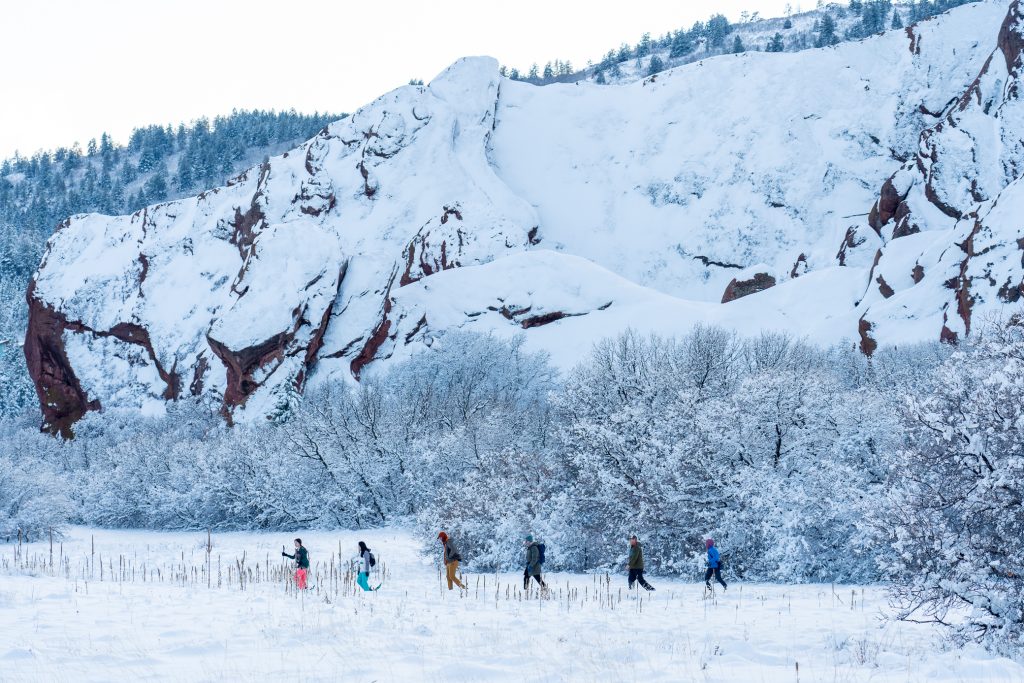
Colorado Parks and Wildlife/Courtesy Photo
A bill to broaden Colorado Parks and Wildlife’s authority over outdoor recreation is making a comeback in the 2026 legislative session, after a previous version was killed in committee last year.
House Bill 1008, also called the Colorado Outdoor Opportunities Act, would give Colorado Parks and Wildlife a clear leadership role in how the state coordinates and manages outdoor recreation across Colorado as participation continues to surge and strain natural resources. It would put into action the planning and coordination effort outlined by the Colorado Outdoor Strategy, which was finalized in April 2025.
“As recreation use has increased in Colorado, it has become clear that proactive coordination and on-the-ground capacity are increasingly necessary to address conflicts before they escalate and to better align recreation planning with community values and resource stewardship,” said Chris Arend, a spokesperson for the Colorado Department of Natural Resources.
“The bill is intended to ensure CPW has the organizational capacity to support that work and help the state respond more effectively to the growing and evolving demands on Colorado’s outdoors,” he added.
The 13-page bill is being led by a bipartisan coalition of lawmakers, predominantly from the Western Slope. It is sponsored by Reps. Meghan Lukens, D-Steamboat Springs, and Rick Taggart, R-Grand Junction, as well as Sens. Janice Rich, R-Grand Junction, and Janice Marchman, D-Loveland.
“At its heart, this bill is about better coordination and efficiency across the programs and people that support Colorado’s world-class outdoors,” Lukens said. “Improved coordination, partnerships, capacity and efficiency are a win for the whole state.”
The act will have its first hearing on Monday, Feb. 23, before the House Agriculture, Water and Natural Resources committee.
Why is it Colorado Parks and Wildlife’s responsibility to manage recreation?
The act solidifies and clarifies Parks and Wildlife’s mission surrounding outdoor recreation — ensuring that the agency’s efforts aren’t siloed between wildlife and recreation, but rather done in concert with one another.
State law charges Parks and Wildlife with preserving Colorado’s wildlife resources and habitat, providing a quality state parks system and offering “enjoyable and sustainable outdoor recreation opportunities that educate and inspire current and future generations to serve as active stewards of Colorado’s natural resources.”
Under this direction, the state agency has built recreation and conservation programming. However, the growth of outdoor recreation in recent years has outpaced this programming and requires additional scrutiny and direction going forward.
“Colorado supports a $65.8 billion outdoor recreation economy,” Lukens said. “The flourishing of that economy is essential to Colorado’s wealth, health and identity, but increased use is placing additional pressure on public lands.”

With this growth, Colorado’s Outdoor Strategy set out in 2023 to build a roadmap for how the state can find a balance between recreation and environmental stewardship. The strategy was led by Colorado Parks and Wildlife, but included coordination with Great Outdoors Colorado, the Colorado Department of Natural Resources, the Colorado Outdoor Recreation Industry Office and the Governor’s Office. These entities are all part of bringing the Colorado Outdoor Opportunity Act to the legislature this year.
The outdoor strategy identified that in order to strike this balance, there was a greater need for coordination between the agencies, governments, tribes, communities, private landowners and organizations that oversee recreation opportunities, responsibilities, planning and programs in the state. This includes a need to integrate recreation considerations in existing land and wildlife management efforts.
What does the Colorado Outdoor Opportunity Act do?
The Outdoor Opportunity Act seeks to solidify Colorado Parks and Wildlife’s role in this coordination effort, requiring it to “undertake collaborative, upfront planning and management to keep our public lands, infrastructure, wildlife and experiences from being loved to death,” Lukens said.
The bill text identifies that the agency’s “history of outdoor recreation planning, management and recreational asset delivery through its state parks system,” and in lands outside of state park boundaries make it “well-positioned to play a critical role” in coordinating local and statewide efforts to balance use.
According to Lukens, in giving Parks and Wildlife this role, the aim is to minimize conflict between outdoor uses and users, more effectively bring external partners into decision making and find opportunities to advance shared goals across local, federal, state and tribal governments.
According to the bill’s fiscal note, its implementation will require nine additional staff positions within Parks and Wildlife, with the hiring staggered over the next two fiscal years. It allocates just over $538,000 in the first year and just over $1.09 million in the second, primarily for personnel costs. This is expected to come from Parks and Wildlife’s existing parks and recreation cash funds.
The proposal would add regional outdoor recreation managers and coordinators across the state, along with supervisory and leadership staff, to support the regional planning, intergovernmental coordination, data management, infrastructure development and alignment with statewide outdoor recreation priorities contemplated by the bill.
Dean Riggs is a Loma resident who currently serves on Colorado Parks and Wildlife’s northwest sportsperson roundtable and as a committee member for the West Slope Outdoor Alliance. Riggs was born and raised in Colorado and spent his career at Parks and Wildlife — and previously the Colorado Division of Wildlife, as it was known — before retiring in 2020 while serving as the deputy regional manager in Grand Junction.

While Riggs believes the Colorado Outdoor Opportunity Act does a good thing by cementing the existing efforts of Parks and Wildlife in managing recreational activities, he has concerns about the direction Colorado is moving with outdoor recreation.
“We’re loving Colorado to death, and we’re all responsible for that,” Riggs said, calling the growth of outdoor recreation in his lifetime “unbelievable.”
“The thing that worries me the most is where are we going with recreation?” he said. “I think that if we really want to maintain the wildlife component of Colorado, we’ve got to start subtracting, right? We’ve got to start going the other way.”
While nothing in the bill is a “deal breaker” for Riggs, he hopes the state exercises caution as it moves forward, adding that having 13 pages of text leaves a lot of opportunities for “people to misinterpret what the bill means.”
What’s changed from last year’s proposal to now?
A similar proposal introduced last session as House Bill 1323 was killed at the outset of its first committee hearing after stakeholders raised concerns about the scope of the measure.
Since then, the state reportedly returned to its partners — including local governments, agricultural representations, conservation and recreation groups, industry stakeholders and federal agencies — to rebuild the bill from the ground up.
In comparing the 2025 bill to the 2026 Colorado Outdoor Opportunity Act, Lukens said it was “conceptually tied but otherwise quite different.”
Specifically, Lukens said that segments about river recreation and a trails program were removed as they created uncertainty around the bill’s scope.
“What remains is a bill focused on building up CPW’s capacity to provide a coordinated approach to the state’s conservation, outdoor recreation and climate resilience efforts and lead implementation of Colorado’s Outdoor Strategy,” she said.





Support Local Journalism
Support Local Journalism
The Sky-Hi News strives to deliver powerful stories that spark emotion and focus on the place we live.
Over the past year, contributions from readers like you helped to fund some of our most important reporting, including coverage of the East Troublesome Fire.
If you value local journalism, consider making a contribution to our newsroom in support of the work we do.