Can a new technology help a Northwest Colorado river basin ‘fuel’ clouds to increase snow, rainfall?
Over the next year, the Upper Yampa Water Conservancy District will be testing the ability of a new ground-based, solar-powered weather modification technology to increase precipitation from storms

Ali Longwell/The Aspen Times
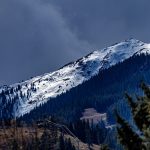
Starting this winter, a new weather enhancement pilot program is planning to test whether a new technology can increase snowpack and rainfall across just shy of 200,000 acres of Northwest Colorado’s Flat Tops — an area that includes the Yampa River headwaters.
The one-year pilot, which is funded by a $100,000 grant from the Colorado Water Conservation Board to the Upper Yampa Water Conservancy District, plans to test a ground-based, solar-powered technology from Rain Enhancement Technologies.
It would be the state of Colorado’s ninth permitted weather modification project, according to a news release from Rain Enhancement Technologies. It would join permitted cloud-seeding projects at ski areas like Vail Mountain, Beaver Creek Resort, Breckenridge Ski Resort, Keystone Resort and Winter Park Resort, in the San Juan Mountains as well as a project conducted by Rain Enhancement Technologies in Weld County, among others.
The partners have been moving through the leasing and permitting requirements to begin installation — and, hopefully, storm enhancement — in November.
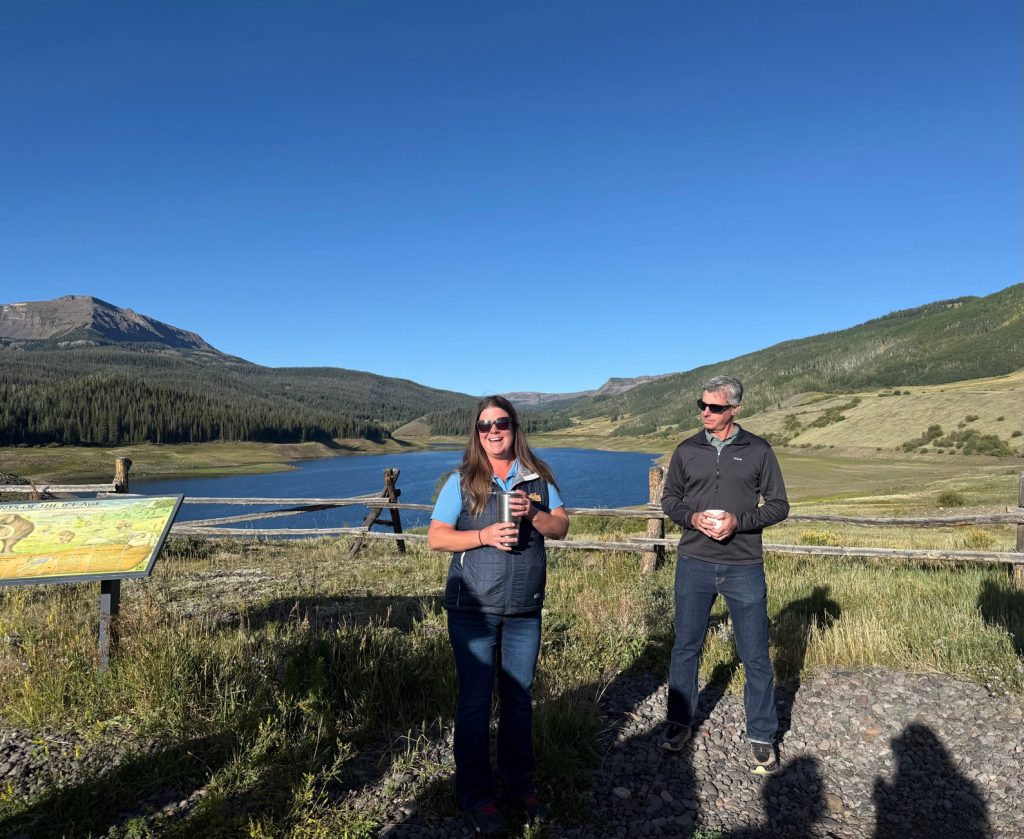
Standing at Yamcolo Reservoir just below the Yampa River’s headwaters in August, Andy Rossi, the Upper Yampa district’s general manager, described the technology as “brand new and experimental.”
“As we move into drier and drier times, folks like us, we’ve got to keep trying new things,” Rossi said. “We don’t know if it works yet, but we’re willing to give it a shot and do the research behind it and see if it’s worth continuing later out for a couple of decades.”
Collecting snowmelt from its headwaters in the Flat Tops, the Yampa River flows east to Stagecoach Reservoir, where it makes a U-turn and meanders west into Dinosaur National Monument and merges with the Green River, and eventually, the Colorado River. The White River also has its headwaters in the Flat Tops and empties into the Green River farther west in Utah. Combined and depending on the year, Rossi said these two rivers comprise 10-15% of the flow at Lee Ferry, just downstream of Lake Powell.
“Without snow, this whole system doesn’t really work,” Rossi said, adding that the goal of the pilot is to “hopefully create a little bit more bang for a buck out of each storm track that comes through, both rain and snow.”
The need for this kind of innovation was illustrated after this year saw Colorado’s worst snowpack on record, abnormally hot temperatures and historically low streamflows spiral the state — particularly its northwest corner — into deeper drought.
“We have been able to track changes in snowpack, in temperatures and in climate variability in our basin, and indeed, what it has shown us over the past decade or so is that the area of the Flat Tops, and at the very highest end of the headwaters of the Yampa, is experiencing a higher degree of warming and a higher degree of snowpack modification because of warming conditions,” Rossi said in an October interview. “For us to target an area that needs the most help, that’s it.”
Enhancing snow, one ion at a time
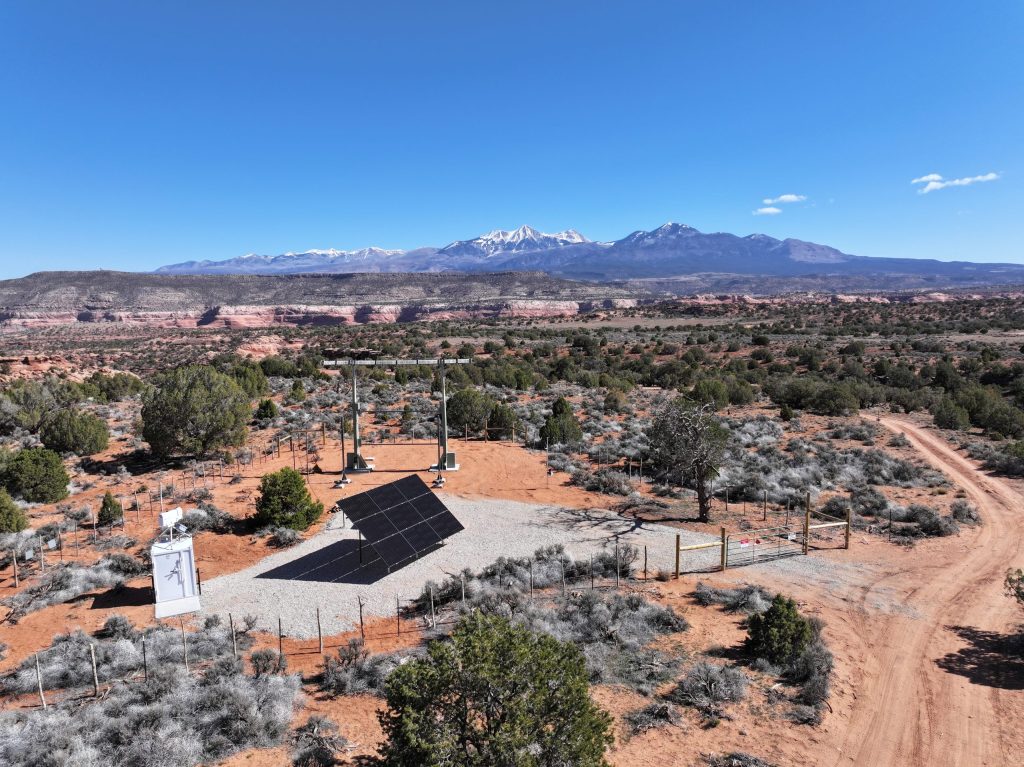
Compared to “typical” cloud-seeding technology, which involves injecting tiny particles — most commonly silver iodide crystals — into clouds to enhance their precipitation potential, this ground-based technology uses ionization to target a similar effect. Rain Enhancement Technologies calls it the Weather Enhancement Technology Array.
In an October interview, Rossi said the installation will be about 30 feet wide and 20 feet long and resembles a ranch gate, with a large frame and electrified coil. It relies entirely on solar power.
According to the statement of work for the pilot, “each station releases electrically charged negative ions into naturally occurring wind flow feeding the cloud with the ‘fuel’ needed to cultivate precipitation.”
These charges enter the cloud mass and enhance condensation, causing cloud droplets to “progressively grow” until they are large and heavy enough to fall as precipitation, it adds.
Meteorologists and technicians with Rain Enhancement Technology will then track storms remotely, firing up the apparatus “when they see a storm track that is: one, headed in the right direction … and two, it has the right predicted moisture content there,” Rossi said.
A test of the technology outside of Moab, Utah, reportedly led the snow-water equivalent to increase by over 20%. Andrew Rickert, Colorado’s weather modification program manager, said in April that more traditional cloud-seeding systems can increase a storm’s snowfall by roughly 8-12% when generators are turned on.
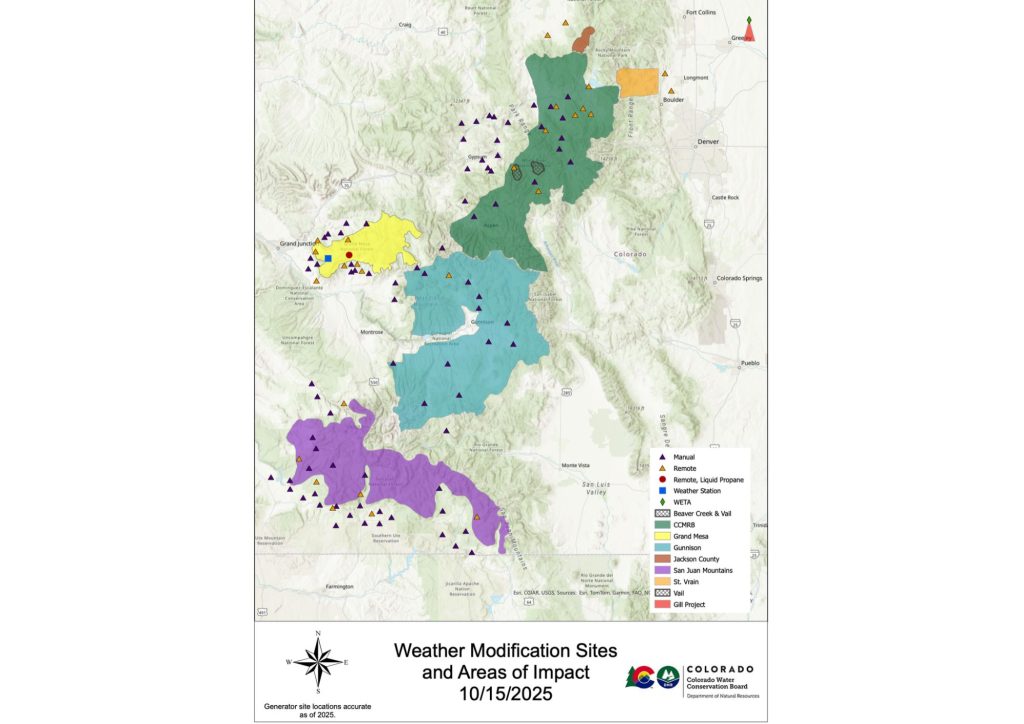
The Upper Yampa installation will be located at Colorado Parks and Wildlife’s State Wildlife Area near Lake Avery, with the intent of increasing precipitation in a 200,000-acre area of the Flat Tops and into the basin.
The ability to be “very specific about the area we were trying to influence” was one of the things that appealed to Rossi about the technology when he was approached midsummer by the Colorado Water Conservation Board and Colorado River District about potentially piloting it.
“We, at the Upper Yampa District, are really trying to enhance the water supply for our reservoirs, and for the headwaters, snowpack, water supply that drives the whole upper end of the system,” he added. “There’s water scarcity that has been going on for generations up there, and so it really was the best place for us to try to deploy a new technology … and try to push the envelope a little bit in response to droughts.”
In a news release, Scott Morris, vice president of engineering at Rain Enhancement Technologies, said that “beyond the reservoirs downstream, this site gives us a chance to benefit the land right around it.”
“We’ll be operating to provide some enhancement to Lake Avery, which is right near the site, and we expect more rainfall and snowpack over the surrounding wilderness areas, which should benefit the forests and the wildlife there,” Morris said.
Rossi added that the site was also carefully selected so as not to increase moisture and precipitation on the burn scars from the Elk and Lee fires, which burned outside of Meeker in 2025.
“That landscape needs some time to heal, and we wanted to be sure we weren’t creating an unintended consequence there that would be negative to that landscape,” he said.
The state has other guidelines to ensure weather modification technologies do not have negative impacts. Rossi said this includes shutting down the project if snowpack gets too high or robust as well as shutting down for “very volatile storm tracks” with the potential for high-intensity rainfall and flash flooding.
“There is a component of safety that is offering a nice check valve on how much we try to influence the moisture that could fall as precipitation,” he said.
The pilot program will last an entire year, meaning that the pilot will aim to track the “efficacy of the technology” and whether there is a “quantifiable positive impact” to both rain and snow precipitation,” Rossi said.
Testing this new technology is just one way the water conservancy district is looking to build resiliency in the face of drought.
“It really is an excellent opportunity for us to try one of the new technologies or methods that’s out there in response to drought,” Rossi said. “This is something that I think we’re gonna need to keep searching for solutions to, and if we can feel like we’ve tried everything that is reasonable, I think we’re gonna feel a little bit better about trying to manage the water resources for the district and for the water users within the district.”





Support Local Journalism
Support Local Journalism
The Sky-Hi News strives to deliver powerful stories that spark emotion and focus on the place we live.
Over the past year, contributions from readers like you helped to fund some of our most important reporting, including coverage of the East Troublesome Fire.
If you value local journalism, consider making a contribution to our newsroom in support of the work we do.