Online course helps anyone learn more about Indigenous perspectives

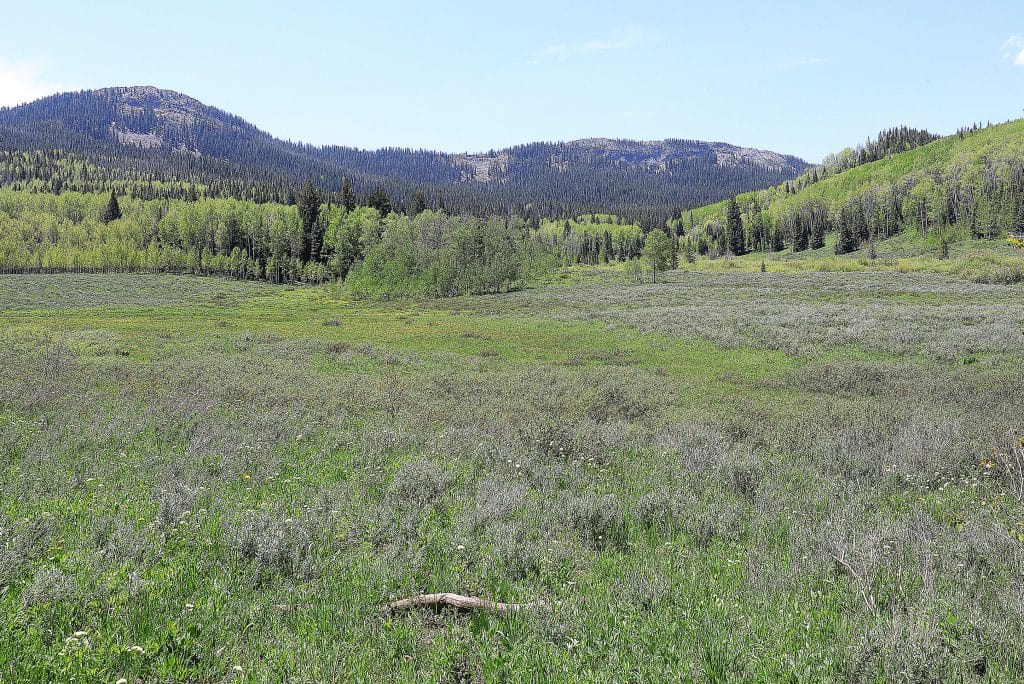
John Russel / Steamboat Pilot & Today
The U.S. Forest Service’s Rocky Mountain Region released a new online tool that helps users learn and better understand Indigenous knowledge and perspectives. The Cultural Landscape Training Path is an easy-to-use sequence of “story maps.” The Continental Divide Trail Coalition partnered with the Forest Service to create the tool.
“Indigenous Nations have a deep connection to their ancestral homelands,” wrote Amanda Grace Santos, a USDA Forest Service archeologist who began building the training path in 2022. “These tools offer a unique opportunity to engage with and learn from Indigenous communities, whose profound connection to the land spans generations.”
The training path is a sequence of four story maps that guides the audience through reflective questions and goals. The story maps include an accomplishments “so-far” section and a call to action for users to make their own impact.
“The intended audience is anyone who is involved with land management — such as federal or state agency employees, non-governmental organizations, or communities — interested in learning about Indigenous perspectives and how to become a better partner,” wrote Valery Serrano-Lopez, a Forest Service partnership liaison specialist.
The idea behind the web resource started when Santos was a resource assistant on the Continental Divide National Scenic Trail. Serrano-Lopez helped Santos with the training path by designing the story maps.
The project started as a series of research questions about the cultural landscape surrounding the Continental Divide National Scenic Trail, Santos wrote. In order to find answers, Santos attended conferences and lectures held by Indigenous organizations and trainings specifically designed by and for those working on ancestral lands.
“This led to surrounding myself with both my non-Indigenous and Indigenous colleagues to learn what the main gaps are that create issues in land management,” Santos wrote.
The training path has six principles:
- Explore Indigenous media
- Acknowledge administrative histories
- Understand that tone and setting matter
- Support sovereignty
- Diversity points of engagement
- Honor expertise of Indigenous partners
The training path utilizes a “decolonized” perspective, something that Serrano-Lopez and Santos both describe as a process of “unlearning” for anyone unfamiliar with the idea. The training path is also aimed towards who are unfamiliar or even intimidated on how to respectfully engage with tribes.
The tool complements the Forest Service’s National Tribal Relations Action Plan, which is a new roadmap to serve tribal nations and strengthen nation-to-nation relationships.
In addition to the Continental Divide Trail Coalition partnering to help create the training path tool, it also released its first installment of “Connections to the Land” film series that premiered in Acoma, New Mexico, in November. The film puts a spotlight on the importance of Indigenous voices and their role in shaping the future of conserving public lands.
“Listening to the perspectives and concerns of Tribal elders about the protection of cultural sites, land, water, and wildlife offers a better understanding of Indigenous values– which include nurturing the land,” Cornell Torivio said, who is the New Mexico Regional Representative for Continental Trail Divide Coalition and organized the film.
The film is a partnership between the coalition, private donors and the University of New Mexico-Taos Media Arts Program.




Support Local Journalism
Support Local Journalism
The Sky-Hi News strives to deliver powerful stories that spark emotion and focus on the place we live.
Over the past year, contributions from readers like you helped to fund some of our most important reporting, including coverage of the East Troublesome Fire.
If you value local journalism, consider making a contribution to our newsroom in support of the work we do.