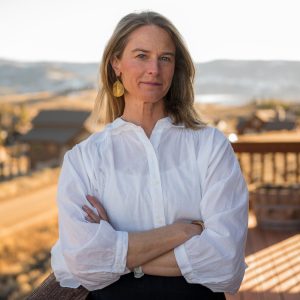
Q&A: Say hello to Jeremy Krones, running for County Commissioner, District 3

Colorado Headwaters Land Trust/Courtesy photo
To learn how we produced the 2026 election Q&A, read here.
Resident of Colorado and Grand County Since 2018.
Q: If elected, what are the three most important results you would want to accomplish during your four-year term?
Framing them as results, I would want to address three primary issues. The first being general affordability, focusing mostly on housing. That’s something that I think is an ongoing project and an ongoing fight. And so I want to push back on the idea of actually achieving a result, as opposed to moving the needle, setting up Grand County, so that it can have more of a continuous affordability. That’s the first one.
The second one would be road safety and transit. I think we’ve come a long way just in the last two years or so, particularly around road safety. Our state senator, Dylan Roberts, has gone to that specifically for Grand County over the last couple of years because the last two years have been really deadly on our roads. But again, I feel there’s more that we can do in terms of actual road infrastructure, so things like guardrails, as well as taking care of our roads better and more conscientiously. So, looking at our dirt roads in the county. What roads are used by locals more? What roads need to possibly have better upkeep? And trying to navigate that with our County Road and Bridge Department and our funding, and making sure that we can address those issues. As well as working with CDOT on the state roads, on the 34 and 40 and nine, and the other counties and U.S. highways that pass through the county. And that also extends to how people use the road.
Fraser, Winter Park, Granby, and Grand Lake all have various forms of public transit, and they’re working through some of the issues around it, mainly with funding and use. But there could be, again, exploring other options, maybe on a county level, not necessarily a project for the county to fund, but certainly for the county to investigate and invest and attract private interest into the county to provide some form of more mass transit or public transit, just to get from Kremmling, to the east side and back. And that would, I feel, take drivers off the road; it would take cars off the road and make our roads safer in that way.
And then the third goal of mine is just general representation. I feel our current elected officials, whether they’ve only been in [office] for one term or more, they more or less consistently win with just over 50%. It’s between 50 and 60% of the vote. And because that’s been so consistent, what it shows me is that they’re really not trying to expand their support network, right? Their voter base in the county, which could manifest in them not really paying attention, or not reacting, or understanding some of the concerns of people who are not voting for them. And so, my goal-and this is partially why I’m running as unaffiliated, but also just as a dedicated community member that spans the county and participates in a lot of very disparate groups. I feel that I would like to see more broad representation at the county level, more consensus building, [and] more collaboration throughout the county, throughout all of these different groups.
Q: Congestion on Highway 40 and other major routes affects residents, commuters, emergency responders and visitors. What are the most realistic steps Grand County can take over the next four years to improve transportation and traffic fatalities, even though many of these highways are controlled by the state?
With traffic fatalities, I think we’ve already taken a great step forward with the bill from last year that Senator Roberts had sponsored. But again, working with CDOT, my understanding, and this is coming from someone who is involved and invested as a private citizen, but has not, you know, dived into the public world so much on this front, but the squeaky wheel gets the grief. So if we’re able to work with CDOT and really make them understand what our needs and wants are on a really serious level, you know, seven to eight million people drive our highways, we’re a big tourist destination for people, and it would be really worthwhile for our roads to be safer and better maintained.
So, working with CDOT, making sure that we have a spotlight on us, and that could include getting Grand County representation, specific Grand County representation on commissions or on boards that work with CDOT on a state level. So looking at that, and then on local roads, on county-maintained roads, we did just go through a review and a renewal of our road and bridge standards, and so going through that process showed me there we are limited, right? We have a small government; we have a limited budget, but really looking at could we allocate different funding towards our roads? Are there grants out there? Are there other funding opportunities out there that we could supplement? Again, to look at paving, to look at better maintenance, and this is not a slight against our road and bridge. They are doing a great job and doing what they can given their resources, but maybe the county could get more resources from outside sources to help them out in different ways.
Q: Grand County provides water that serves communities far beyond our borders. What should the county’s priorities be in protecting local water rights, river health and water supplies as demand increases across Colorado?
Well, the priority should be to retain the water that we have, and that really speaks to, again, standing up, speaking out, making sure that people understand that we are not just at the table as someone who signs documents and goes along with agreements and contracts as they get put before us, but we actually speak up for ourselves, and we’re able to negotiate in good faith to ensure that Grand County has the water we need. And when I say Grand County, and especially in this case, it’s Grand County residents as well, or Grand County human residents, as well as our non-human neighbors, so the wildlife, the landscape, the natural resources-you know-we’re looking at the Fraser River going down to one or two CFS.
A lot of people, and rightfully so, are focused on the impact that could have on our own taps and our own wells, but we’re also looking at the natural resources and how that could affect not only within the stream itself with the fisheries and the stream banks and what that means for the riparian areas and the wetlands that the Fraser and the Colorado rivers create, but then also just throughout the entire Middle Park ecosystem. So really standing up for that and prioritizing what we need, and it will be difficult; the Colorado River Compact and the Drought Management Plan and all of those are very complicated, and there are a lot of really big players in them, but being at the headwaters I do believe that we play a special role, and we should be recognized as someone who plays a special role in this, and kind of respected to that extent.
Q: During the KFFR Candidate Forum, there was a discussion about the county’s decision to commit $5,000 toward an amicus brief in litigation involving energy companies and Boulder County. Beyond that particular case, what standards should commissioners use to determine when county funds should support litigation or advocacy outside Grand County?
That’s a good question, and I appreciate that the conversation’s ongoing about it because just this last week that court case was in the news because it had hit the courts. I think the most basic standard we should use is if and how that case or the results of the case could or would affect Grand County specifically, right? So, comparing that court case, the results of that case, I don’t believe would affect Grand County in a specific way. We wouldn’t be able to draw a straight line, like if ultimately Boulder City and County won their ultimate court case, that won’t affect Grand County in a specific, direct way. There might be outside influences, but our economy changes all the time, and there are a lot of outside influences that we don’t have a say in, and we don’t control or can’t control.
Whereas you look at other court cases or other situations that could have gone to the courts that we have weighed in on, such as the Uinta Rail Line coming through the county. That had a direct effect on Grant County because the train is coming through Grant County, and we have a rail line that goes straight through the county, goes through Byers Canyon. So I think comparing the two is not accurate because one is more broad and one is very specific to us, so I think that would be my first standard of evaluation.
And then, you know, especially when it comes to earmarking local taxpayer funds to support or protest a case like that, that’s really something that I feel should have been put to a larger discussion, whether it was a full public hearing or we had a collection of experts of different backgrounds and different ideas come together to really discuss it. Because again, I see this more as the commissioners acting without such a strong mandate, right? They didn’t win with an overwhelming majority of the vote, which to me means they don’t really represent the overwhelming majority of the people of Grand County. And while that doesn’t always come into play when they’re making day-to-day decisions about planning and zoning or how to allocate funds within the county government, I think it does play a role when the county is speaking on the larger stage, and they’re supposed to represent the county’s interests and values.
Q: If Grand County faced a significant budget shortfall next year, what three services would you protect first, and what spending would you be willing to reduce, delay or eliminate?
I think top of mind, and this is kind of the core of the purpose of government, is health and human services. So that is our emergency services, and I would extend that to our roads, making sure that we have proper resources to navigate both the day-to-day situations that we could all face in emergencies, so police, fire, EMS, as well as greater disasters. So making sure our roads are maintained, and that specific roads are maintained for appropriate egress.
Going through evacuation during East Troublesome, we evacuated on 34 and then 40, and those are state-maintained roads that they’re paved, and it was a very smooth evacuation. And I live close to the highway; I certainly know a lot of people who don’t live close to highways. In the case of an evacuation, they would have to navigate dirt roads and back roads and roads that might not have been maintained recently enough in the cycle, and so prioritizing that would be most important to me: emergency roads, and then probably health. So making sure that we still have those resources to support those of us who live here at that most basic level.
Cutting funds, I don’t know if I would be interested so much as just slashing departments as much as reducing budgets and encouraging the departments to look to the outside for funding. There are a lot of state and federal grants, and even private grants that are made available regularly to municipal governments and small governments like ours to help support that. And you know, I come from the nonprofit world. I’m pretty well versed in what those resources look like and how they can be navigated. Grants are not meant to be sustaining funding, but they’re meant to prop up or support specific projects.
Q: Tourism is central to the county’s economy, but many residents want more year-round employment opportunities, better wages and greater economic stability. What specific industries or businesses should Grand County work to attract or expand, and what can county government realistically do to support them?
I’m going to push back briefly on the question itself. This is not an either-or. Tourism and local year-round manufacturing or industry can coexist very well, so it’s kind of dangerous when people pit the two against each other because so much of our local economy is based in outdoor tourism, and that category in and of itself is very broad. It’s everything from the ski resorts to the dude and guest ranches to outdoor recreation, as well as any of our museums and other facilities that are most appealing to tourists. But looking at year-round industry, the term that I’ve come across is called light manufacturing. It’s local production; we’re not looking at big factories, but it’s what can we do to encourage creativity? What can we do to encourage more natural resource-based manufacturing? So I’m looking at the space to create in Grand Lake. That is a really great example of, yes, it’s the advertising, and a lot of the interest in it is based in the arts. But there’s nothing to say that can’t grow, and someone could create a business out of leatherworking, or metalworking, or glassworking at a local level.
There’s also a lot of opportunity for growth in technology-based industries. During COVID especially, a lot of my friends that I’ve made over the last six years came to Grand County and became full-time residents during or immediately after COVID because they could afford to live up here. They ensured that they had regular internet and they had regular electric services, and they’d go down to Denver one or two days a week just to check in at the office. And so I think that really has opened the door that communities nationwide are still slowly getting into, which is what types of technology can we invest in that keep people here year-round, but they don’t have, and they’re working for corporations or businesses that might exist elsewhere in the country or even in the world, but still live here and make a living wage, or more than a living wage, raise a family here, and really invest in their communities.
Diane Butler, who’s our economic development director at the county, said this really well at a recent meeting: if we invest in these small businesses that have a big impact for the dozen or two dozen employees and families that they have, on the unfortunate off chance those businesses leave, on one hand, that’s not going to drain the town out of a population, but the fact that those businesses are here means that the town and the county really benefit from that economic flow. Looking at that, and the county, I do believe, can invest, and it’s both financial investment as well as intellectual investment, where if we make it obvious to outside investors, to outside businesses, that Grand County is a place that they can come and they can invest and they can set up shop. If we have a co-working space or we have an empty building, which we have a lot of empty buildings owned by the towns, owned by the county, owned by private individuals, these businesses can set up shop there, support their own workers living in such a beautiful place. So what the county can do realistically: if we don’t have the financial benefit or the financial bonus of investing, we can certainly present ourselves as a community that wants them to come here, and we can really understand those benefits.
Q: At the forum, you advocated updating zoning and land-use codes to allow more housing types and greater density where infrastructure already exists. What specific zoning changes would you propose, and how would you ensure they produce housing affordable to local workers rather than additional second homes or vacation rentals?
The changes that I’ve been saying have really been opening up planning and zoning to allow for and prioritize density. So where there’s already infrastructure, where there could be more infrastructure for maybe less cost, that is where I would want to concentrate new development, and that development would be cheaper, just by way of one, it’s multifamily housing; it’s density housing. So that’s multiplexes and duplexes and just smaller buildings that would lower the cost of construction. There wouldn’t be new roads; there wouldn’t really be much new infrastructure built to access those new developments. So I’m seeing that as if we’re just doing it based on the cost of the construction itself, the bottom line would be lower.
Again, I don’t believe the county should get into development. However, if the county has county land that they could commit to development, prioritizing locals, year-round residents, building them at cost as opposed to inflating the cost based on the developer’s whims, I think would be a really good step forward to encouraging and prioritizing the workers and the year-round residents of the county.
I would be interested in having the conversations around vacancy taxes or second home taxes or fees in order to demonstrate that Grand County is prioritizing our full-time residents and our workers without alienating a large block of our tourist economy. I’m sure the state would want to be involved if we were to say housing can only be sold to these people because that would restrict the free market. But if we were able to demonstrate our priorities and make sure that our locals, our full-time residents, and our workers kind of had first crack at things, especially if those houses- like condos, tiny homes and multiplex housing units, multifamily housing units, if they were built more in a concentrated area, I think that in and of itself would make them less appealing to second homeowners because they wouldn’t really be built as vacation homes; they would be built as full-time residences.
Q: You expressed opposition to mass surveillance and questioned whether the cameras provide sufficient public safety benefits. If independently verified data showed that the cameras helped solve serious crimes, would that change your position?
No. I think the only change I would have is: is there another model of surveillance that does not rely on a multinational tech corporation that would be internally monitored, internally controlled, and could those crimes have been stopped, captured, detained without ALPRs, using different technology or more boots-on-the-ground resources? And I understand there are funding issues there, but again, there are funding opportunities and other resource opportunities we could investigate. You know, the big question for me would be: Were those crimes uniquely stopped by Flock or by those cameras, or were they stopped, and there would be other opportunities for us to stop them otherwise?

Support Local Journalism
Support Local Journalism
The Sky-Hi News strives to deliver powerful stories that spark emotion and focus on the place we live.
Over the past year, contributions from readers like you helped to fund some of our most important reporting, including coverage of the East Troublesome Fire.
If you value local journalism, consider making a contribution to our newsroom in support of the work we do.