Q&A: Say hello to Randy George, running for County Commissioner, District 3


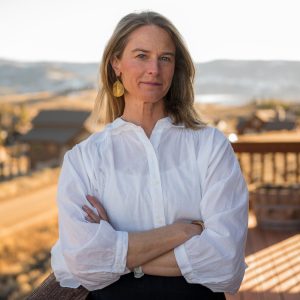
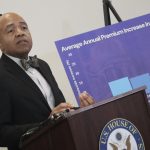
Randy George/Courtesy Photo
To learn how we produced the 2026 election Q&A, read here.
Resident of Grand County since 1987.
Q: If elected, what are the three most important results you would want to accomplish during your second term?
The three most important results that I would like to accomplish are maintaining the fiscal responsibility of Grand County, improving our transportation, and third, making sure that future development can occur while maintaining the rural character of the Grand County that we all love.
Q: Grand County provides water that serves communities far beyond our borders. What should the county’s priorities be in protecting local water rights, river health and water supplies as demand increases across Colorado?
This issue is largely controlled by existing Colorado water law, and also by forces outside the state, but it is the responsibility of the county to fight to keep as much water in the local streams and rivers as possible. That will benefit those who rely on that for their livelihoods in the ranching community, for irrigation, and it will also enhance the environmental quality of our rivers and streams by providing much improved aquatic health.
Q: Congestion on Highway 40 and other major routes affects residents, commuters, emergency responders and visitors. What are the most realistic steps Grand County can take over the next four years to improve transportation and reduce traffic fatalities, even though many of these highways are state-controlled?
You touched on one of the most important points, and that is that the major highways in Grand County are indeed state-controlled. That means that we need to advocate with the Colorado Department of Transportation for any and all improvements to those roads to enhance driver safety, as well as reduce gridlock. The county also has an opportunity to expand a few of our roads that are off the main highways, and will provide additional ways for locals to move around the county without necessarily having to get on those major state-controlled highways.
Q: If Grand County faced a significant budget shortfall next year, what three services would you protect first, and what spending would you be willing to reduce, delay or eliminate?
This question poses a hypothetical that seems unrealistic at the moment. We are currently budgeting for slight decreases in some of our revenue streams. With that said, I hold public safety as a high priority, so that includes funding the sheriff and funding the EMS. Also, I hold in high priority the maintenance of our transportation infrastructure. That means funding our road and bridge system, the road and bridge department, and all the work that they do. Thirdly, Grand County needs to continue to provide services to our residents, such as the Division of Motor Vehicle Services. That’s one that almost all of us have experience with.
There are other services as well that we provide in terms of public health. Those are just two examples. Now, what we would have to cut-that would mean that we’d have to do some belt-tightening in areas, such as cutting back on personnel. That might mean that our citizens would have to wait longer for various kinds of services. I think of some things like our Department of Natural Resources. We might have to cut back on our ability to provide weed control to our residents at no additional cost. We also might have to delay some projects for wildfire mitigation.
The county has been very conservative in terms of our approach to budgeting, and with that said, we have an emergency reserve that will allow us to work through temporary economic downturns. Also, the county’s revenues tend to lag what’s going on in the general economy. Therefore, we will have time to plan ahead and respond to potential changes, either a downward trend or an upward trend in available revenues.
Q: Tourism is central to the county’s economy, but many residents want more year-round employment opportunities, better wages and greater economic stability. What specific industries or businesses should Grand County work to attract or expand, and what can county government realistically do to support them?
Having spent several years on the Grand County Tourism Board, which promotes tourism for the county, I am very well aware of the importance of tourism to our economic success in this county. We do need to diversify, but that is not something that will happen rapidly. The county does have an economic development department that is currently working to develop a space to create. That’s a simple example of an initiative aimed at helping entrepreneurs get their businesses started by providing a place where they can economically build the foundations of a successful business. Realistically, because of our location and the difficulties of transportation for any large or heavy items, light manufacturing would be a direction that I would like to see us go, and the county can assist in reducing the barriers by encouraging development, perhaps even the use of special use permits to allow those industries to get a foothold in the county.
Q: During the KFFR Candidate Forum, there was discussion about the county’s decision to commit $5,000 toward an amicus brief in litigation involving energy companies and Boulder County. Beyond that particular case, what standards should commissioners use to determine when county funds should support litigation or advocacy outside Grand County?
The important consideration that commissioners must make is whether the expenditure of funds for litigation will be judged to have a positive impact for the residents of the county. We are currently involved with legal counsel to support the Shoshone water rights case with the water court. We are not directly litigators in that, but we are providing support because we believe that having more water in the Colorado River will benefit all of us in the long term. To reiterate, it’s a question of whether we think a particular case is of significant public benefit for the residents of Grand County.
Q: During the KFFR Candidate Forum, you identified housing affordability as one of the important issues the forum needed to address. As the incumbent commissioner, what specific housing initiatives have you supported during your time in office, what results have they produced, and what would you do differently in another term?
As a reminder, the county’s involvement in affordable housing is fundamentally limited to the unincorporated parts of the county. There are numerous housing projects and affordable housing projects that are underway in some of the municipalities. However, the county had a unique opportunity, being given the property that was the Black Bear Motel, and to convert that into workforce housing. The Black Bear apartments are now available and, last I knew, fully occupied by workers in Grand County, not workers of the county, but workers in the county. That’s one area where we’ve been very positively involved, and as I came in as commissioner, we were in the midst of working along with the developer for the project known as the Mill Avenue Apartments, and that’s affordable housing. And the reason the county was involved is that to get the kind of special tax treatment that made that project more affordable they needed to have a government entity partnering with them. So we have a very, very small share, 1% or something like that, in that project to allow that to come to completion.
The last thing I would say about this is that the risks of development should be borne by the private sector and not by the public sector. As the county, we can help reduce some of the uncertainty that private developers encounter by giving them a straight path to accomplish their development, and in so doing, make housing less expensive.
Q: During the forum, you said there is good growth and unacceptable growth when discussing development. Can you give an example of both, and expand on what you mean by this?
As a commissioner, we have people who come to us very, very exercised about the fact that they don’t want any change. They don’t want any development. And then we have others who come to us who are very excited that we need to have more development; we need to have more housing. We’re always in this situation where we want to address both of those issues simultaneously. I think any multifamily developments, any large single-family developments, need to be concentrated in areas where we already have the water and wastewater infrastructure to handle that development. I would say unacceptable development would be that kind of development outside of areas having that necessary infrastructure.



Support Local Journalism
Support Local Journalism
The Sky-Hi News strives to deliver powerful stories that spark emotion and focus on the place we live.
Over the past year, contributions from readers like you helped to fund some of our most important reporting, including coverage of the East Troublesome Fire.
If you value local journalism, consider making a contribution to our newsroom in support of the work we do.