Two-year moratorium on commercial alternative energy projects in Grand County continues until June 2027
Sky-Hi News
During a 2025 meeting for the Grand County Board of County Commissioners, a unanimous 3-0 vote sealed a two-year moratorium on commercial-size solar, wind, battery and energy storage projects.
On May 14, 2025, the Grand County Planning Commission had proposed a one-year moratorium on commercial solar development following a few requests by commercial entities about existing regulations on solar project development within Grand County.
Within ten minutes of discussion, this moratorium was then extended to last for two years and cover commercial wind projects. There was not public at about this topic at either public meeting.
Spearheaded by Kristen Manguso, Community Development Director, recommended by Ryan McNertney and seconded by Bob Gnuse, this moratorium was then referred to the Board’s following a 4-1 vote. After the passing of the recommendation, the moratorium went into effect immediately on June 24, 2025.
The recommendation adopted by the Board extended the definition of the moratorium to battery and energy storage applications, as well as solar and wind projects, that exceed a 25kW capacity. This limit, which is described as about 60-70 standard solar panels according to Liz McIntyre, president of the board at Mountain Parks Electric, is defined as the maximum system capacity allowed for net metering under a residential labeling.
Net metering is an accounting process that allows members to receive retail credit for their renewable energy production over a period of 12 months, according to an email from Megan Moore-Kemp, Director of Strategy and Programs at Mountain Parks Electric.
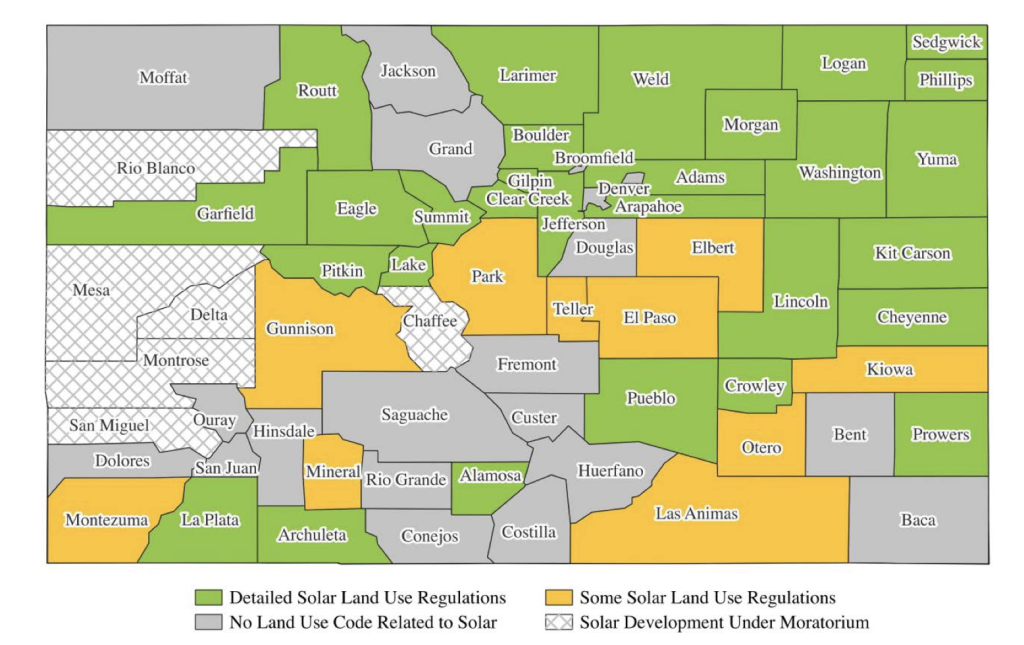
Referenced by Manguso, 39 Colorado counties have adopted solar land-use regulations as of November 2024. As the Grand County master plan continues to be updated, and limited public input had been gathered by that time for the development of large-scale commercial alternative energy projects, the moratorium allowed for extra time in drafting regulations and courting public opinion, she said.
According to an email from Moore-Kemp, “MPE is looking closely at utility scale batteries, as they could be especially valuable to our membership for cost control. But, if we go this route, we are a ways off and will be working in coordination with the county.”
This present moratorium, however, halts any progress of these projects until June 24, 2027.
The utility company currently facilitates two 1 megawatt solar arrays, one located in Walden and one in Fraser. These arrays produce enough energy to provide electricity to up to 350 homes each, according to McIntyre.
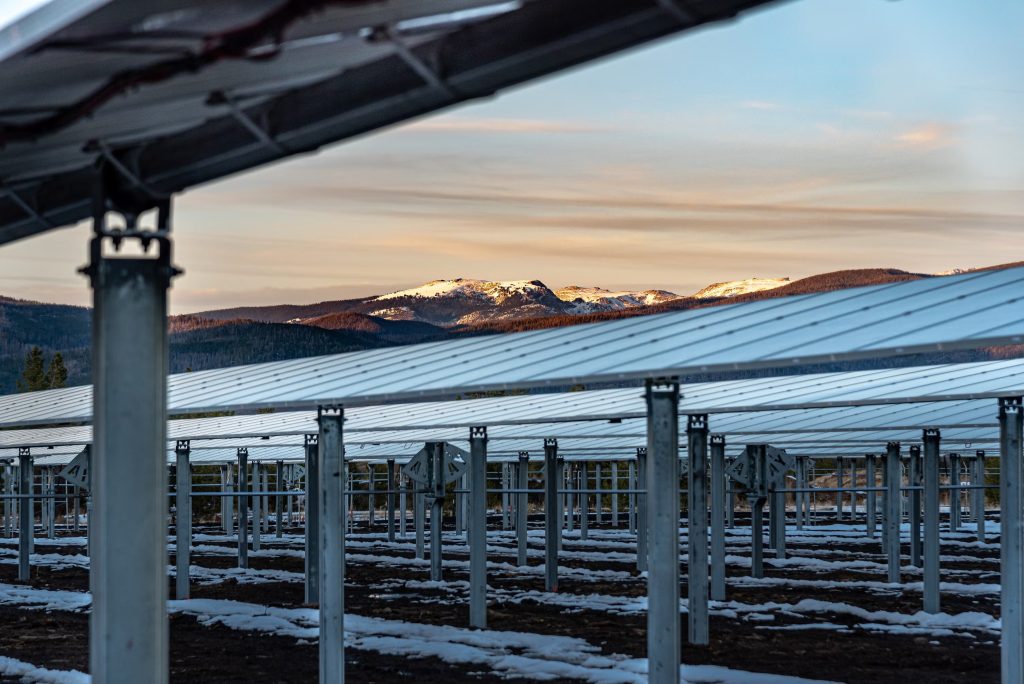
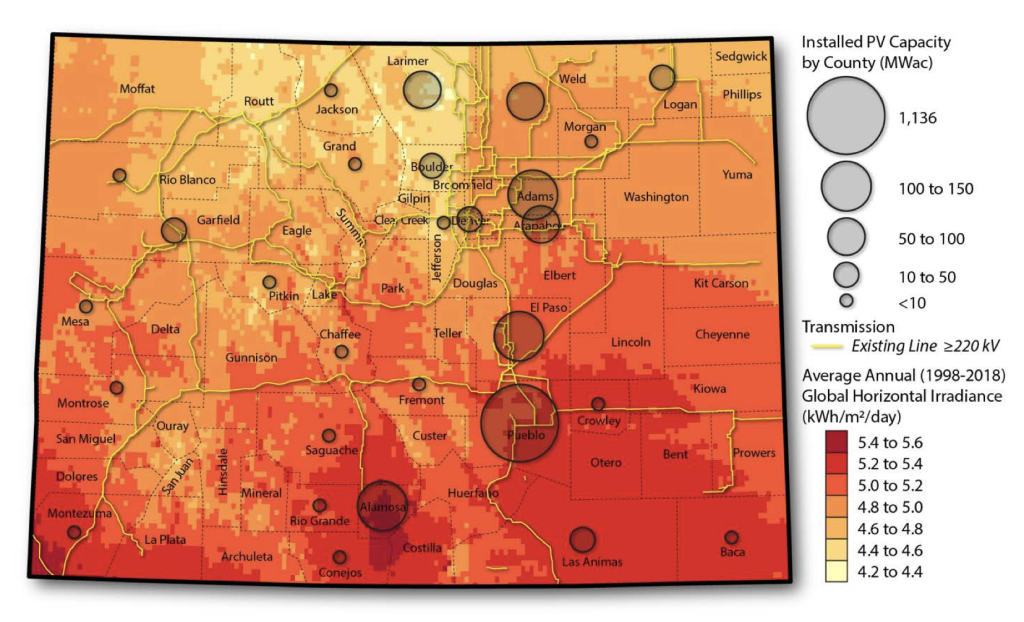
“We have less than 30 percent of developable area,” says Manguso. “The land is valuable here, and it is more valuable for development than it is for solar farms.” Manguso also says that these developments “cause damage too, the sun doesn’t get underneath (solar panels)” and that runoff causes water and drainage issues.
The study quoted by Manguso within meeting documentation, an April 2024 report from the Colorado Agrivoltaics Learning Center and National Renewable Energy Laboratory, however, combats some of these notions, naming agrivoltaics as a possible solution for some of these quarrels.
Agrivoltaics is a dual land use combining agriculture and ground-mounted solar, where one could cultivate crops, bee keep or graze livestock below and/or between solar panels. This study says that adoption of agrivoltaics could diversify income streams, help the property owner save water and provide other benefits.
Lynn Adams said during the planning commission meeting, that “alternative energy had some appeal, but doesn’t really work as well because… it is backed up by gas or coal.” Adams then mentioned the prospect of growing conversations surrounding nuclear energy, saying that any solar developments could be left “abandoned” and “unreclaimed” if nuclear energy comes to fruition.
This moratorium does not discourage residential solar production though, with Manguso adding that she “has a very small, if any, electric bill” due to solar panels installed on her property. She then clarified that solar works individually, but it doesn’t seem to work on a larger scale.
It is unclear when the next hearing for public comment will be held regarding this moratorium.




Support Local Journalism
Support Local Journalism
The Sky-Hi News strives to deliver powerful stories that spark emotion and focus on the place we live.
Over the past year, contributions from readers like you helped to fund some of our most important reporting, including coverage of the East Troublesome Fire.
If you value local journalism, consider making a contribution to our newsroom in support of the work we do.