Bennet, Neguse continue calls for review of Uinta Basin Railway project over concerns of potential for oil spills
The Uinta Basin Railway project would connect an oil-rich region in Utah to a national railroad network that passes through Grand Junction, Glenwood Springs, Kremmling and Denver

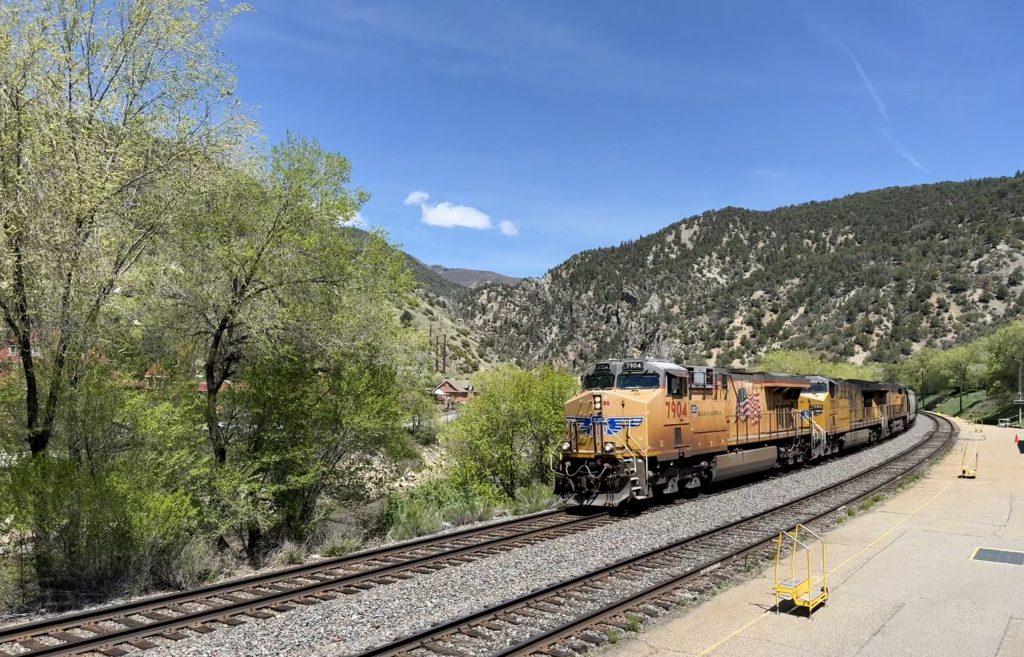
Ali Longwell/Vail Daily
U.S. Sen. Michael Bennet and Rep. Joe Neguse are continuing their calls for a comprehensive review of the Uinta Basin Railway, a project that would ship crude oil along the headwaters of the Colorado River.
Bennet and Neguse sent a letter to the federal Surface Transportation Board on Monday, urging the board to reject a motion that would reaffirm the board’s previous approval of the project with what the lawmakers in a news release described as a “truncated review.”
“A train derailment that spills oil in the headwaters of the Colorado River would be catastrophic not only to our state’s water supplies, wildlife habitat and outdoor recreation assets, but also the broader Colorado River Basin,” the lawmakers wrote.
The Surface Transportation Board originally approved the Uinta Basin Railway project, which would connect Utah’s rural Uinta Basin oil fields with a national railroad network that passes through Grand Junction, Glenwood Springs, Kremmling and Denver, in 2021. As many as five, two-mile-long trains per day could travel from Utah through Colorado to the Gulf Coast on the route.
The Seven County Infrastructure Coalition, the group behind the project, has said the Uinta Basin Railway will solve long-standing freight transportation challenges in the Utah region and “move goods in a safe and cost-effective way.”
But Bennet, Neguse and environmental groups have raised concerns that the project could increase the risk of a train derailing and spilling oil into the Colorado River headwaters as well as increase wildfire risk. In their letter, the lawmakers pointed to the derailment of a coal train in the Gunnison River near Grand Junction in December as evidence that “train accidents and spills are not rare.”
“These trains would run for over 100 miles directly alongside the headwaters of the Colorado River — a vital water supply for nearly 40 million Americans, 30 tribal nations, millions of acres of agricultural land, and a main driver of our state’s recreation and tourism industries,” the lawmakers wrote.
In 2022, Eagle County government and environmental groups sued over the proposed 88-mile railway, arguing that the environmental review completed under the National Environmental Policy Act Review for the project was insufficient.
A 2023 ruling by the U.S. Court of Appeals in Washington, D.C., sided with the Eagle County government, pausing the project, but the U.S. Supreme Court last year unanimously overturned the lower court’s ruling, clearing the way for the project to move forward.
Bennet and Neguse, however, have continued to urge the Surface Transportation Board to take Colorado community’s concerns into consideration and “conduct a thorough and updated supplemental (environmental impact statement)” before approving the project.
“We urge the Board to reject the motion submitted by the Seven County Infrastructure Coalition to reaffirm the Board’s previous approval of the project with a truncated review,” the letter states. “Instead, the Board should engage in a thorough, rigorous evaluation of the project that includes robust public participation and a supplemental environmental impact statement that considers the project’s risks to Colorado’s communities, water, land, air and climate.”



Support Local Journalism
Support Local Journalism
The Sky-Hi News strives to deliver powerful stories that spark emotion and focus on the place we live.
Over the past year, contributions from readers like you helped to fund some of our most important reporting, including coverage of the East Troublesome Fire.
If you value local journalism, consider making a contribution to our newsroom in support of the work we do.