Water Information Network shares annual snapshot of program
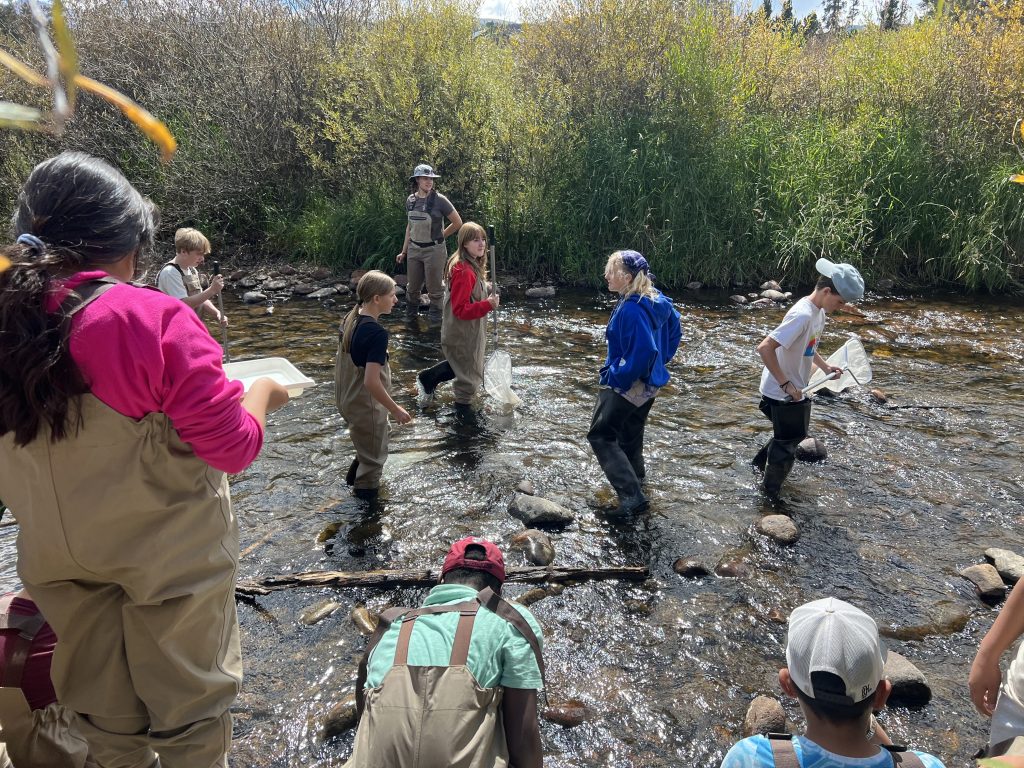
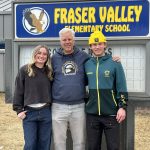
Grand County Water Information Network/Courtesy photo
Grand County is an important part of the state’s ecosystem — home to many lakes and reservoirs, and the headwaters of the Colorado River. The Grand County Water Information Network plays a major role in water quality monitoring, information sharing and educating local youth. This ensures the health of these natural resources for next generations.
On March 3, the Water Information Network gave its annual presentation at the board of county commissioners’ meeting. Kyle Masterson, the nonprofit’s executive director, shared updates on multiple monitoring programs, educational outreach and a new interactive data dashboard. Grand County’s water resource manager Katherine Morris assisted with the presentation.
Monitoring for toxic algae, stream temperature, river health and more
The water information network monitors cyanobacteria, a potentially toxic “harmful algae bloom.” The toxin is known as blue-green algae and normally comes in either green or turquoise, but can also be red, gold, or brown. When this coating appears in bodies of water, GCWIN staff are the boots on the ground to test it.
Staff members monitor for signs of cyanobacteria in the Three Lakes area — Grand Lake, Shadow Mountain Reservoir and Lake Granby — as well as Granby’s Willow Creek Reservoir.
The algae thrives in stagnate bodies of water, where it can bloom and become toxic to humans and animals. Cyanobacteria levels must be below Colorado Department of Public Health and the Environment’s recreation limits at all times.
If members of the public spot what may be toxic algae bloom, they should contact GCWIN at 970-627-8162 or Morris at Grand County’s water resource department at 970-725-3058.
Cynobacteria can be tested visually, through properties like its texture and if it floats to the surface.
Masterson cautioned the public from touching cyanobacteria or trying to test if it’s toxic — “Without the proper PPE, the last thing we want people to do is these tests and have a rash from it. That’s my public service announcement,” he said. “… We’re always there in the summer and we can deploy somebody to do the test.”
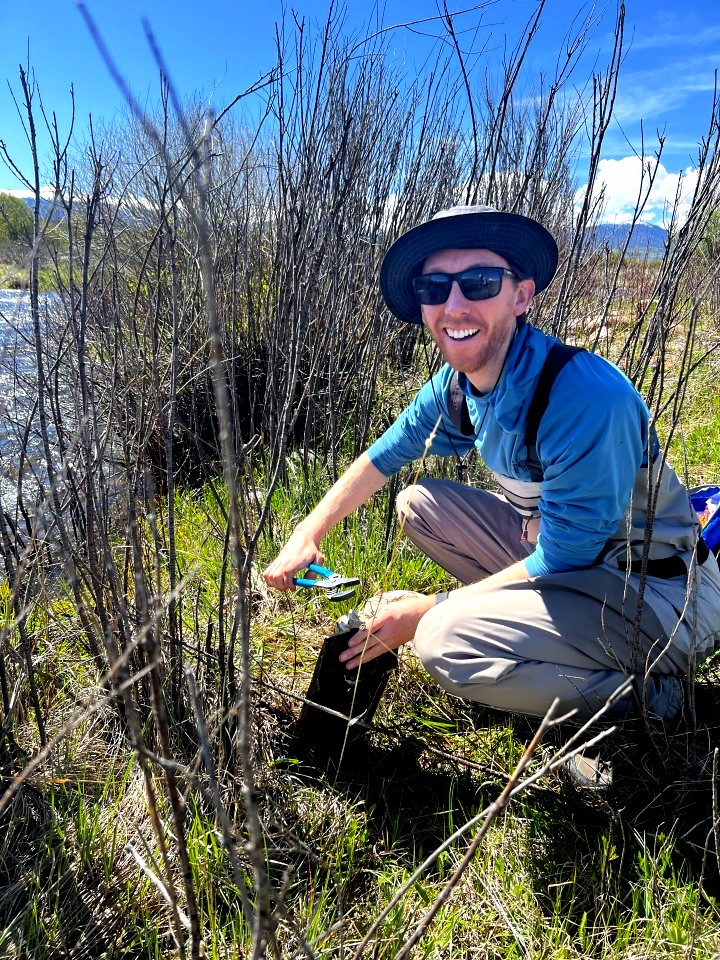
GCWIN also monitors data for important water health metrics, such as stream temperature for the Upper Colorado and Fraser River Basins. One of its most significant monitoring efforts is for lake clarity in Grand Lake and Shadow Mountain Reservoir.
GCWIN shares its data with Grand Lake Adaptive Management, a group which works to restore and maintain the clarity of Grand Lake.
In the 1940s, the Colorado-Big Thompson project negatively impacted the clarity of these water bodies. This ambitious project pumped water from the headwaters of the Colorado River to the Front Range. The water transfers through Grand Lake via a tunnel that runs under the Continental Divide. The water is stored in Shadow Mountain Lake and Lake Granby prior to release. In 2024, the state government passed a resolution to improve lake clarity.
The Water Information Network’s mission is to manage and provide comprehensive water quality monitoring for lakes, streams and rivers in Grand County. The Network also provides educational programs for Grand County students. It was founded as a nonprofit in 2004, with members such as the county commissioners, Winter Park Resort, Learning By Doing and town governments.
Students get their feet wet through field trips
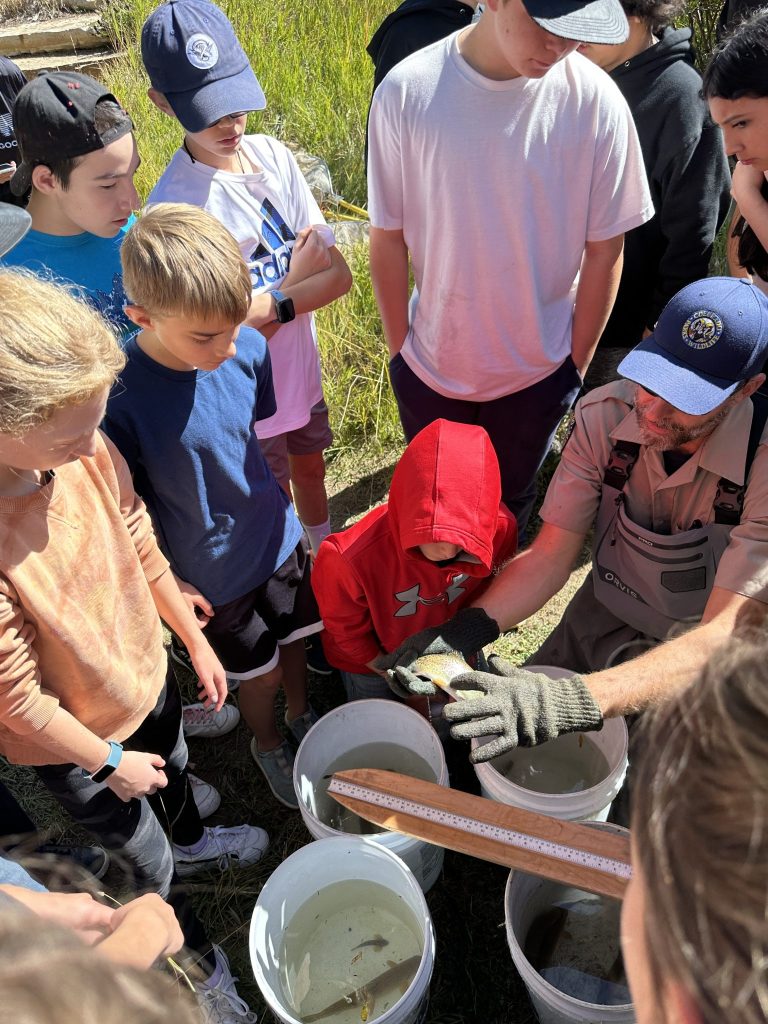
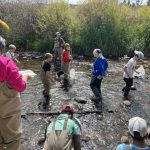
GCWIN is dedicated to teaching local students the importance of keeping Grand’s waters healthy. Masterson, a former high school teacher, is passionate about educating kids outside the classroom — from Williams Fork to the Fraser River.
Masterson thanked Rocky Mountain National Park staff for helping secure $10,000 in 2025 to fund GCWIN’s education programs.
“That’s a huge accomplishment,” he said, adding that the funds will be used to update aging equipment that’s used for demos and to get kids in the water exploring, such as waders.
“I imagine that we will just continue those programs and have impactful field days for the students, hoping to spark some interest and really encourage the next generation of water stewards in the county,” he said.
Interactive dashboard enables public to view data
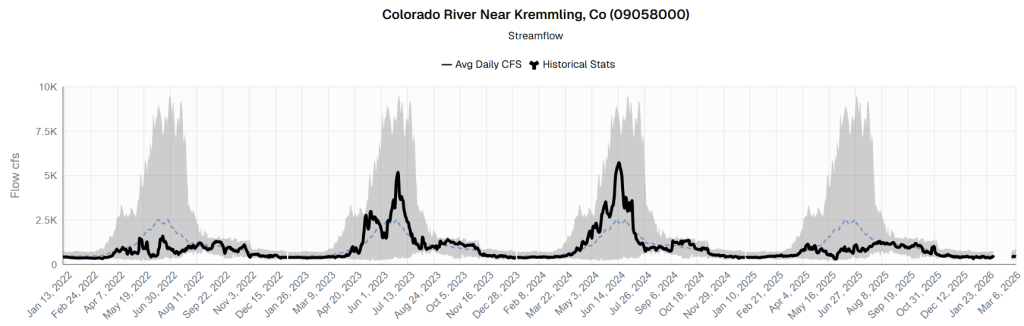
With support from Grand County government, GCWIN has recently launched an interactive data dashboard on its website, so that all the county’s monitoring sites and water data is viewable online.
“We’ve been waiting for this for almost 20 years. This is a really big deal,” Morris emphasized. “It’s so exciting; this is going to be wonderful for the community, because it is easy to use.”
Environmental groups like Learning By Doing and providers like Northern Water can share the data on the dashboard, consolidating it in one place. Now, an angler can visit the site to see what the stream temperature is during the week, and if it’s safe for the fish to catch and release. A student can analyze data year over year to see how Grand County’s drought is impacting water levels. Waste water plant treatment plant operators can also implement the data when they renew their discharge permits.
Masterson added that the dashboard provides “snapshot storytelling” for the everyday community member to understand a very complex topic. The tools provides decades of data — stretching from the Colorado River to the reservoirs that sustain Grand County and beyond.
For more information and to explore the data dashboard, visit GCWIN.org. For any questions, email director@gcwin.org.
9 educational field trips across county for 684 students
19 partnering entities
278 East Grand middle schoolers
93 West Grand middle schoolers
137 Grand County fifth graders
126 Grand County second graders
36 Fraser Valley Rec day campers
14 middle schoolers from The Logan Creative School of Denver






Support Local Journalism
Support Local Journalism
The Sky-Hi News strives to deliver powerful stories that spark emotion and focus on the place we live.
Over the past year, contributions from readers like you helped to fund some of our most important reporting, including coverage of the East Troublesome Fire.
If you value local journalism, consider making a contribution to our newsroom in support of the work we do.