What to do if you’re experiencing water clarity issues in Hot Sulphur Springs

Sky-Hi News archive
Most residents of Grand County turn on the tap at home without questioning their water clarity. But a few residents in Hot Sulphur Springs recently expressed frustration with water they receive from the town’s infrastructure.
In a Facebook post on the Grand County Community Page in late November, several Hot Sulphur residents stated that they had issues with the clarity of the town’s water. According to past reporting by Sky-Hi News, the town has experienced water issues intermittently over the past two decades.
Mayor Ray Tinkum and town Public Works Director Nick Rardin spoke with Sky-Hi about what can cause clarity issues and improvements the town is pursuing.
Water clarity issues
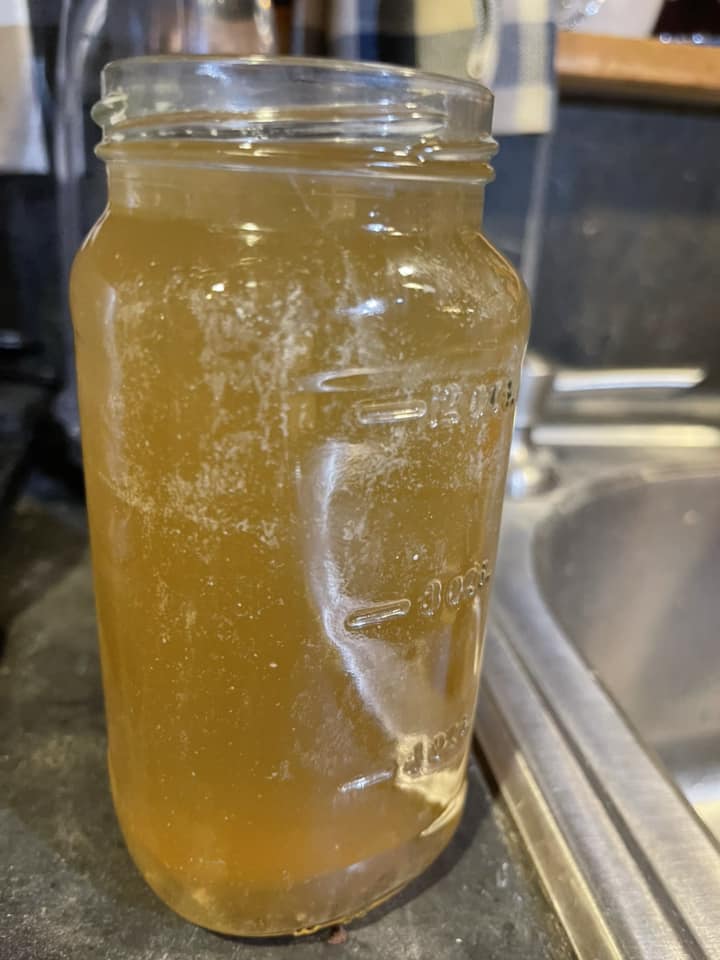
Rardin said he didn’t want to speculate on causes while town staff are still investigating instances of brown water. However, he did confirm that flushing fire hydrants temporarily causes brown water for residents in certain areas.
Tinkum explained the effects of flushing hydrants.
“We’ve noticed that dramatic pressure fluctuations in our main line will sometimes dislodge some sediment and create this brown water effect,” Tinkum said. … “Part of that has to do with the age of our infrastructure. That’s what you’re seeing in all of Grand County’s communities is that the infrastructure has some age on it.”
The town’s website states that flushing fire hydrants is necessary to ensure proper operation for firefighting and to clean distribution system lines.
According to Rardin, another possible cause for lack of water clarity is a resident’s private service line. These lines run from the town’s main lines, located beneath the streets, into homes.
“People could have old, galvanized services that have corrosion,” he said. “Maybe if they use a sink while they’re taking a shower or filling their bathtub, getting that extra flow through there, that could be one of the issues.”
If residents want to replace their private service lines, they should contact a plumber. However, town staff will assist residents who need to replace service lines that contain lead. According to a federal mandate, all lead pipes must be replaced by 2037.
Hot Sulphur’s public works department conducts weekly, monthly, quarterly and annual sampling of its drinking water. The town is required to monitor for contaminants in accordance with federal and state regulations.
“The water quality is fine; the water is safe to drink,” Rardin said. “We’re in compliance with Colorado Department of Public Health and Environment.”
According to Hot Sulphur’s 2023 water quality report, the town has no detected elevated levels of contaminants, such as lead, chlorine or copper.
Rardin said that although water quality complies with all regulations, residents should never drink water when it’s brown in color. However, the turbidity — or how cloudy the water is — is only temporary he said.
What to do about brown water
To get rid of the brown water, Rardin recommends flushing lines by turning on taps full blast for five to 10 minutes. This typically clears up the issue, he said.
Nick Rardin, public works director
Cell: 303-915-7716
Office: 970-725-3933
Email: nick@townofhss.com
Town hall
970-725-3933
Email: townclerk@townofhss.com
As soon as residents experience brown water, they should contact Rardin or town hall so staff members are aware of the issue.
“If people do not call us and let us know about the issues, we don’t know about them,” he said. “So without knowing about them, we cannot try to remedy the situation.”
Tinkum agreed.
“We are here to help the people, and we do respond to problems, but they need to communicate with us,” he said. “Facebook is not a medium that we use to communicate with our citizens.”
Where the water comes from
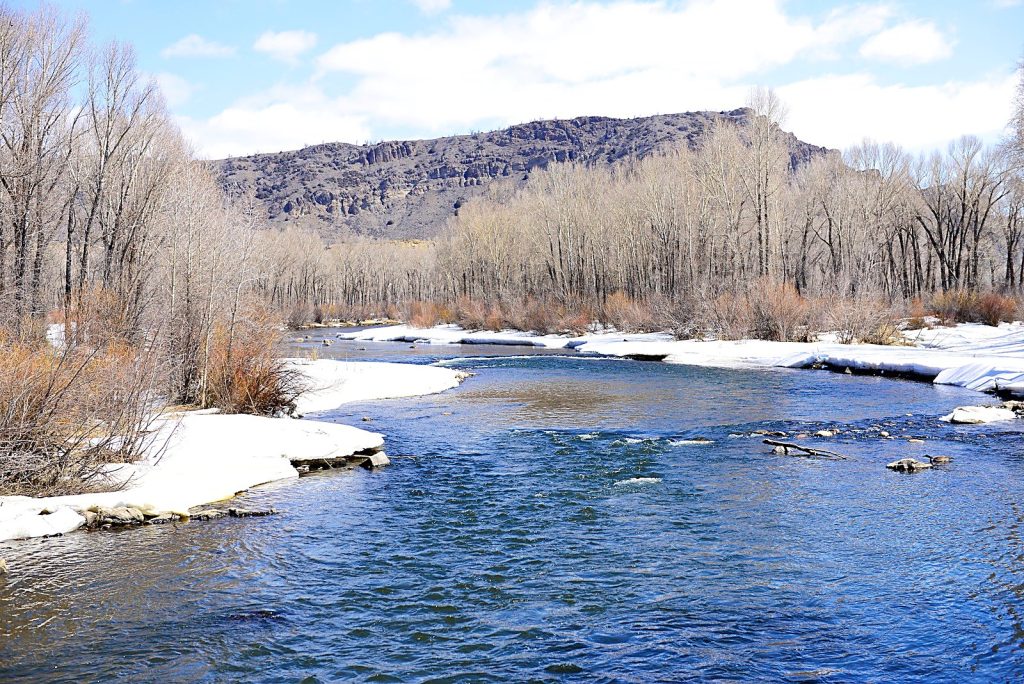
The town receives all of its potable water from the Colorado River, which flows directly through Hot Sulphur from its headwaters in Rocky Mountain National Park. The town holds senior rights.
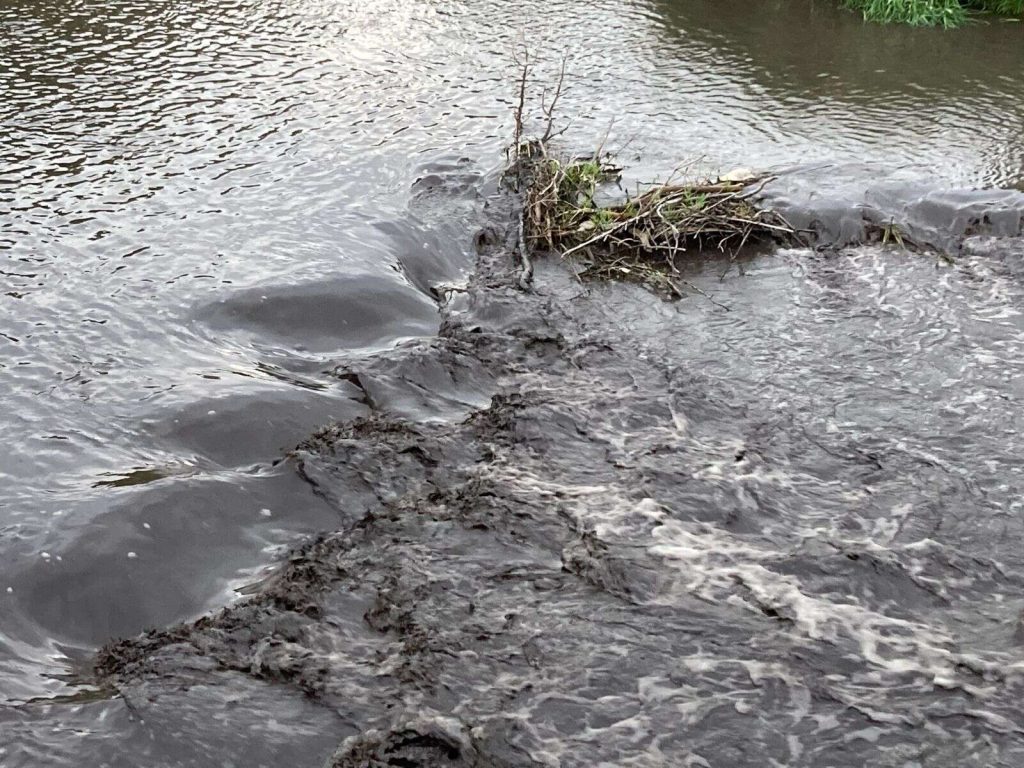
However, natural disasters such as the East Troublesome Fire have left Hot Sulphur’s water supply at risk. The fire left massive burn scars in Grand County, and the fire’s impacts “continue to affect turbidity levels in the river during periods of spring runoff,” Rardin said.
He added that the ongoing impacts of the fire can make it difficult to get raw water into the treatment plant intakes, such during as a period of heavy rain in August 2021.
“The impacts affected us by forcing temporary shutdown of operations on a couple of occasions,” he said, adding that “it never affected the quality of the water we were producing.”
Spring 2024 saw an improvement in turbidity levels over previous years; however, Rardin anticipates impacts from the burn scar to continue.
Rardin stated that the town is considering an off-channel alternate water source. A reservoir is another possibility, but not the most ideal one.
Improvements ongoing
Due in part to water infrastructure issues, there is a moratorium on town development, meaning only single-family homes with existing water and sewer taps can be constructed in the town’s boundaries. The first time the town instituted a moratorium was in 2021. Rardin and Tinkum said they do not have an exact date when the moratorium on taps could be lifted.
In order to support future development, town staff are working on water and sewer improvements.
First, the town must fix wastewater infrastructure. According to Tinkum, there is a problem with groundwater and stormwater entering pipes due to a suspected issue with a lagoon liner.
“We’ve been actively lining sewer lines, repairing the inflow and infiltration, and we’ll continue to do so,” Rardin said, adding that staff members “are constantly making improvements.” For example, the town recently finished a filter installation.
We’re trying to stay on top of both the current needs, the predicted needs and the evolution of the requirements coming from (the Colorado Department of Public Health and Environment). But it’s quite a daunting task because it is evolving every day.”
— Hot Sulphur Springs Mayor Ray Tinkum
To help raise funds to improve water infrastructure (and other municipal improvements) the town asked voters in November to approve two ballot measures: a lodging tax and a construction use tax. Residents narrowly approved the lodging tax, but the construction use tax failed.
Regardless, a number of improvements are in the works for Hot Sulphur’s water infrastructure, and a project needs assessment is being conducted with the Colorado Department of Public Health and Environment. Once completed, the assessment will give the town a clear direction for improvements and timelines.
“We’ve got target dates in there for major repairs, with deadlines of one year, two years, five years, 10 years,” Tinkum said. “And we’ve even got projects lined out that are going to be 20 years down the road.”
The needs assessment should be completed by spring. In the meantime, town staff members are “trying to stay on top of both the current needs, the predicted needs and the evolution of the requirements coming from the Department of Public Health and Environment,” Tinkum said. “But it’s quite a daunting task because it is evolving every day.”

Coloradans on the Western Slope could see Affordable Care Act premiums rise by nearly 15% in 2027
Coloradans using the state’s Affordable Care Act marketplace could see health insurance premiums increase by an average of 11% in 2027, according to the preliminary rates requested by insurance companies.


Support Local Journalism
Support Local Journalism
The Sky-Hi News strives to deliver powerful stories that spark emotion and focus on the place we live.
Over the past year, contributions from readers like you helped to fund some of our most important reporting, including coverage of the East Troublesome Fire.
If you value local journalism, consider making a contribution to our newsroom in support of the work we do.