Federal agency offers future Colorado River management options as states pursue a long-sought consensus
Stalemate continues over how Lake Powell and Lake Mead should operate in an uncertain future

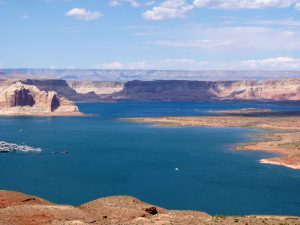
Bureau of Reclamation/Courtesy photo
With the seven basin states locked in a stalemate over Colorado River negotiations, the U.S. Bureau of Reclamation released its draft of options for managing the basin’s water supply.
The states now have until Feb. 14 to reach consensus on the post-2026 operational guidelines for Lake Powell and Lake Mead, or the federal agency will move forward with one of the five options listed in its draft guidelines published on Friday, Jan.9.
“Colorado’s working really hard to try to come up with a strategy where we are in the driver’s seat and not where we hand the keys over to the federal government,” said Dan Gibbs, executive director of Colorado’s Department of Natural Resources, at the Jan. 14 Colorado Parks and Wildlife commission meeting. “We think our best destiny is coming together on a seven-basin state solution.”
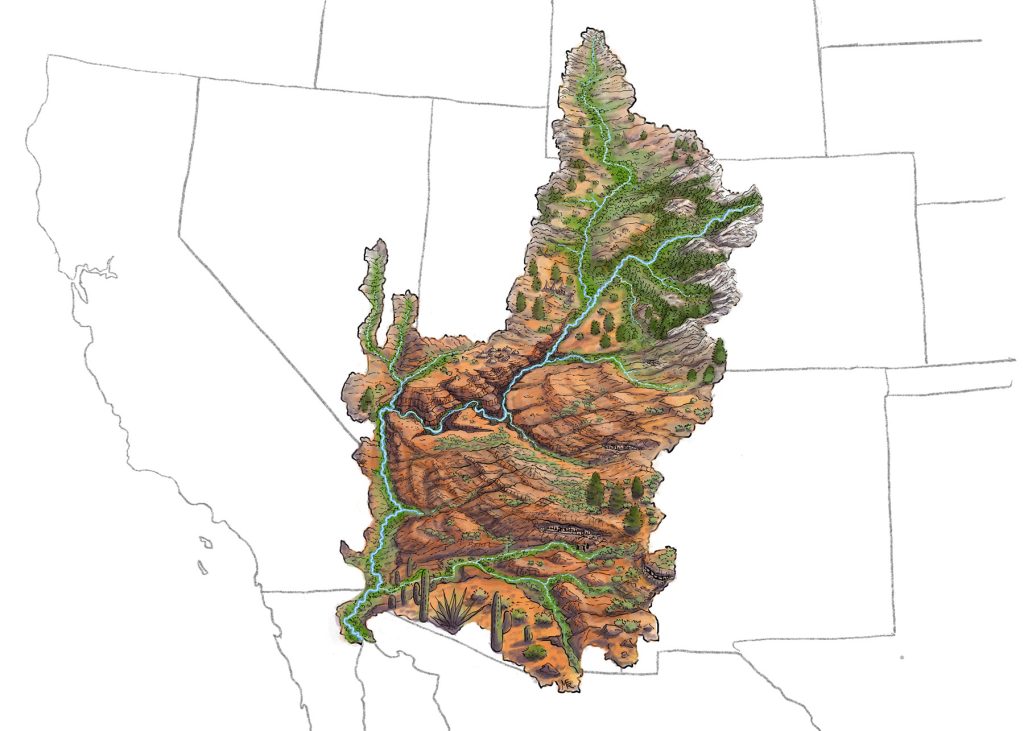
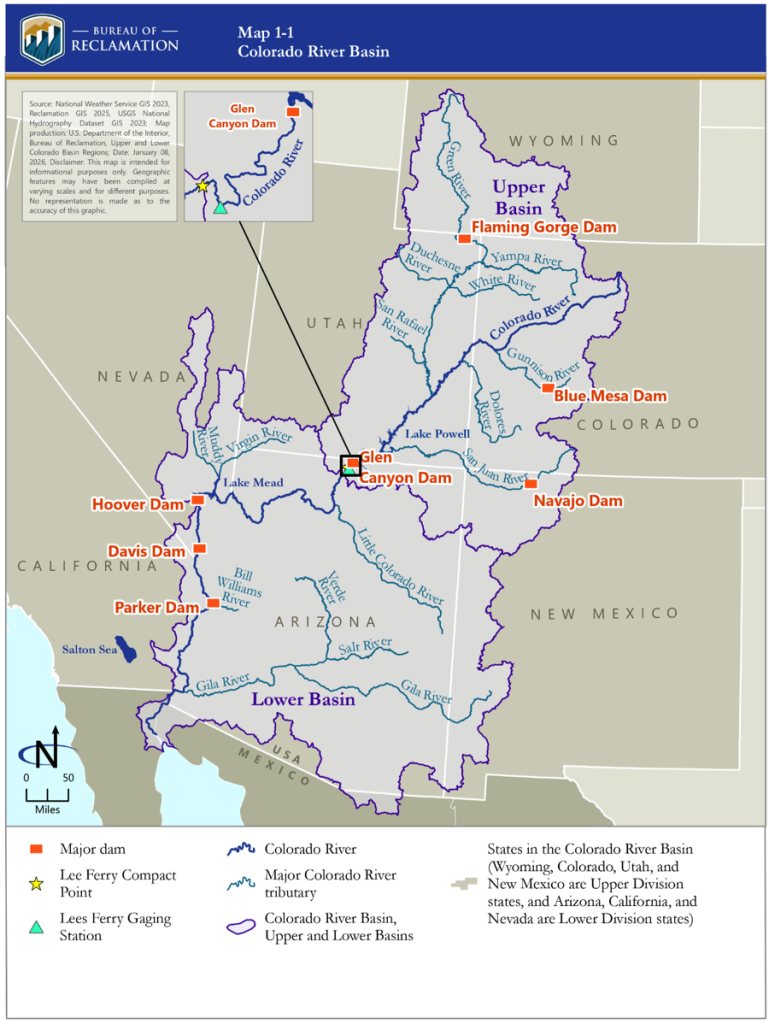
The Colorado River provides water to 40 million people, seven states, two counties, and 30 tribal nations. Water allocation on the river is guided by the 1922 compact agreement, which divided the river between the upper and lower basins.
While the four Upper Basin states in the compact — Colorado, New Mexico, Utah, and Wyoming — rely predominantly on snowpack for water supply, the Lower Basin states — Arizona, California, and Nevada — rely on releases from Lake Powell and Lake Mead.
It’s not the compact, but the 2007 operational guidelines for Lake Powell and Lake Mead that are being renegotiated as they are set to expire this year. A decision must be made prior to Oct. 1, 2026, according to the Bureau.
The federal government, seven states, and 30 tribal nations all agree the best path forward is for a consensus between the upper and lower basins. However, with the looming deadline and unresolved disagreements about the future of the river, the Department of the Interior and its subagency, the Bureau of Reclamation, are forging ahead.
”The Department of the Interior is moving forward with this process to ensure environmental compliance is in place so operations can continue without interruption when the current guidelines expire,” said Andrea Travnicek, the assistant secretary of water and science for the Bureau of Reclamation, in a news release announcing the agency’s latest draft options. “In the face of an ongoing severe drought, inaction is not an option.”
One of the main disagreements throughout negotiations has been who should be making cuts to water use. The Lower Basin states have advocated for basin-wide water use reductions. The Upper Basin states, however, have pushed back on the idea, claiming they already face natural water shortages driven primarily by the ups and downs of snowpack.
What options does Reclamation propose?
The draft Environmental Impact Statement released by the Bureau of Reclamation last week offers five options — including a required “no action” alternative and four others — that represent a broad range of operating strategies.
The draft’s publication initiates a 45-day public comment period ending on March 2.
In a statement, Scott Cameron, acting lead of the Bureau of Reclamation, said that the federal agency has purposefully not identified a preferred alternative, “given the importance of a consensus-based approach to operations for the stability of the system.”
The expectation is that whatever agreement is reached incorporates elements of all five options offered by the Bureau of Reclamation, Cameron added.
The five options identified are:
- No Action
- Basic Coordination
- Enhanced Coordination
- Maximum Operational Flexibility
- Supply Driven
Each option offers differing methods for how the Bureau of Reclamation will operate Lake Powell and Lake Mead, particularly under low reservoir conditions; allocate, reduce, or increase annual allocations for consumptive use of water from Lake Mead to the lower basin states; store and deliver water that has been saved through conservation efforts; manage and deliver surplus water; manage activities above Lake Powell; and more.
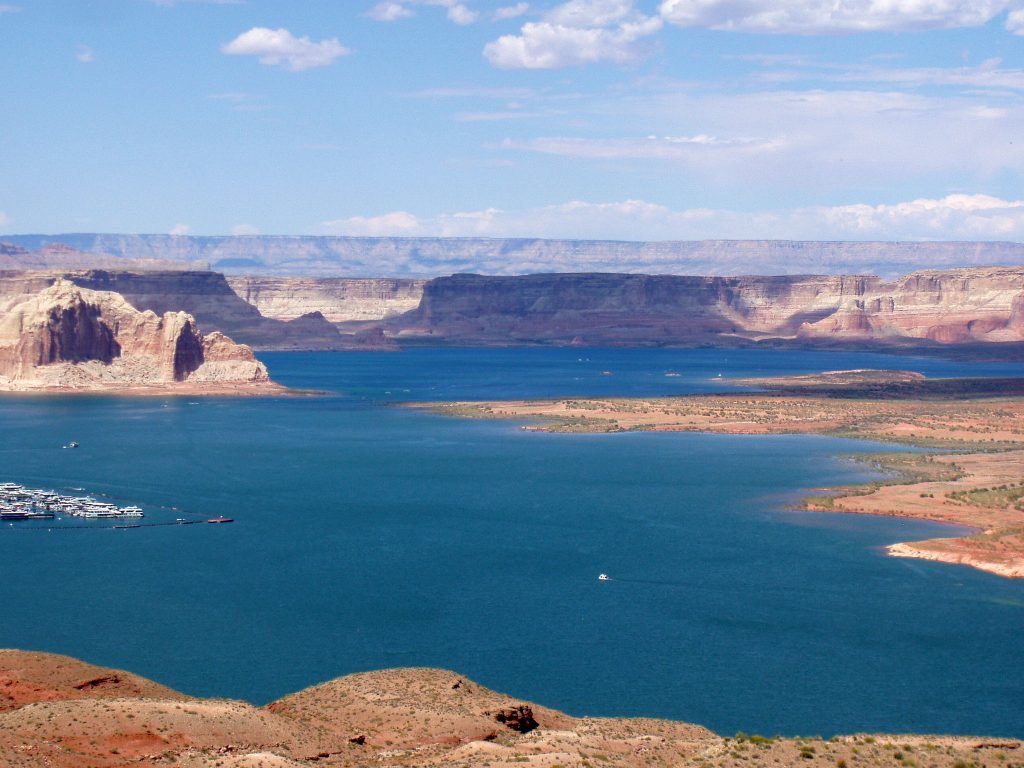
The 2007 agreement governing the two reservoirs came at a time when both Lake Powell and Lake Mead were full, but conditions have changed. As of Jan. 11, Lake Powell and Lake Mead were 27% and 33% full, respectively.
“The problem is we’ve been managing it in a constant state of crisis,” said Andy Mueller, the district’s general manager, at the Colorado River District’s annual meeting in October.
“Developing new guidelines is difficult in this complex basin, where critically low storage in Lake Powell and Lake Mead, significant hydrologic variability, and the anticipation of drier future conditions amplify the central tradeoff: balancing the potentially profound impacts of water-delivery reductions with the need to maintain reservoir storage,” the Bureau of Reclamation’s draft states.
The drafted options aim to address this trade-off whether conditions in the basin improve or not, the draft continues.
“(The alternatives) demonstrate that there are multiple ways to find a balance if conditions improve,” it states. “If conditions do not improve, achieving a balance is more difficult, and, under critically dry futures, even large and unprecedented reductions may not be enough to stabilize storage.”
At the October River District meeting, Becky Mitchell, Colorado’s water commissioner and lead negotiator, said that a consensus will require the upper and lower basin states to both set aside building an operations plan that meets the needs as they are currently, something she said has been a struggle.
“We need to let go of that dream,” Mitchell said. “That involves us creating a mechanism that allows the Upper Basin and the Lower Basin to manage within available supplies. We both have to do that. And we can’t have anything that suggests a delivery obligation or really hit on those major compact issues … We have different views of the compact. We’re going to have to fall somewhere between them.”
While any mention of water and Colorado River issues was brief at Colorado Gov. Jared Polis’ final State of the State address on Thursday, Jan. 15, Polis said that “there is no state better positioned to lead the way to a sustainable future for our namesake river.”



Support Local Journalism
Support Local Journalism
The Sky-Hi News strives to deliver powerful stories that spark emotion and focus on the place we live.
Over the past year, contributions from readers like you helped to fund some of our most important reporting, including coverage of the East Troublesome Fire.
If you value local journalism, consider making a contribution to our newsroom in support of the work we do.