Colorado 150: How skiing carved turns through Colorado history, shaping the modern outdoor industry
The story of the skiing mail carriers, ‘flying’ Norwegian immigrants and World War II ‘ski troops’ who made Colorado what it is today

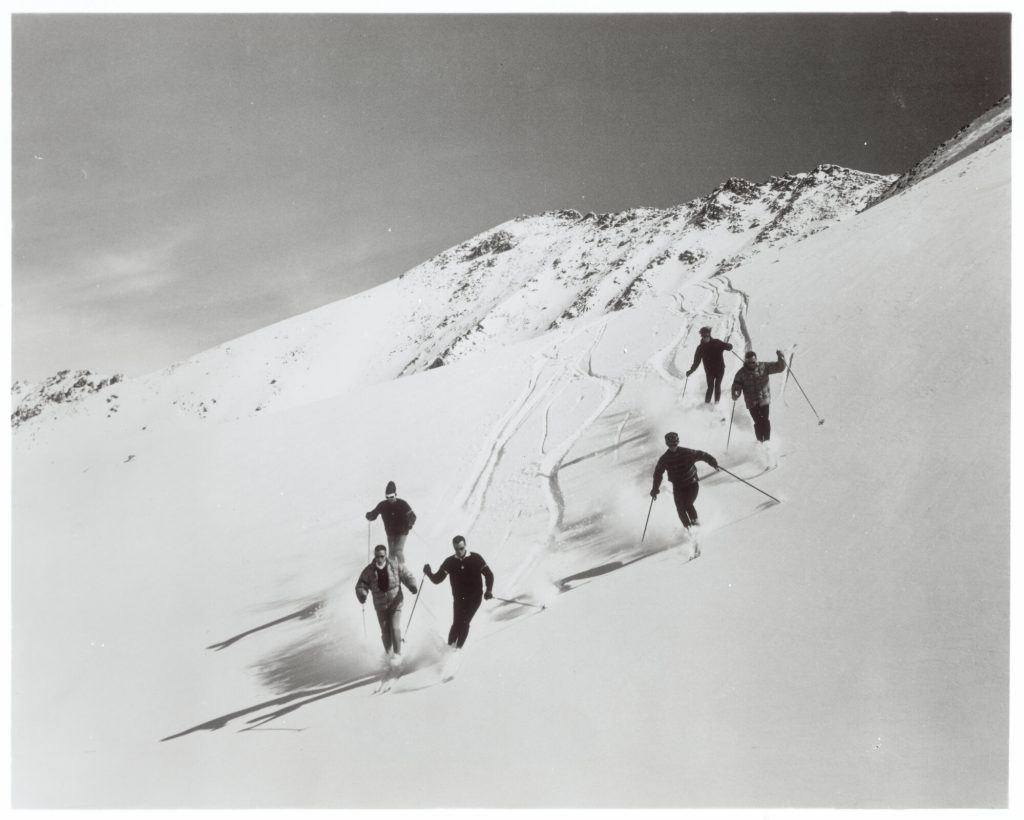
Denver Public Library Special Collections
For as long as Colorado has been a state, skiing has been a part of its culture and identity.
In the 150 years since Colorado was founded, the sport has snowballed from its humble beginnings as a means of winter travel into a multi-billion-dollar industry that attracts millions of visitors to the state each year.
“The mountains and skiing have become synonymous with our identity,” said Colorado Snowsports Museum Curator and Director of Collections Dana Mathios. “I think that’s largely because of how deep these roots run in our state.”
 As Colorado celebrates its sesquicentennial in August, our reporters are looking back at the people and stories that shaped our mountain communities.
This series traces the region’s history from before statehood, beginning with the Ute people, whose creation story is rooted in the Rocky Mountains, and the Hispano families who established some of Colorado’s earliest settlements. From there, it follows the miners and homesteaders who transformed the landscape, and the visionaries who helped build the recreation- and tourism-driven communities that define the region today.
Tracing the origins of the ski industry in Colorado can be as thrilling as plunging downhill off a steep slope. The story begins with characters like Father John Lewis Dyer, a skiing preacher and mail carrier, and includes the daring escapades of the 10th Mountain Division, an elite light infantry division of “ski troops” who trained in Colorado and founded dozens of ski resorts after returning from World War II. It covers the explosion of freestyle forms of skiing — and the emergence of snowboarding — in the late 1900s.
History Colorado Director of Interpretation and Publications Sam Bock said exploring the role that skiing has played in shaping Colorado is an exercise in inspecting who we are as Coloradans — and Americans.
“I think the big question 150 years ago in the state was, ‘What are we going to be?'” he said. “That is reflected in the five tries over 17 years it took … to go from a territory to state. Those questions really weren’t answered at the time — and to some degree I think they still aren’t.”
Skiing, though, has become a defining feature of Colorado, according to Bock, who said he himself grew up skiing in the state from the age of 3.
Today, millions of skiers buy multi-resort passes sold by ski conglomerates, like the Epic Pass from Vail Resorts and the Ikon Pass from Alterra Mountain Co. With major resorts like Vail Mountain, Breckenridge Ski Resort, Aspen-Snowmass, Steamboat Resort and Winter Park Ski Area, Colorado attracts roughly one-fifth of the total ski visitation in the U.S. each year.
“Colorado’s mountains gave us the perfect landscape for snow sports, but it was the people who transformed that natural beauty into a culture of adventure, innovation and community,” Mathios said. “You can build ski resorts anywhere, but you can’t recreate the unique relationship between Colorado’s mountains and the generations who made them part of our identity.”
The Wild West of skiing during Colorado’s gold rush
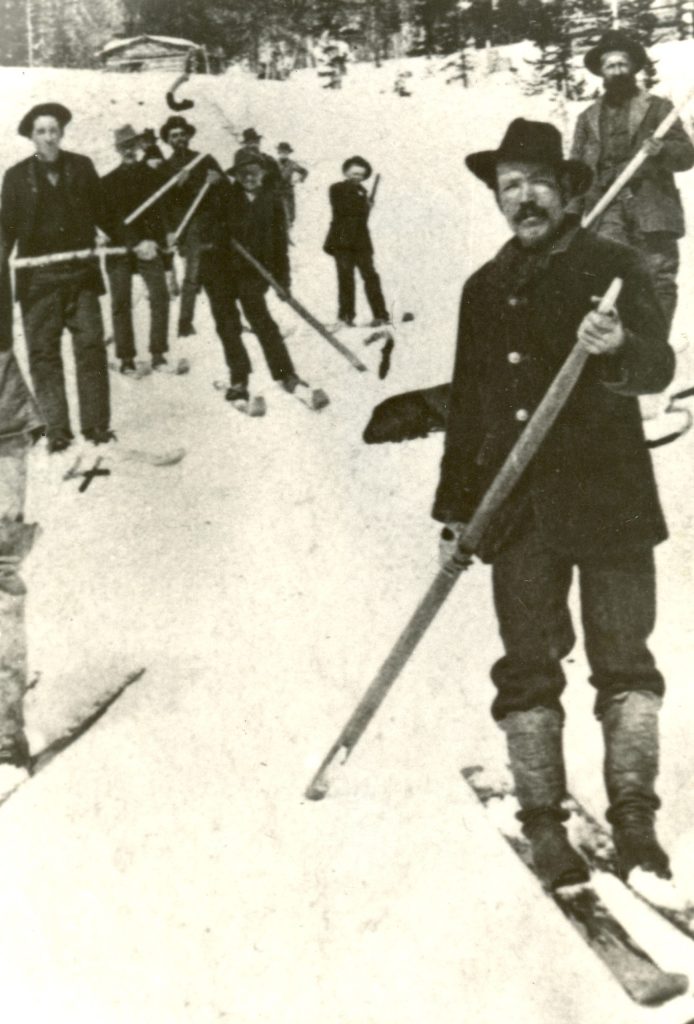
Historians say skiing was first introduced into the Colorado Territory by Scandinavian immigrants who came to the mountains with hopes of striking it rich during the Colorado gold rush, which began 1858.
According to historian Mary Ellen Gilliland, the first recorded incident of skiing in Colorado occurred when Norwegian brothers Balce and Christian Weaver grew bored while holed up in a fort during one of the first winters in what is today Breckenridge.
“This mind-numbing tedium inspired [the Weavers] to cut a spruce tree into boards, steam the board tips to curve upward and add long-thong bindings,” Gilliland wrote. “Their creation enabled a February 1860 ski adventure that ended with the Weaver brothers’ discovery of wildly-rich gold in nearby Gold Run Gulch.”
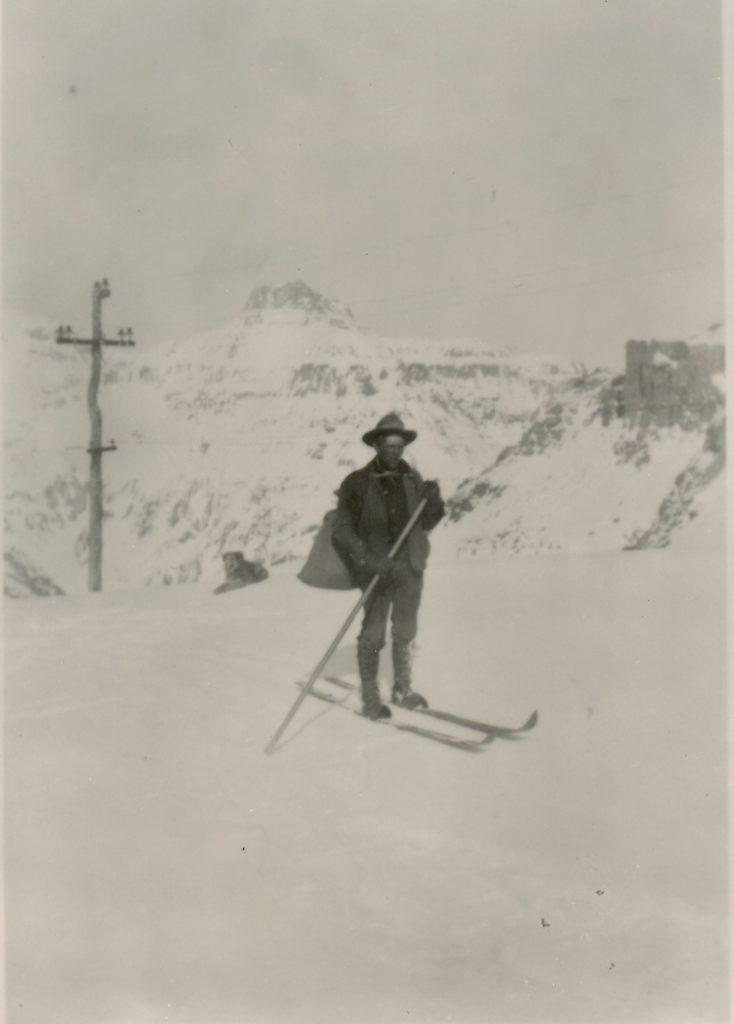
Throughout Colorado’s early years of statehood, historians say mining and farming communities used skis as a mode of winter transportation to travel long distances between remote communities in deep snow. In the 1880s, there were more than 50 skiing mail carriers in Colorado who braved blizzards, avalanches and bitter cold to deliver letters and packages, according to the Colorado Snowsports Museum. In Steamboat Springs, pioneer physician Dr. Vernon Solandt made house calls on skis from 1897 to 1916.
One of the most famous early skiers was Father John Lewis Dyer, a Methodist preacher who took a second job carrying mail from Alma to Leadville. Along his route, which crossed Mosquito Pass at 13,185 feet, Dyer would stop in mining communities to preach against common vices, like gambling, drinking and prostitution. He wouldn’t let miners — who were desperate to hear news from homes and families they left behind back east — have their mail until after they heard a sermon.
Historians say skiing only occasionally served as a recreational pastime during this period. In Gunnison County’s mining towns, 25 racers skied a quarter of a mile for a $25 prize on Christmas Day 1881, according to the Snowsports Museum. A racing circuit of skiers was established there in 1886 but was short-lived.
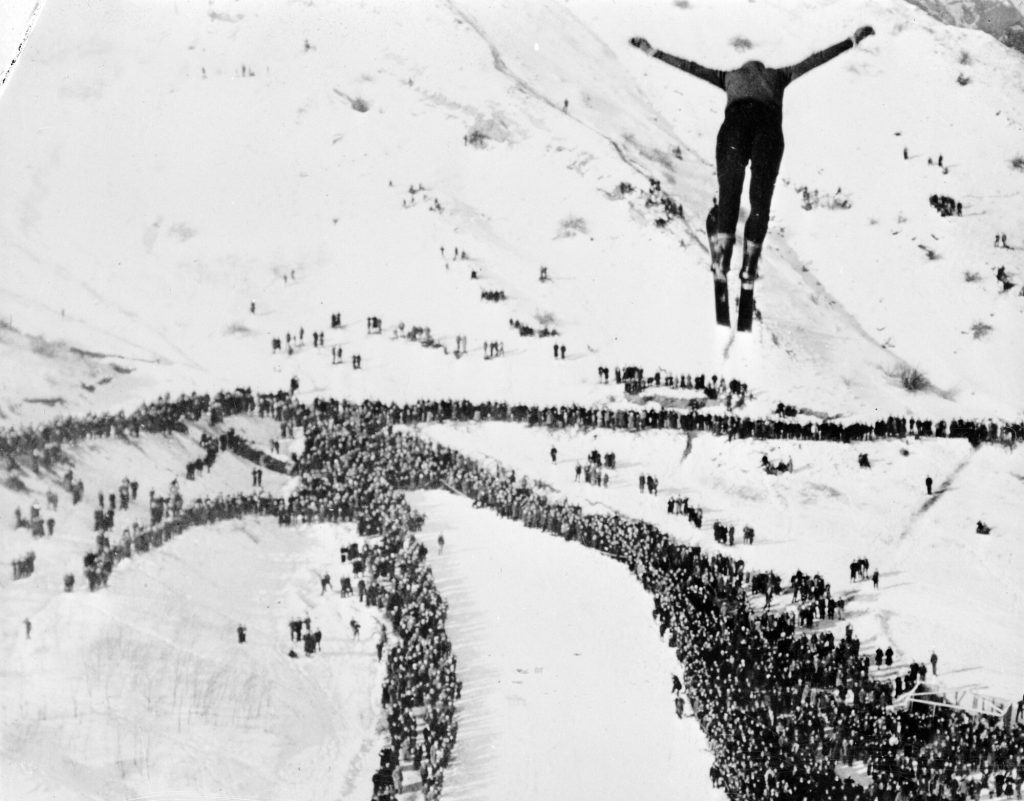
‘Flying’ Norwegians help Coloradans see skiing as a sport
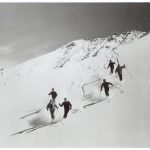
It was really after the turn of the 20th century that historians say skiing began to gain more widespread popularity as a recreational activity amongst Coloradans, with ski clubs forming and competitions being scheduled across the state.
In 1911, Hot Sulfur Springs was hosting its first Winter Carnival when Norwegian immigrant Carl Howelsen skied down Rollins Pass into the festivities. He built a ski jump and astonished the townspeople when he launched dozens of feet through the air on his skis, according to the Snowsports Museum. Around the same time, historians say Norwegian Peter Prestrud, who settled in Frisco in 1910, was also building recreational ski jumps.
Howelsen — who became known as “the flying Norseman” — later moved to Steamboat Springs where he opened Howelsen Hill in 1915 with a few ski jumps. Today, Howelsen Hill is the oldest continuously operating ski resort in Colorado.
After the Hot Sulfur Springs Winter Sports Club became the first organized ski club in Colorado in the early 1900s, historians say the sport started to become more organized. Members of the Colorado Mountain Club founded the Arlberg Ski Club in 1929, which hosted races, including the first modern slalom race, until the U.S. entered World War II in 1941.
“With ski clubs forming, the winter carnivals, there was such a social aspect [to skiing]. It was really quite popular in that regard,” Mathios said. “I think that’s where it all kind of began. The love of the sport, just intertwining with the social aspects.”
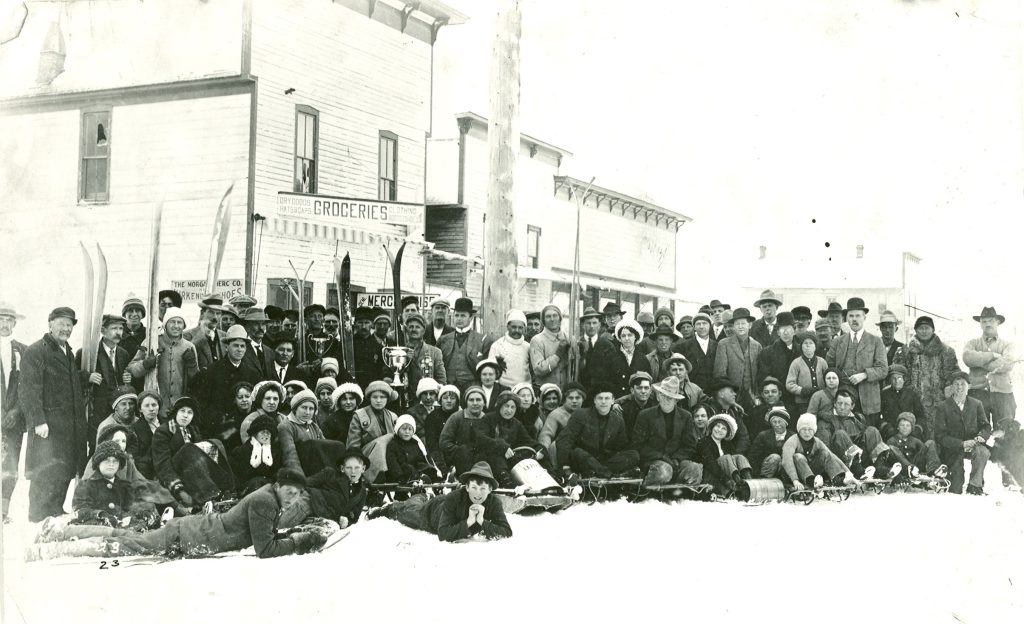
Before World War II, Bock said “the forces of recreation and capitalism” were already at play as skiing and winter sports surged in popularity across Colorado.
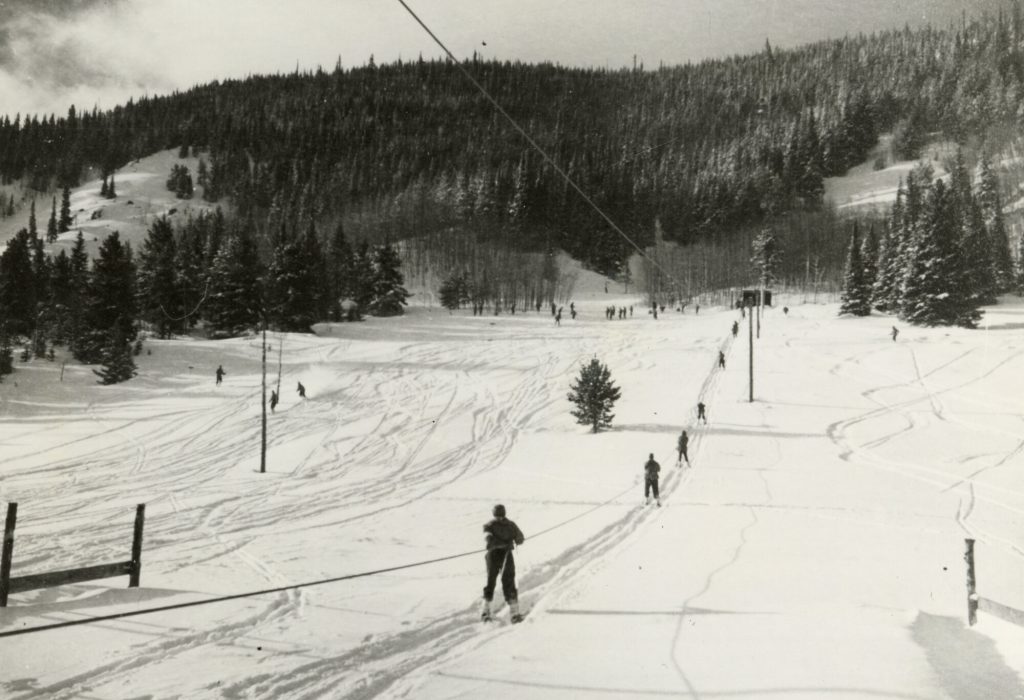
In 1937, some of the first rope tows were installed at places like Berthoud Pass, Hoosier Pass and the Climax Mine near Leadville, according to historians. In 1923, the construction of the West Portal of Moffat Tunnel provided a train route between the Western Slope and Denver, eventually leading the city and county of Denver to open the Winter Park Ski Area in January 1940.
But it was only after the creation of the 10th Mountain Division during World War II that Colorado’s ski industry really would start to look recognizable to most modern snowsports enthusiasts, according to historians.
“After World War II, you see a post-war boom. There’s more lift innovation. There’s ski schools. I believe the first ski pass came out around this time too,” Mathios said. “You kind of start to see more of what the ski industry looks like today.”
10th Mountain Division soldiers redefine skiing in Colorado
As World War II unfolded, historians say the U.S. Army’s decision to train a division of elite soldiers in mountain warfare for combat in Europe impacted the trajectory of Colorado and the nation’s outdoor recreation industry, especially skiing.
Hannah Cary, the director of the Healy House Museum and Dexter Cabin in Leadville, said the Army conceived of the idea for the 10th Mountain Division after watching the success of Finnish ski troops against Russian armies early in the war.
“As far as the 10th Mountain Division was concerned, it was a very unique division of the U.S. Army during World War II,” Cary said. “These were troops who were trained in skiing and winter warfare — so skiing, rock climbing, winter survival [and] surviving in snowy, high-altitude conditions.”
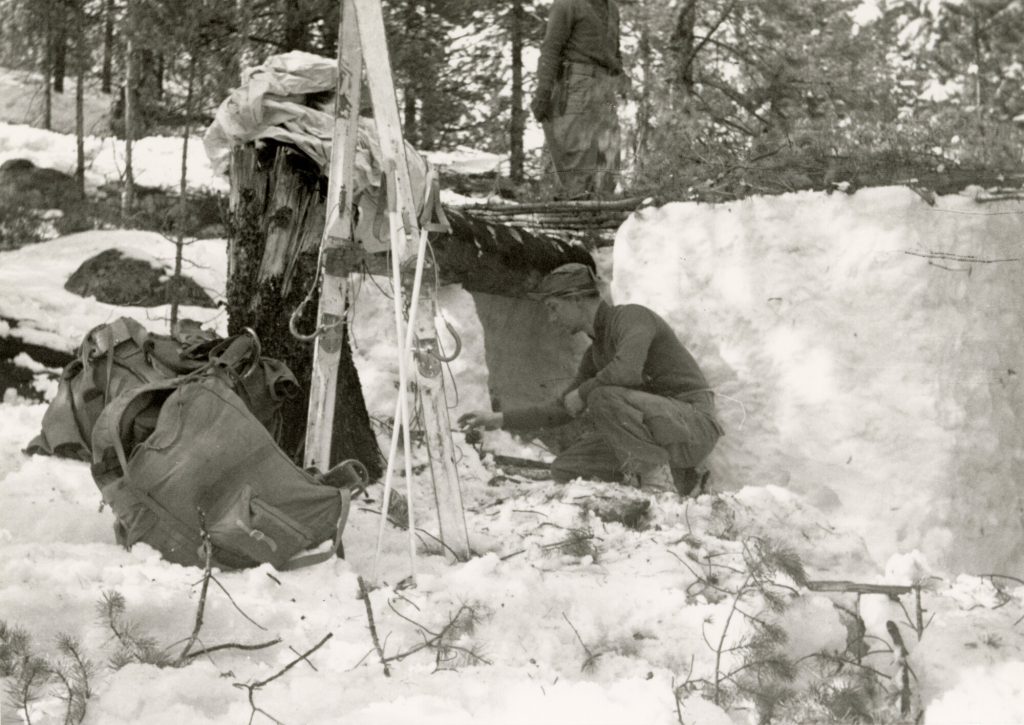
Colorado was chosen as the training grounds for these mountain warriors because of its high-elevation peaks and rugged, wintry conditions. In 1942, the U.S. Army began constructing Camp Hale near Red Cliff. The 53,800-acre Camp Hale-Continental Divide National Monument, designated by President Joe Biden in 2022, memorializes the places where the 10th Mountain Division trained.
To find the soldiers for this specialized troop, the Army recruited individuals who already had some degree of skiing, backcountry or mountaineering experience, including from the National Ski Patrol that had just formed in 1938, Cary said. She said that brought experienced outdoorsmen from around the country, including the Midwest and the coasts, to Colorado’s mountains — a place that many would return to after the war.
At Camp Hale, the soldiers learned to survive and fight in winter conditions, sometimes trekking for weeks at a time in temperatures that could drop to 35 degrees below zero, according to the National World War II Museum. As part of their preparations for war, historians say the 10th Mountain Division also innovated new mountain tram systems, winter clothing and outdoor equipment.
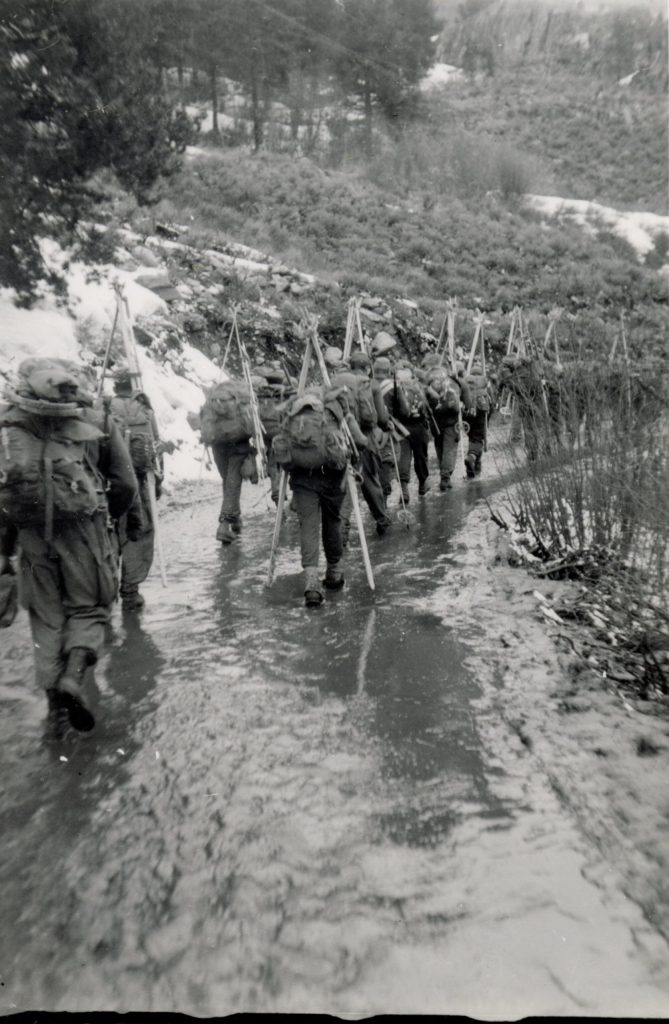
Nearby communities including Red Cliff, Minturn, Frisco and especially Leadville — which was a population center with a red light district frequented by 10th Mountain Division soldiers — “did their best to keep the soldiers’ spirits high,” Cary said. The soldiers trained in Alpine skiing at Cooper Hill, now known as Ski Cooper, she said.
The 10th Mountain Division was deployed to join the Italian Campaign in 1944 to help capture the heavily-fortified Mount Belvedere, something which Allied troops had failed to do, according to historians. Using their mountaineering training, the 10th Mountain Division launched a surprise nighttime attack on the steep cliffs of Riva Ridge before successfully capturing Mount Belvedere with support from Allied forces.
“They gained a great amount of ground, even though they were only active for a relatively short period compared to other Allied troops and divisions,” Cary said. “They never gave up any ground to the Nazis once they gained it. They did suffer pretty heavy casualties as a result, but overall their deployment was viewed as very successful.”
The 10th Mountain Division soldiers who returned to the U.S. after the war would go on to help build the modern ski industry and found influential outdoor gear companies and advocacy groups.
“They fought these incredibly desperate battles there,” Bock said. “While they were over there, they started to see European mountain towns and this European mountain culture in the Alps, in Switzerland, in Germany, in Austria. So when they came back, they knew the terrain of the mountains of central Colorado really well, and they introduced the idea of the ski resort.”
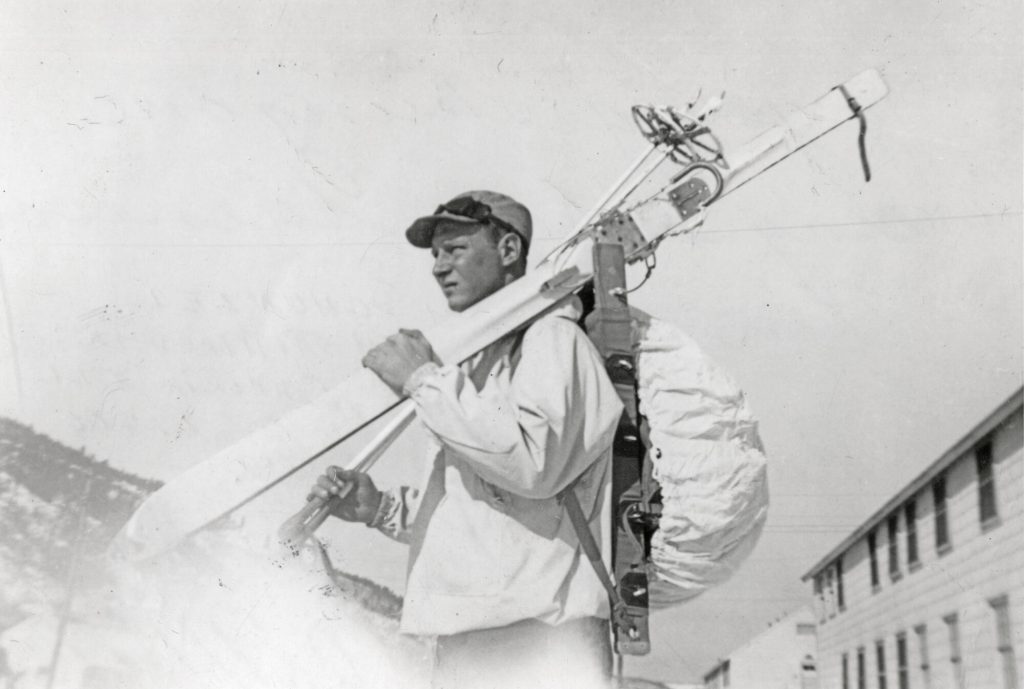
Veterans of the division include Pete Seibert, who helped co-founder of Vail Mountain; Friedl Pfeifer who helped develop Aspen Mountain; and Lawrence Jump and Frederick Schauffler, who founded Arapahoe Basin Ski Area. The 10th Mountain Division members also have ties to the founding and early leadership of dozens of other ski resorts and ski schools around the country.
The division’s members — including Bill Bowerman, the co-founder of Nike, and Aspen’s Klaus Obermeyer — are credited with innovations that revolutionized outdoor gear. Among many other notable veterans of the division, David Brower served as the first executive director of the Sierra Club and Fritz Benedict helped found Colorado’s popular backcountry 10th Mountain Division Hut system.
Chris Bolz, the son of 10th Mountain Division veteran Reamer Bolz, said the influence of the troop on America’s outdoor space is widespread. Because the 10th Mountain Division recruited people who “loved the mountains” to Colorado, he said the veterans who returned to the state helped “put it on the international map” as a place for skiing and outdoor recreation.
“They loved the outdoors, and they found a home in Colorado,” Bolz said. “Because of that love, they were able to return and put their energies into developing the [ski industry], so that other Americans can enjoy the out of doors and the thrill of skiing and outdoor sports, winter sports especially, in the United States that had been so popular in Europe. I think that was one of their biggest legacies.”
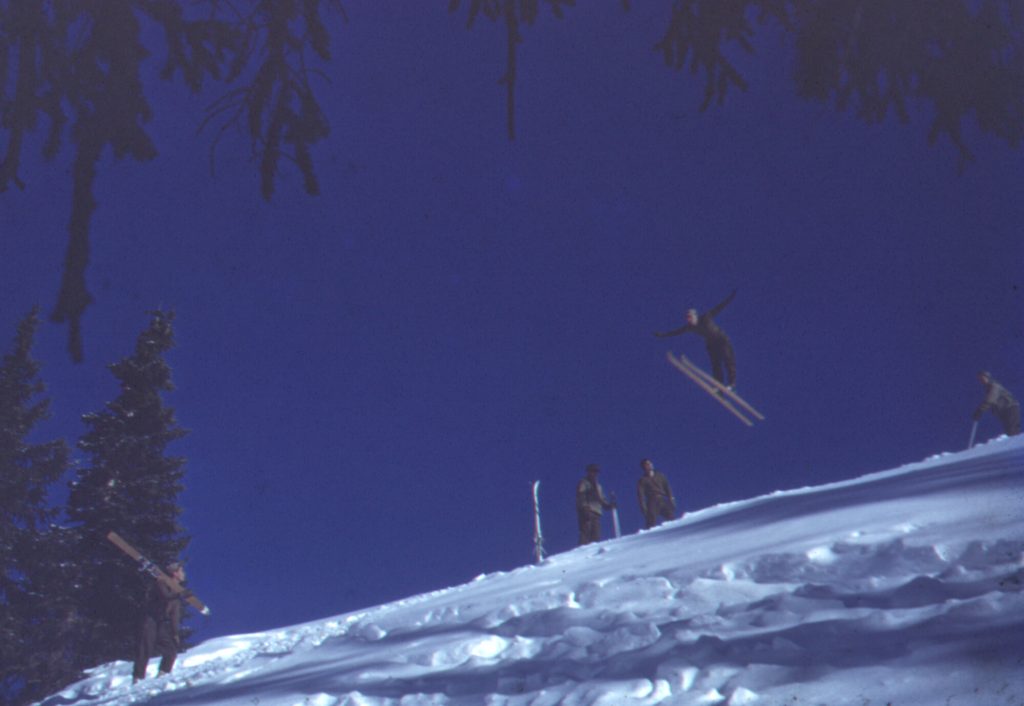
Skiing becomes a centerpiece of Colorado’s economy
As World War II ended, a monumental shift was taking place in Colorado’s economy, according to historians. The age of mining had all but died out — and a new age of tourism and outdoor recreation was dawning.
Through the decades, more and more ski resorts would open: A-Basin and Aspen Mountain in 1946, Breckenridge Ski Resort in 1961, Vail in 1962, Steamboat Ski Resort in 1963, Keystone Resort in 1970, Copper Mountain in 1972 and Beaver Creek Resort in 1980.
“I think a lot of assumptions were that Colorado’s economy would forever be based on that extraction model, right?” Bock said. “What happened around the country, and really around the world, in the 20th century was this explosion of leisure time, and it started with the well-to-do classes and made its way down into the middle class that could afford this travel.”
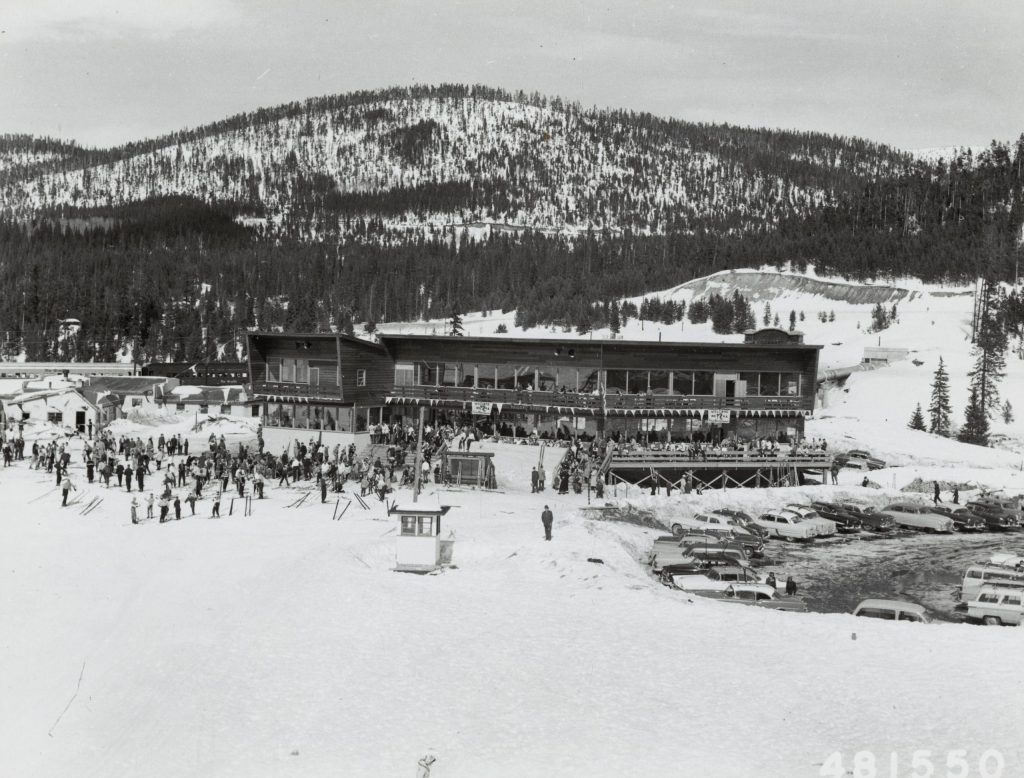
The explosion of interest in skiing post-World War II was aided by the fact that the Army had a huge surplus of skis and winter gear that had not been used in the war, which historians say was sold to the public at discounted rates.
But more than anything, the explosion of the ski industry and outdoor recreation was aided by America’s growing interstate highway system, which historians say allowed more and more people to access the mountains with ease over the decades.
“What really turbocharged the Colorado ski industry is the construction of the interstate highway system. That wasn’t complete until the ’70s, and even later in some places,” Bock said. “That connection, the high-speed connection between Denver and the mountain towns we know today as recreation places, that’s what really allowed Colorado to become a place where people could come from far away and enjoy a ski trip.”
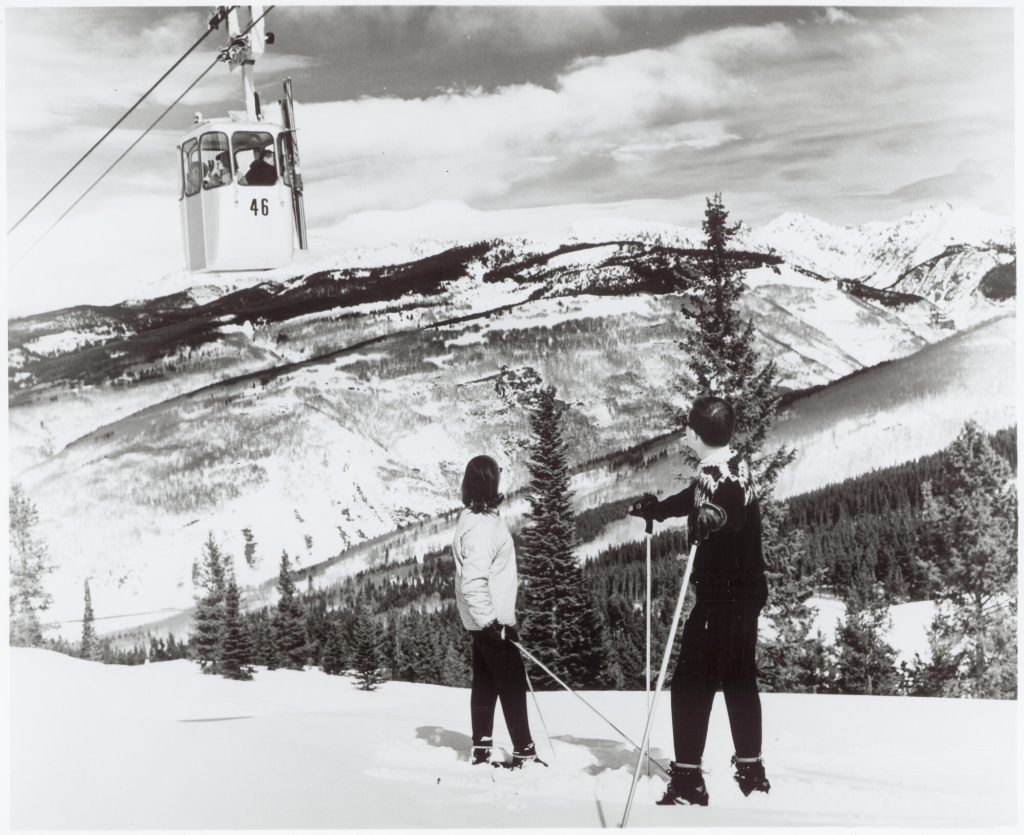
Interstate 70 carved its way into the peaks in phases. By the 1970s the Colorado Department of Highways (now the Department of Transportation) was moving mountains to make way for the interstate. The Eisenhower Tunnel opened to two-way traffic in 1973, and the Johnson Tunnel and the original Vail Pass project were on I-70 by the end of the decade.
At the same time the highway system was growing, historians say Colorado Ski Country USA, a nonprofit trade association of ski areas founded in 1965, began working with the state government to promote Colorado as the nation’s premier ski destination.
Around the 1970s, “things really started to become much more commercialized,” and the “gear got way, way better,” Bock said. “Rather than leather boots and sort of floppy bindings and this funky telemark ski style, you get plastic and the ’80s is when you start seeing this more modern ski equipment we’re familiar with today.”
“Colorado was so effectively marketed, and the landscape is just so stunning on its own in so many places in the state that it just made the case for itself and made a case for its position in this new travel and tourism economy,” Bock said. He noted that skiing has long been a sport that has catered to a class of people who are wealthy and mostly white, reflecting some of the “socioeconomic realities of our country.”
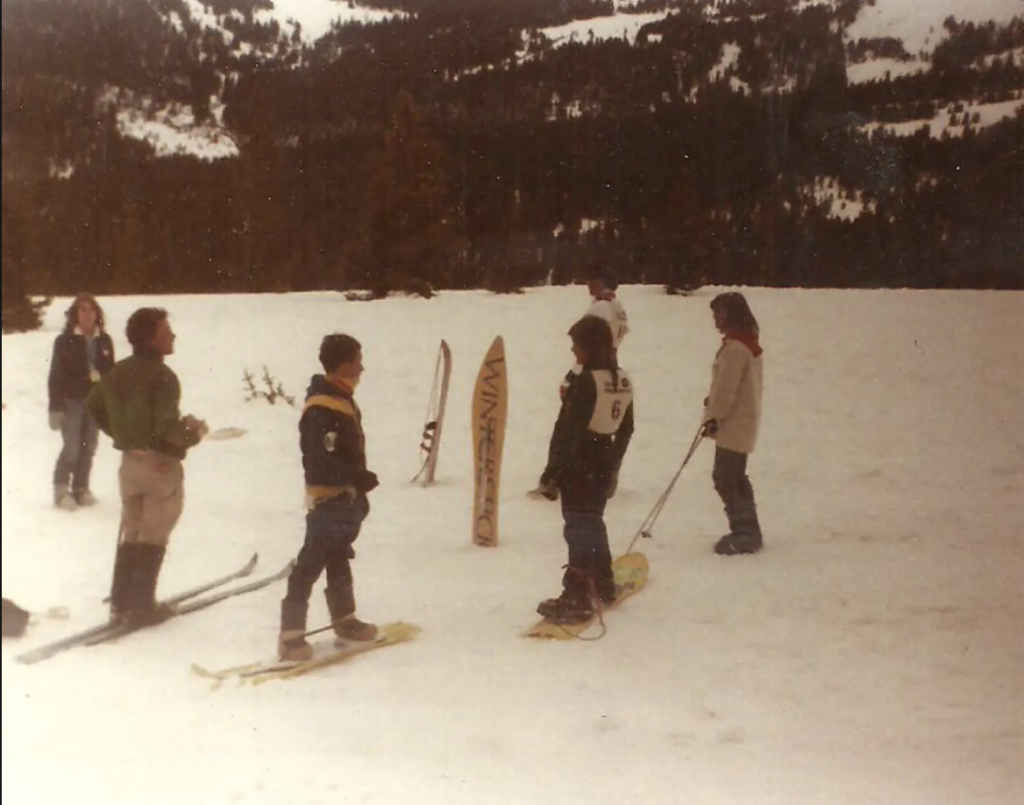
By the 1980s, Mathios said freestyle skiing had taken off and snowboarding was beginning to hit the mainstream, ruffling feathers at times, but launching snowsports to new heights of popularity in the U.S.
Smaller ski areas like Berthoud Pass and Ski Cooper hosted some of Colorado’s first snowboarders beginning in the 1970s. Then, Breckenridge went against the grain when it became the first major Colorado ski resort to allow snowboarding in 1984. Other ski resorts across the state slowly followed suit, and it took until 2001 for Aspen Mountain to lift its ban on snowboards.
“The fact that we saw a new snowsport in the ’80s really reinvigorated snow sports in general,” Mathios said. She added that ski areas also continued to build more and more lodging, amenities and infrastructure through the latter half of the 20th century giving us the “mega resorts we have now.”
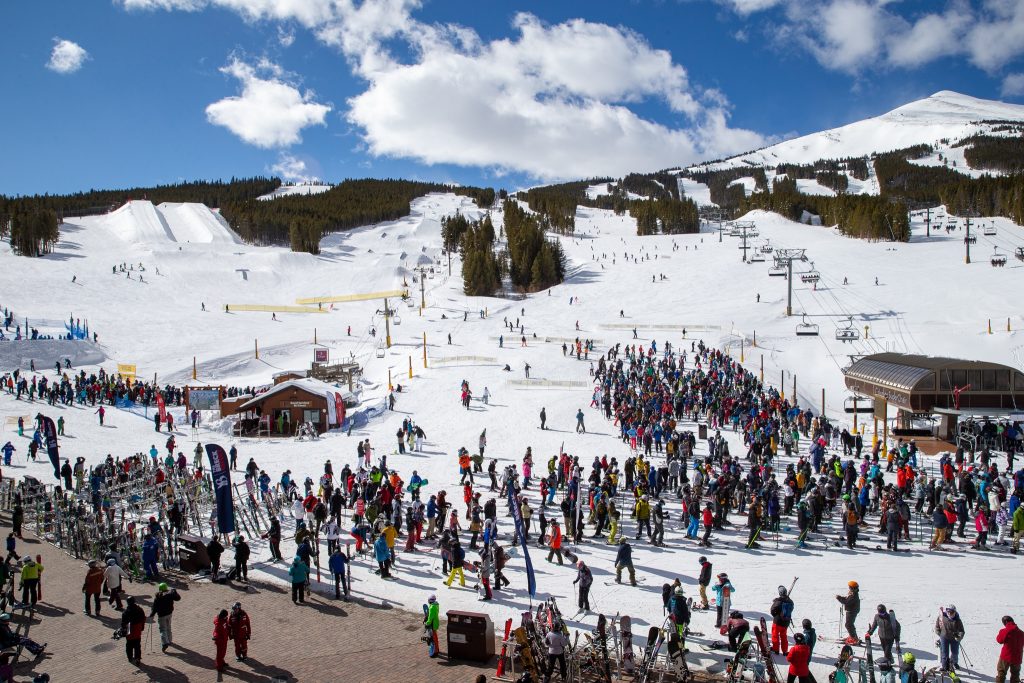
Modern ski industry faces climate, crowding and accessibility challenges
Today, Colorado’s ski industry is a behemoth that generates an estimated $4.8 billion in annual economic output.
Colorado ski resorts have logged more than 10 million skier visits every winter since the 1991-92 season, according to Colorado Ski Country USA data. Throughout the 21st century, visitation in Colorado has continued to hit new highs, peaking at 14 million skier visits during the 2023-24 season.
“I don’t have a crystal ball. I don’t know where things are headed over time, but I certainly don’t see the sport becoming less popular,” Bock said. “And I think it’s up to Colorado to figure out how we’re going to expand both capacity for more people to enjoy the sport, and expand the welcoming hand to those who may have felt excluded from the sport.”
Despite its popularity, Colorado’s ski industry faces stark challenges in the 21st century.
The multi-resort pass model and consolidation that Vail Resorts has pioneered since the turn of the century has helped insulate the ski industry from the ups and downs of regional weather.
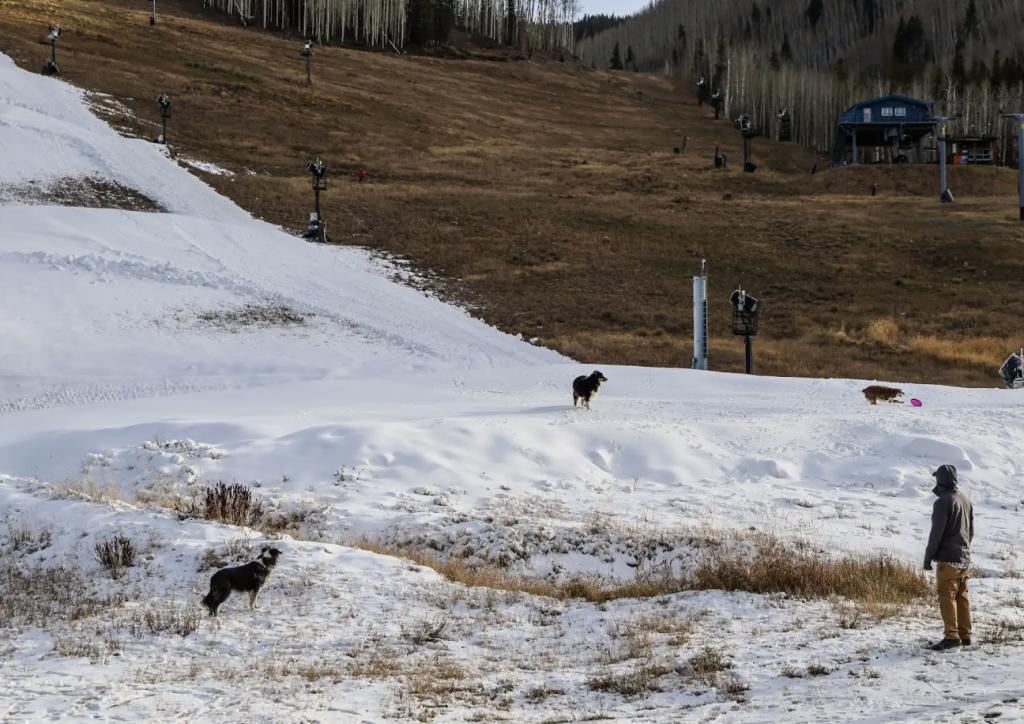
But climate change is reshaping winter patterns across the globe, including in Colorado, where scientists say warming caused by the burning of fossil fuels helped lead to last winter’s record low snowpack. The historically bad winter, in turn, led to the state’s lowest ski visitation in 35 years.
“Will our winters show up?” Bock asked. “Will the climate allow for the industry to continue on in the way that we have been accustomed to? There’s a lot of engineering that can happen to mitigate those impacts. But there’s only so much water, there’s only so much snowfall and resorts can only put so much snow on the ground when its warm.”
Meanwhile, Bock skiing continues to get more expensive each year, with season passes costing upwards of $1,000, not to mention costs like gas, gear, lodging and lessons — and the ever soaring affordability challenges facing those who work in ski communities. Noting that “Colorado’s economic story is one of booms and busts,” he asked, “To what degree is the current model sustainable for ski resorts?”



Support Local Journalism
Support Local Journalism
The Sky-Hi News strives to deliver powerful stories that spark emotion and focus on the place we live.
Over the past year, contributions from readers like you helped to fund some of our most important reporting, including coverage of the East Troublesome Fire.
If you value local journalism, consider making a contribution to our newsroom in support of the work we do.