Colorado River stakeholders ask Congress for $2 billion in emergency funds to address drought crisis
The request comes as a previously withheld Biden-era funding for drought mitigation begins to trickle into Colorado

A coalition of organizations, tribes, utilities and governments from across the Colorado River basin is asking the federal government for at least $2 billion to address the near-term impacts of the escalating drought and water supply crisis in the West.
“Water Year 2026 is unfolding as one of the most challenging hydrologic years in more than a century of recordkeeping, with exceptionally low snowpack and river runoff and continued stress on an already depleted reservoir system,” wrote the coalition. “Difficult decisions around water supplies will be needed to address the severe shortages and operational risks that threaten the basin and the stability of the entire system.”
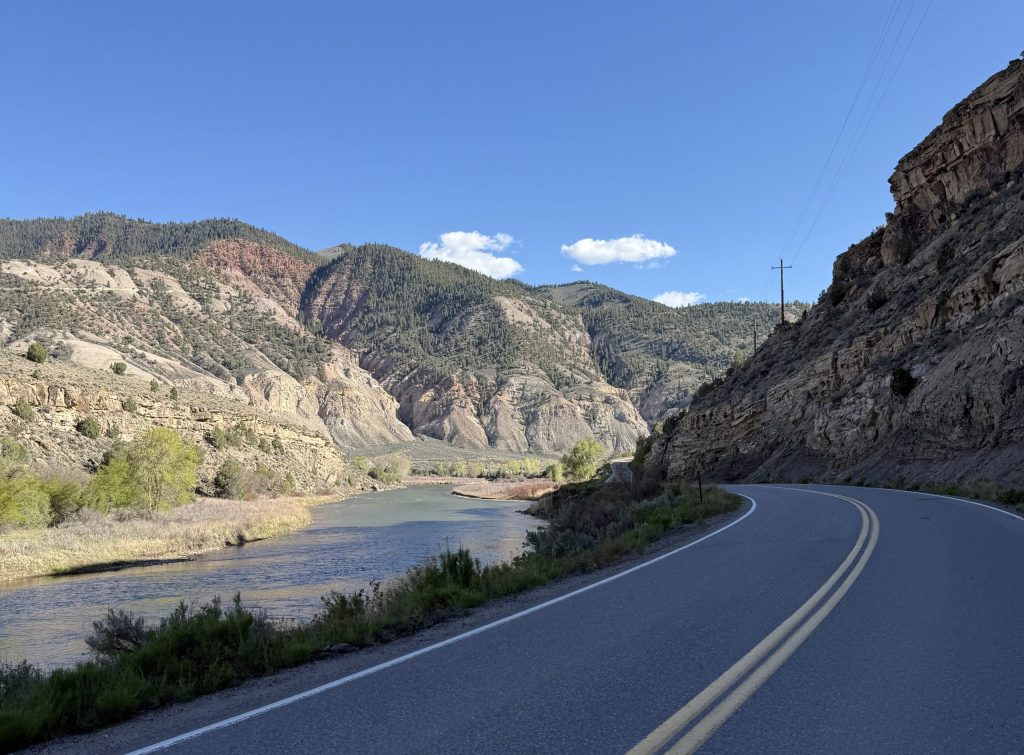
The letter was signed by 70 groups that represent water users and interests in all seven states that comprise the Colorado River basin: Wyoming, Colorado, Utah, New Mexico, Arizona, California and Nevada. The river flows from its headwaters in Grand County down 1,450 miles to the Gulf of California in Mexico, providing water to nearly 40 million people across the seven states, two counties and the 30 tribal nations that fall within the basin.
The newly-formed coalition asks Congress to find funding for additional resources to “sustain and scale” the U.S. Bureau of Reclamation’s existing drought mitigation investments needed to stabilize the system “in a manner that ensures the Basin will do more than simply endure from crisis to crisis.”
It requests that the $2 billion be invested in tools that bolster conservation, efficiency and smart, targeted augmentation to develop new water supply sources.
“A near-term drought mitigation program will need to provide additional resources and authorities beyond September 2026 to advance momentum on conservation and augmentation, improve system reliability and efficiencies and build resilience against drought and wildfire under increasingly dire hydrologic conditions,” reads the letter. “Without this bridge, the basin risks remaining in a repeated cycle of reactive, emergency-driven operations that are more disruptive, less effective and more costly to Colorado River communities, economies and ecosystems over time.”
It was addressed to Sens. Mike Lee, R-Utah, and Martin Heinrich, D-New Mexico, the chair and ranking member of the U.S. Senate Committee on Energy and Natural Resources, as well as Reps. Bruce Westerman, R-Arkansas, and Jared Huffman, D-California, the chair and ranking member of the House Committee on Natural Resources.
Nearly 20 Colorado-based entities signed the letter, including the Colorado River Water Conservation District, Grand and Routt counties, the Northwest Colorado Council of Governments, Denver Water, Southern Ute Indian Tribe, the Ute Water Conservancy District, the Grand Valley Water Users Association and more.
The request for immediate action comes amid a crisis point for the river and its users. Water supply for the Upper Basin states — Colorado, New Mexico, Utah and Wyoming — comes predominantly from snowpack, which melts and flows downstream to the Lower Basin states. California, Arizona and Nevada rely on releases from Lake Powell and Lake Mead for their water supply.
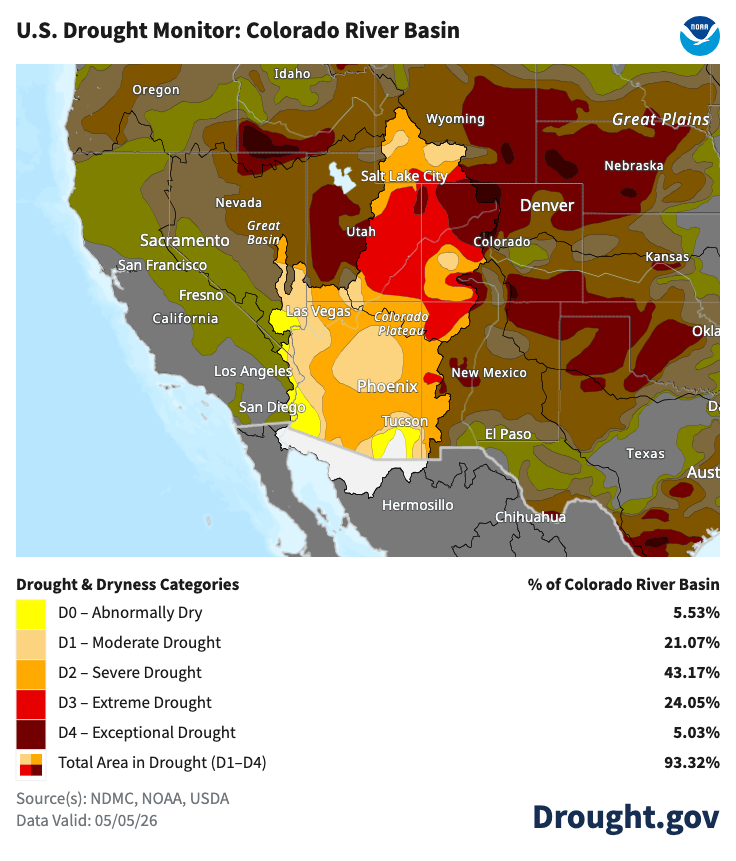
This winter, the Upper Basin experienced a historically low snowpack, a situation made worse by a March heatwave that melted off much of the snow earlier than normal. Now, with 93% of the Colorado River watershed facing some level of drought, the Colorado River Forecast Center is projecting that inflows to Lake Powell will be the lowest since the reservoir was first filled in 1963.
The Bureau of Reclamation has projected that the reservoir could fall below the level — marked at 3,490 feet or 15% capacity — required to sustain operations, hydroelectric power generation and water supplies by August, causing it to begin planning for increased releases from Flaming Gorge Reservoir in the Upper Basin and reduced releases from Powell to Lake Mead.
While the letter to Congress seeks emergency funding given this dire situation, it also acknowledges a need for the federal government to think about the long term.
“The challenges facing the Basin — drought, wildfire, hydrologic change and limited water supplies — are structural and ongoing,” wrote the coalition. ” … A durable, long-term federal framework can seed interest and leverage additional public and private investment to deliver sustained benefits at scale — helping keep agricultural producers viable, maintaining local economies and communities, ensuring water conservation is shared equitably across all sectors and restoring the natural infrastructure that provide the water we all depend on and is the backbone of the Colorado River economy and beyond.”
The letter is a sign of solidarity between groups in the Colorado River’s upper and lower basins as the states remain gridlocked over how the two reservoirs should operate beyond this year.
Funding trickles into Colorado drought mitigation projects
The coalition’s request for funding comes as another federal source of funding for drought mitigation begins to trickle into Colorado.
In the final days of President Joe Biden’s term, the Inflation Reduction Act awarded $388.3 million to projects in the Upper Basin to mitigate the impacts of drought. This included $152 million awarded to 17 Western Slope projects. Three days later, President Donald Trump took office, and his Day 1 order, “Unleashing American Energy,” called for all federal agencies to “immediately pause the disbursement of funds appropriated through the Inflation Reduction Act.”
This has resulted in a state of limbo for the Western Slope projects, with Colorado’s entire congressional delegation pushing for the federal government and the president to release the funding. Slowly, over the past year, some of the funding has been released.
In June, the Bureau of Reclamation released funds for two of the projects in Palisade’s Orchard Mesa Irrigation District, meant to improve water delivery to the 15-mile reach of the Colorado River, which extends from Grand Junction and the confluence of the Gunnison River and serves as critical habitat for several endangered fish species, as well as install new metering technology in the Grand Valley
On Tuesday, May 12, it was announced that funding for four more Colorado projects was released. This includes:
- $25.6 million to support ecosystem and habitat restoration in six southwest Colorado River sub-basins
- $16.75 million to the Southern Ute Indian Tribe to improve ecosystem health in the Pine River watershed
- $4.6 million for drought resiliency projects in western Colorado, including wetland restoration, floodplain reconnection, erosion control structure installation, habitat restoration and more
- $750,000 for stream habitat restoration — specifically for Gunnison Sage Grouse — in the Gunnison River basin
In a Tuesday press release, Sens. John Hickenlooper and Michael Bennet celebrated the release of funds while pushing for the remaining $92.5 million to also be pushed through.
“This year’s extremely poor snowpack has made the Colorado River crisis even more dire. We don’t have time to stall and hope for a wet summer,” said Hickenlooper in a statement. “We’re relieved that this funding from our historic Inflation Reduction Act will continue to flow to help our communities manage the drought impacts on the Upper Basin. We won’t let up until all of the obligated funding is released.”
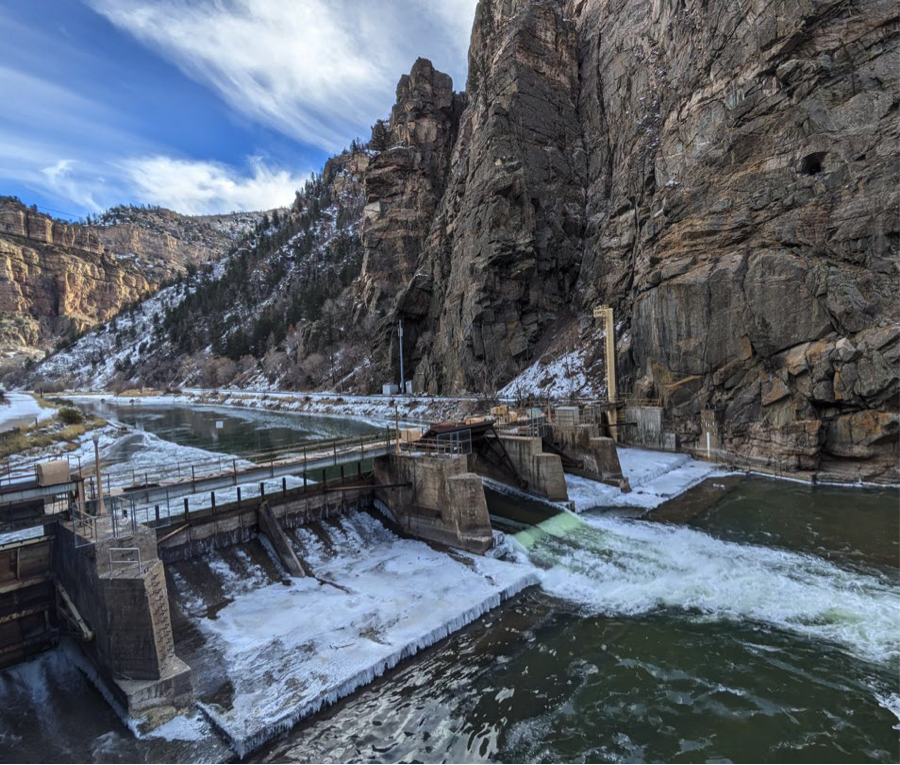
The remaining funds include Colorado’s largest allocation from the drought mitigation funding: $40 million promised to the Colorado River Water Conservation District for its purchase of the Shoshone water rights, tied to a hydroelectric plant in Glenwood Canyon. The River District is in the process of acquiring the rights — the largest and oldest non-consumptive rights on the Colorado River — from Xcel Energy for $98.5 million.
In a statement, Andy Mueller, the River District’s general manager, said the district was glad to see the four projects receive funding and was continuing to work with the Bureau of Reclamation and elected officials to see the remaining funds released.
“As we face historic drought conditions across the Colorado River basin, investments in critical water projects remain essential to the health of rural communities, economies and ecosystems,” Mueller said. ” …The Shoshone project offers a clear return on investment to the federal government through long-term benefits to agriculture, rural economies, and the health of the Colorado River. We look forward to this administration making the right choice to release the full amount.”







Support Local Journalism
Support Local Journalism
The Sky-Hi News strives to deliver powerful stories that spark emotion and focus on the place we live.
Over the past year, contributions from readers like you helped to fund some of our most important reporting, including coverage of the East Troublesome Fire.
If you value local journalism, consider making a contribution to our newsroom in support of the work we do.