OPINION: For Grand County, the election is already over
Grand Lake
The current fights we are seeing around the country over mid-decade redistricting are a classic race-to-the-bottom defect in our electoral politics. They are also a distraction from the true source of our political dysfunction: an unrepresentative and polarizing primary election system.
While gerrymandering artificially creates safe districts for one party or the other, partisan geographic sorting means that most districts would be naturally safe even without any gerrymandering horseplay. Our own political fate in Grand County provides a perfect example of the “primary” election problem.
Grand County is in Colorado’s 2nd Congressional District for the U.S. House of Representatives. Like so many other districts around the national map, our district is safe — in the extreme — for the incumbent.
Democrat Joe Neguse has represented Grand County and the 2nd District for eight years. His margin of victory in each election has ranged from 26 to 42 percentage points. By any measure of politics, the seat is effectively guaranteed safe for Democrats. This means that the only election that matters is the dominant party’s primary.
So who is running in that Democratic primary election for District 2?
The list is short: Joe Neguse. Unopposed.
If you think our democracy is under threat — from whichever direction — this should be a desperately urgent issue. It is emphatically a nonpartisan issue, too, and one that actually has nothing to do with Neguse. Because he is our representative, he is just the example. He is certainly not the point.
The point is that this exact scenario — where the election is over before votes are cast — plays out in scores of congressional districts around the country, both blue and red. Colorado’s 4th District, for example, is a perennially safe Republican seat occupied by Lauren Boebert.
This means the only election that matters for District 4 is the Republican primary. And who is running in it?
The list is short: Lauren Boebert. Unopposed.
When a district is so safe that we know the Republican will win, and when there is no competition in the primary, not a single voter in the red 4th District — just as not a single voter in our blue 2nd District — will cast a meaningful vote this June or November.
Typically, when an incumbent runs unopposed in the primary it means that they have appeased their partisan base enough to deter a primary challenger from running to their wing. But even if the dominant party in a safe district had a contested primary, the situation is no better.
When primary turnout is low — as it almost always is — and when the voters who do turn out overwhelmingly tend to be the most partisan, then the candidate who attracts those very few and most partisan voters wins the nomination.
And because that nominee does not face a real general election race, the only electoral incentive they have as an officeholder is to appeal foremost to a narrow slice of highly partisan voters primary voters … If they fail to do that, they are inviting a challenge in the next primary election by a candidate who will.
But how pervasive is this problem, really?
Out of the 435 U.S. House races in the 2026 midterms, the Cook Political Report rated just 18 as true toss-ups as of mid-May. That’s a 96% safety rating. Great for airbags, a dirty diaper for democracy.
Can we honestly call Congress a representative legislature when nearly all of its members are electorally accountable to a small number of highly partisan primary voters rather than to the far more numerous —and far more moderate — general electorate?
We need to wise up. All of us in Grand County, like so many of our fellow Americans, have already been robbed of casting a meaningful vote this election cycle. Because the primaries give strongly ideological voters a seismic advantage in having their preferred candidates elected, our politics are pre-rigged for unrepresentative polarization.
The good news is that we, The General Electorate, have the power to easily fix this problem.
In fact, we had the chance in 2024 when a ready-made solution was on our ballot as Proposition 131. If passed, it would have required nonpartisan primaries, a straightforward system designed not to determine any party’s nominee, but simply to narrow the field of candidates who qualify for the general election to the top four.
Using this method, even if a district were completely safe for one party, gerrymandered or naturally, instead of zero viable alternatives to the dominant party’s nominee in the general election, there would be up to four viable options.
Coupled with the requirement that the winner receive a majority rather than a plurality of the vote — which is the whole idea behind ranked-choice voting — even if all four candidates on the general election ballot were from the same party, they would still have to appeal not to a small number of highly partisan base voters but to the much larger and more moderate general electorate.
This would make all candidates, the Neguses and Boeberts alike, actually have to compete to win office. What a concept!
Proposition 131 failed, 54% to 46%. If we, The General Electorate, continue failing to exercise our sovereign power to change the primary election system, all we can expect, all we really deserve, are elections that are over before they start, ballots that are meaningless, and the same old hyper-polarized, unrepresentative, idiotic, bickering politics as usual.
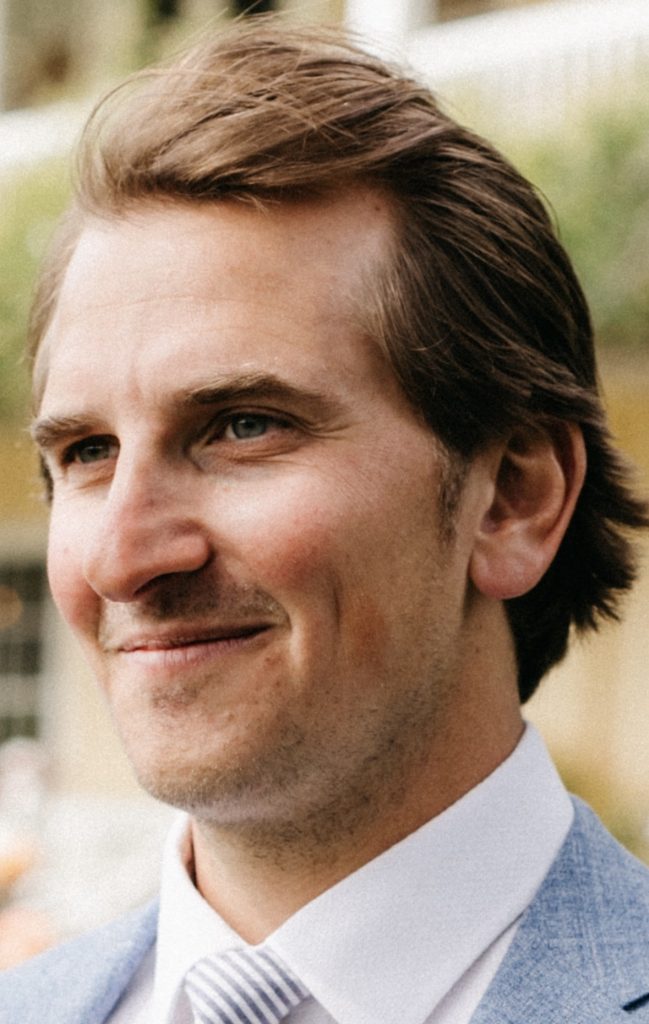
Brian Blumenfeld is an attorney in Grand Lake, an Adjunct Law Professor at the University of Wyoming Law School, and a noted local speaker on constitutional law and history. His published research on law and public policy has been cited by Congress most recently in January 2025. Contact Brian at brian@rzalegal.com.








Support Local Journalism
Support Local Journalism
The Sky-Hi News strives to deliver powerful stories that spark emotion and focus on the place we live.
Over the past year, contributions from readers like you helped to fund some of our most important reporting, including coverage of the East Troublesome Fire.
If you value local journalism, consider making a contribution to our newsroom in support of the work we do.