Q&A: Meet the Democratic candidates vying for Colorado Governor
Michael Bennet and Phil Weiser are facing off in the June 30 Democratic primary

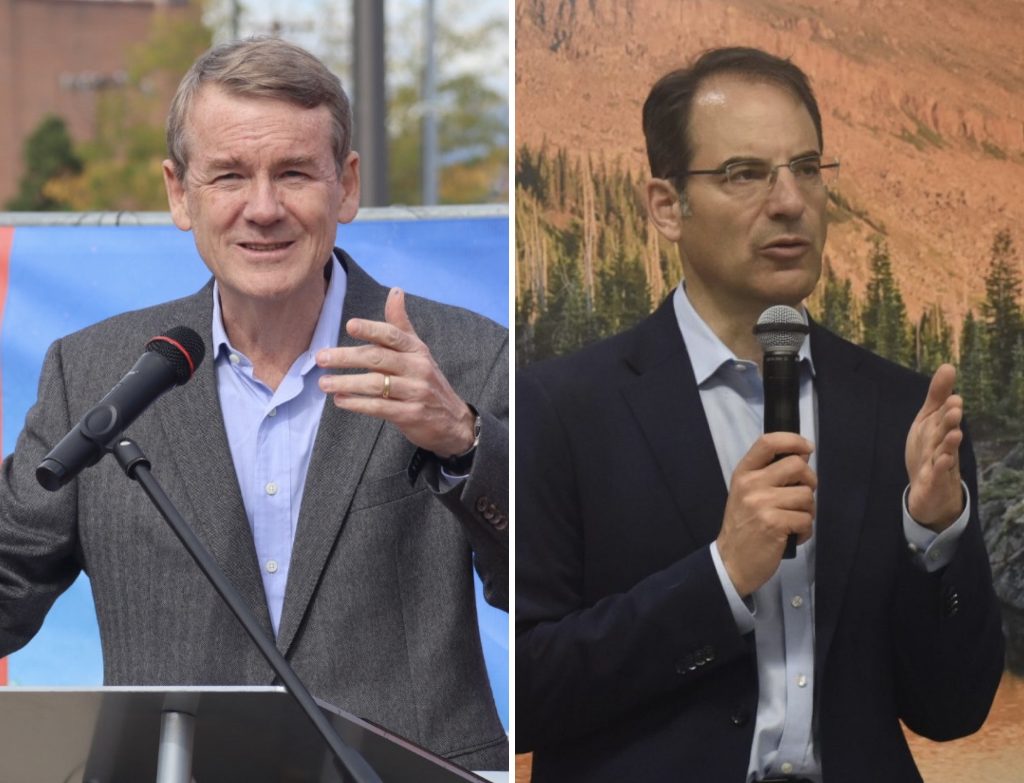
Robert Tann/Summit Daily News
Michael Bennet and Phil Weiser are both candidates in the June 30 Democratic primary for Colorado Governor. Sky-Hi News asked each candidate five questions about some of the key issues facing Colorado’s Western Slope.
Question 1: Colorado’s High Country has a severe housing crisis that is pushing out working locals, yet much of the housing legislation that has been passed in recent years has been focused on Front Range communities. As governor, what efforts would you take to bring down costs and increase access to housing in the High Country?
Bennet: My wife Susan and I raised our three girls here — and I want them to build their lives here too. But for too many people, that’s hard. Colorado’s housing crisis continues to push too many people out of my state. It’s not just a Front Range issue — it’s a Western Slope issue, a High Country issue, it’s an issue across Colorado.
Though this is a statewide issue, we know that one size does not fit all — what works in Denver might not work in Glenwood or Frisco. I’m the only person running for governor with a goal to ensure no Coloradan pays more than 30% of their income on housing. I will work closely with High Country communities, homebuilders, labor and nonprofits to cut the cost of housing by building more starter homes, cutting red tape and working with local governments to streamline permitting, and using the state balance sheet to finance new housing. Read more about my housing plan here. I am committed to making sure state programs, like Prop. 123, work for mountain communities and will support locally driven programs to put more working families in homes, like cost buy-downs, ADU construction and permanent workforce housing.
Weiser: Colorado ranks 43rd in the nation in overall affordability and 48th in homeownership affordability — and we are short of roughly 80,000 owner-occupied homes priced between $150,000 and $500,000. That is unacceptable, and this gap in affordable housing hits working people hardest. There is not one “silver bullet” solution to solving the housing crisis; what works on the Front Range doesn’t always work in the High Country.
We need a multi-pronged solution that prioritizes new construction, preserves existing affordable units, enhances home construction trade education, lowers building permit fees, protects renters from being taken advantage of and provides down payment support for first-time homeowners — and we must forge this through regional collaboration, incentives, oversight and accountability.
My near-term goal is to increase attainable owner-occupied housing by 40,000 units — closing the current gap by 50% and materially decreasing costs for 100,000 renters currently spending half their income on housing — by 2035.
Question 2: Rural resort areas navigate a delicate balance between the tourism industry and the need for long-term housing for locals. Do you support legislation to tax and/or limit vacant homes and short-term rentals? Please provide a “yes” or “no” answer to this question before expanding on your reasoning.
Bennet: I’m open to changes in taxation of second homes and short-term rentals as part of a comprehensive conversation about tax reform. My top priority is ensuring housing is affordable for Coloradans in every corner of the state, which is a particular challenge in mountain communities. As governor, I will bring local leaders and community members to the table to create a solution that works for our state long-term.
Weiser: This is an area I am open to discussing options. It is crucial to avoid policies that have unintended results and harm homeownership, property values or communities. It’s important to hear from impacted communities, local governments, advocates and homeowners to ensure that differences in tax treatment address core challenges without unintended consequences.
Question 3: The fight over the future of the Colorado River is likely to spill into the next governor’s administration. What do you believe is the best path forward for Colorado’s water security, and how will you work to protect residents’ critical water rights?
Bennet: The future of the Colorado River affects all six million Coloradans. With a hotter and drier future, we will not be able to sue our way to more rain or snow.
I will defend Colorado’s water rights and fight for fair and realistic outcomes that deliver certainty for Colorado communities. I believe a collaborative approach that keeps decisions in Colorado’s hands — rather than federal judges or President DonaldTrump’s administration — will lead to a more certain and secure future for our state.
More broadly, I will use my deep, statewide relationships to help Colorado respond and adapt to drought. I will work with the agriculture and water communities to develop a suite of drought resilience tools, increase efficiency by upgrading aging infrastructure and deploying new technology, and support statewide voluntary, temporary and compensated water conservation efforts that protect existing water rights and benefit producers and local communities, not speculators.
Weiser: My commitment to protecting our water is demonstrated by my record: stopping a scheme to pipe water from San Luis Valley farms to feed new developments in the Denver area; supporting Eagle County’s lawsuit to stop a risky venture to ship millions of barrels of crude oil along the Colorado River, putting it at risk of dangerous spills, leaks and fires; and standing up to Nebraska to stop an attempt to divert more water across state lines.
As governor, I’ll protect our water quality just as we protect our water supply — by holding accountable polluters that illegally dump into our rivers and watersheds, supporting commonsense water conservation policies that Coloradans can afford, fighting “buy-and-dry” schemes that devastate rural communities and benefit unchecked suburban developments, providing meaningful financial incentives for farmers who voluntarily shift to less-water intensive crops, and pushing for meaningful funding investments to fund Colorado’s Water Plan.
Question 4: Wolf reintroduction remains a contentious issue in Colorado with lawmakers bringing concerns about program cost, transparency, management and impacts on the Western Slope. What actions, if any, would you support to alter the wolf reintroduction program and why?
Bennet: I have always wanted wolf reintroduction to succeed. Our state created a wolf management plan with input from across Colorado and the best available science. However, I’ve met with ranchers and rural communities who are frustrated with its implementation.
As governor, I will work collaboratively with Colorado Parks and Wildlife staff, local governments, wolf advocates, and agriculture, conservation, recreation and sportsmen interests to rebuild trust and move forward together.
Weiser: No one on any side of this issue — including me — believes the program is working well. Half of all the relocated wolves haven’t survived, frustration on the Western Slope is at an all-time high, the program is costing the state more money than was budgeted and other states are now refusing to offer up new wolves to Colorado. The program and those running it must do better to ensure the voters’ will is honored, and trust must be restored between Colorado’s wildlife agencies and rural communities.
As attorney general, when Western Slope community leaders told me their voices weren’t being heard, I went to bat for northwestern Colorado communities to ensure they were at the table when decisions were made. As governor, I will ensure our laws are carried out, and I’ll do it in a smart way — one that listens to all Coloradans impacted and follows the science and data.
Question 5: Colorado continues to face a structural deficit in its state budget, and this year the legislature was forced to cut spending on Medicaid, affordable housing and other key programs. As governor, how would you put the state on a more sustainable spending path while protecting programs and services that Coloradans rely on?
Bennet: I fought against Trump’s one big beautiful disaster of a budget that gutted Medicaid while blowing a $1 billion-sized hole in our state budget — turning a challenge into a crisis.
As the only candidate in this race who has led large organizations and fixed broken budgets, I’m focused on achieving the lasting reforms our state needs. As governor, I will work across the state to tackle Colorado’s budget challenges with a real, long-term strategy instead of the annual band-aid fixes. That starts with building true consensus in every corner of the state to take on TABOR and create a more fair tax system to bring in the revenue we need, while ensuring state government spends taxpayer dollars effectively.
We need to modernize Medicaid by paying providers based on the value to patients rather than the number of procedures performed, while cracking down on abusive private equity practices that drive up costs. We also need to invest more in mental health services and prevention, reducing long-term costs while improving public safety.
Weiser: In Colorado, the Taxpayer Bill of Rights — TABOR — is throttling our state’s ability to invest and thrive. Time and again, ballot measures to reform it have failed because they were hatched in the State Capitol, sold as a top-down approach and didn’t engage voters early. We need a new approach — one that the voters can trust and support.
To be clear, Coloradans like to vote “yes” or “no” on taxes, and I see that as a settled question. But TABOR has far more provisions than voting on taxes, which must be evaluated. I’m committed to reforming TABOR through a grassroots, bottom-up effort that will include reforming our state tax system and constitutional spending limits. Colorado must be allowed to keep and transparently invest excess dollars in good economic times and build a healthy reserve to weather the bad. As governor, I’ll prioritize changing TABOR so that we can protect the critical services and programs Coloradans rely on.
View the Q&A responses from the Republican candidates for Colorado Governor in the primary. Ballots for the June 30 Colorado primary were mailed to voters starting Monday, June 8. To check your voter registration status, visit GoVoteColorado.gov.



Support Local Journalism
Support Local Journalism
The Sky-Hi News strives to deliver powerful stories that spark emotion and focus on the place we live.
Over the past year, contributions from readers like you helped to fund some of our most important reporting, including coverage of the East Troublesome Fire.
If you value local journalism, consider making a contribution to our newsroom in support of the work we do.